
Mid November involved my visiting two international film festivals, Leeds and Bratislava, to sit on their short film juries. Two days in Leeds, thirty four films over six programmes in one screen at the Everyman cinema, resulted in one minor headache (probably from sitting too close to the screen), four satisfying meals, some very well crafted works and the pleasure of the company of fellow jurors Muriel d’Ansembourg and Jasper Sharp.
I’d never been to Leeds before and I still feel as though I haven’t, due to the tight schedule of screenings partially dictated by my departure back to Edinburgh in time for the next festival. Nevertheless, spending two days watching short films created with energy, passion and skill is a fine way to spend one’s time. From what I did see of Leeds and the impact of the festival (it runs for two whole weeks) on the city, it appears well attended and well loved. I was sad not to catch the local talent represented by the Yorkshire Short Film Competition. 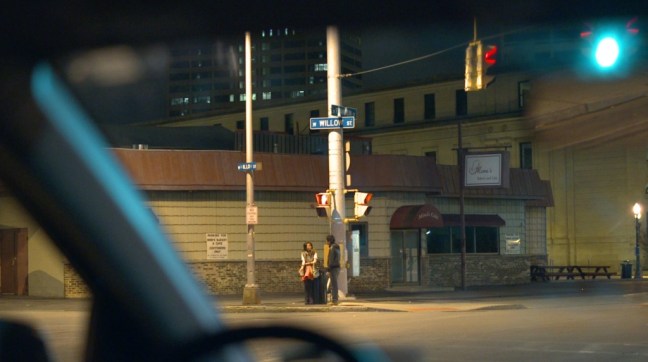 Of the films in consideration, we selected Drama directed by Guan Tian (pictured above) as the winner of the Louis Le Prince International Short Film Competition. Drama frames its action from the back seat of a car, where a mostly unseen couple halt their coitus when they realise they have no condoms. Seeing a woman across the street whom they assume is a sex worker, they decide she should be able to provide them with the missing contraception, and in observing her relate their interpretation of her interactions. The film impressed us for its layering of translations and clever use of off-screen space. First there’s the assumptions made about an unknown woman, then the translation of dialogue into subtitles for a non-Chinese speaking audience, and finally, like Rear Window, a play of what can and cannot be seen from the couple’s vantage point. In eleven minutes, Drama absolutely involved us in this couple’s intimate investment in another couple’s conflict, moving through frustration, fear, laugher and relief. Elsewhere in Leeds’ line up, The Jacket by Patrick Vollrath (to which we gave a special mention), Turtle (Jordan Scheile) and Volta (Stella Kyriakopoulos) were all very well executed pieces on – respectively – themes of masculinity, class and motherhood.
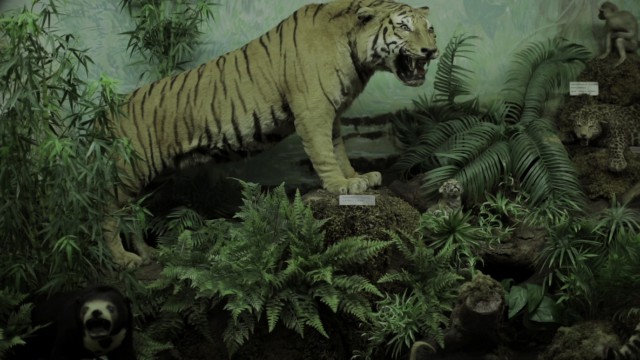
Onward to Slovakia and a far more relaxed schedule awaited me. Alongside jurors Doris Bauer (programmer of Vienna Independent Shorts) and Eva Križková (Editor in Chief of Kinečko), I was tasked with considering twelve short films for the Prize for Best Short Film, and in a selection that included Aura Satz’s Chromatic Aberration and another by Patrick Vollrath – the Cannes selected Everything Will Be Okay, it’s safe to say each film had its own elements of originality and technical achievement. Ultimately we chose Konstantina Kotzamani’s Washingtonia, for the way it combined an idiosyncratic portrait of a mother and son, with musings on the nature of relationships and the natural world, or as we put it to the festival: ‘For the many pleasures that it offers. It has a depth and ambiguity that allows multiple interpretations and balances concerns of the heart and mind.’
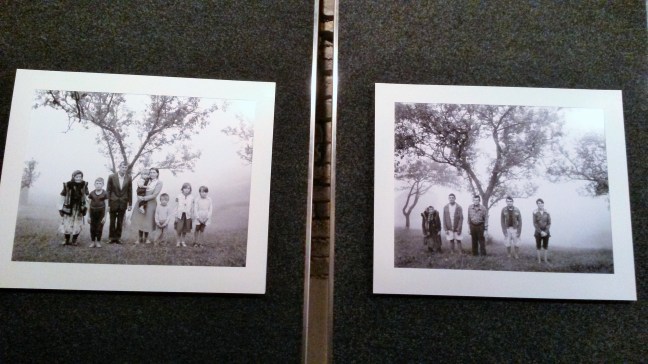
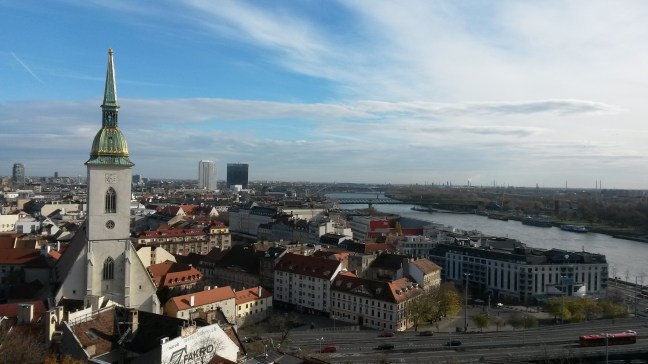
Being in Bratislava for three full days with time to spare, I explored the city a little. An attempt to find the archaeological museum to see an exhibition of photographs by Lida Suchy titled, Portrait of a Village, resulted in a climb up and around the castle and back again and finally the discovery of the museum next to a construction site along the dual carriageway. It was worth it to see the extraordinary images captured by Suchy of villagers photographed first in the 1990’s and then, twenty years later. Bodies grow and shrink, lines appear, stature is affected and then relaxed and the benefit of hindsight provides new philosophies.
Suchy’s partner, Mišo Suchý was the focus of a retrospective, and his concerns as an ethnographic/documentary filmmaker sat well with the festival’s family theme. At the screening I attended, I had the pleasure of seeing I Have Come a Long Way (1988), About Dogs and People (1993), Pictograph (2007) and Prysia’s Garden (work in progress, 2015) – all beautifully observed and thoughtfully realised studies of people and their environments. During the programme’s introduction, I was identified as the only non-Slovak speaker in the audience and to my surprise, after the lights dimmed, Suchý himself sat in the seat next to mine, whispering to me that he would provide translation as the first film had no subtitles. Akin to a live director’s commentary, the exactness of his hushed interpretation is unknown to me, at least I know that, for example “typical communist propaganda” describes the general, rather than specific translation of one scene in which a TV news program is seen in I Have Come A Long Way. Thanking him for his kindness after the screening, Suchý said simply that he had been in the position of lacking understanding in un-subtitled screenings many times, and he didn’t want to impose that experience on me.
Strangely the rest of the films I saw at BIFF were all American. Charlie Kaufman’s Anomalisa was typically agonising and hilarious, Tom McCarthy’s Spotlight was utterly gripping (and deserves more words than I can offer here) and following Bachelorette, Leslye Headland’s Sleeping with Other People seemed to hide a dark and personal story beneath shiny romantic comedy clichés.
Also recently viewed: My Skinny Sister (Min Lilla Syster, Sanna Lenken, 2015), Mountains May Depart (Shan he gu ren, Jia Zhangke, 2015) and Netflix’s Master of None, created by Aziz Ansari and Alan Yang.
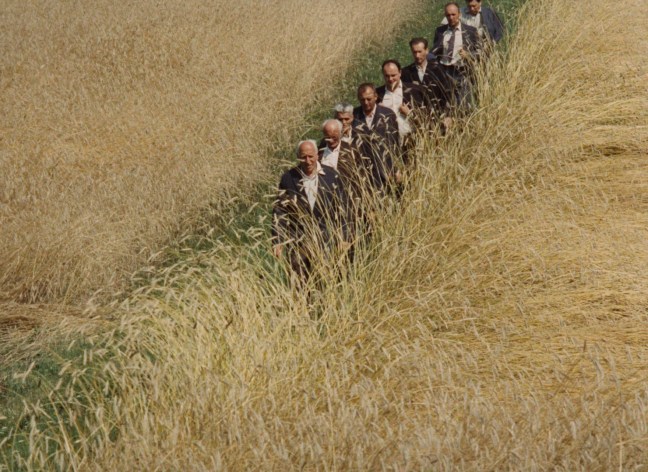
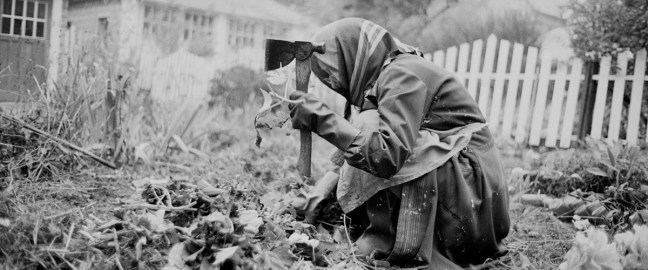
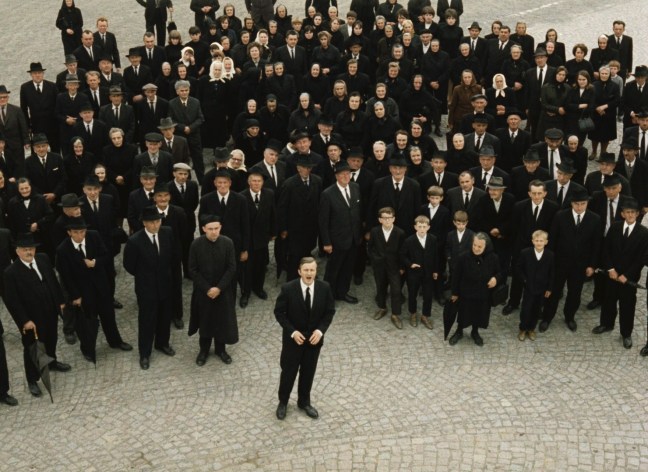
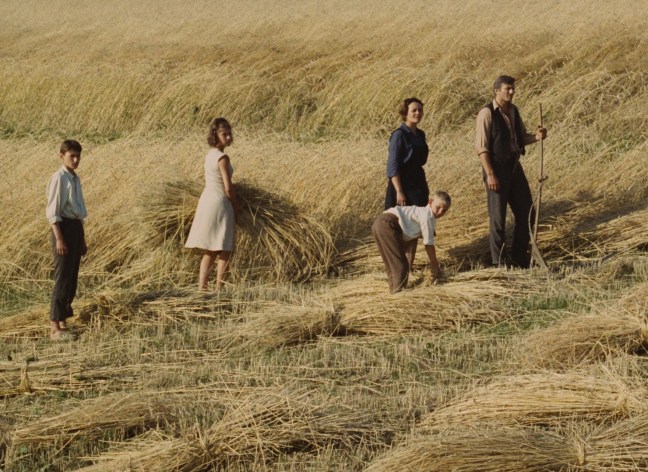 All My Good Countrymen was Jasný’s nineteenth film, and followed on the success of When the Cat Comes (1963) in continuing the director’s international acclaim. It was however later banned due to its portrayal of the Communist system and Jasný was for a period forced into exile. The film was a long-gestating and highly personal project based on memories the director’s mother shared about village life, and there’s an impressionist tendency to the way the people and landscape are shown, connecting characters and places but remaining ever so slightly removed from the subject. Jasný covers the period from 1945 to 1958 in chapters that follow the seasons, with an epilogue set in 1968 during the Prague Spring, and it’s the treatment of time that’s one of the film’s most beautiful elements.
 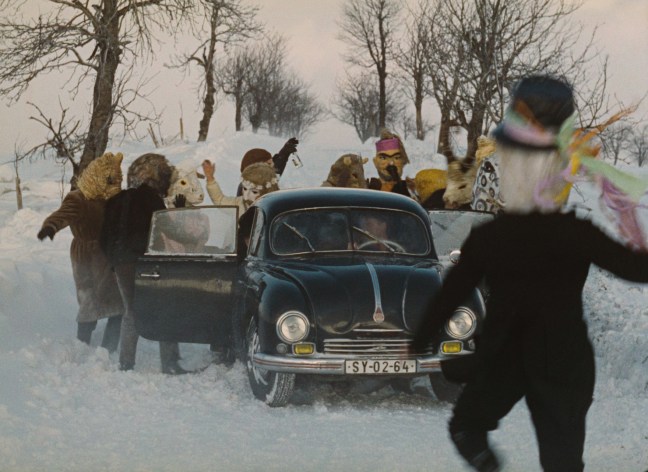 Characters come and go, the local council persists in attempting to recruit František to join ‘the Cooperative’ but the land still needs plowed and festive celebrations continue according to the season. The elderly of the village appear set apart from events, commenting upon their younger counterparts with the wisdom of experience.
  For someone unfamiliar with Jasný, but an appreciator of the Czech output of this period from directors such as
 cinematicinvestigations.com