My week in film: Knife in the Water and The Trouble with Harry

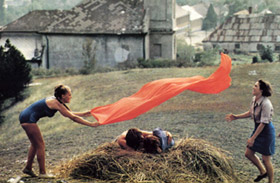
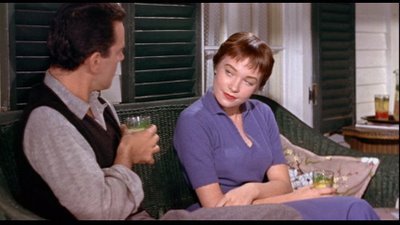
cap429Despite 2012 being the year Alfred Hitchcock was consistently celebrated; with a retrospective at the BFI in London, including restorations of his early, silent films – the ‘Rescue the Hitchcock 9’ project, which was part of the Cultural Olympiad; and two films The Girl (Julian Jarrold) and Hitchcock (Sacha Gervasi, released on 8 February), I still didn’t manage to catch up on the great director’s entire work. So, to continue my efforts The Trouble with Harry (1955) was this week’s Hitch selection. Set in a quiet and picturesque New England town, the film opens with Captain Albert Wiles (Edmund Gwenn) talking to himself as he seeks the victim of a morning’s hunt, whilst young Arnie (Jerry Mathers) plays alone nearby. The Captain’s chatter can be taken as an idiosyncrasy of the character or more likely – a self conscious way to guide the viewer as to his thoughts Trouble With Harry Hitchcock pic 1and motivations as he goes about trying to decide what to do with Harry’s corpse.
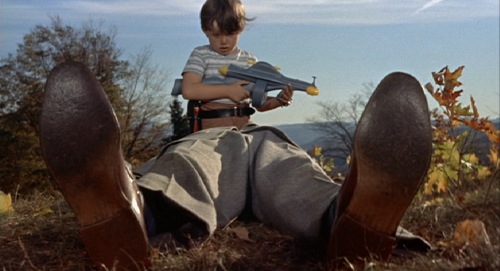
A true dark comedy in keeping with Hitchcock’s oeuvre, but without any pretensions towards being his usual thriller; the main attraction in this uneven film is the debut of Shirley MacLaine as Harry’s widow, Jennifer Rogers – mother to Arnie. MacLaine manages to raise herself above what results as an unnecessary romantic through-line, pretty much upstaging the arrogant (and annoying) Sam Marlowe (John Forsythe) – at least until the inevitable matrimonial union. Its undoubtedly enjoyable and The Trouble with Harry may feature some gorgeous landscape shots, unusually for the studio-loving Hitch, but it can’t escape the throwaway nature of the script which tries too hard to tie up all loose ends. knife
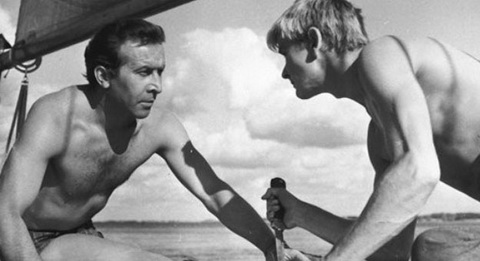
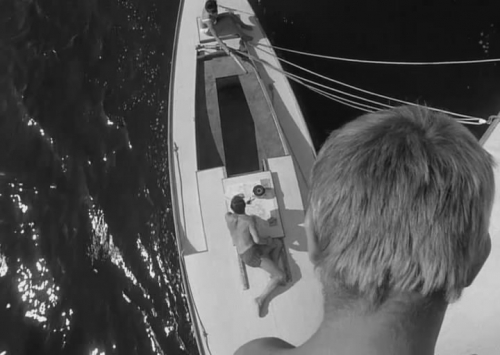
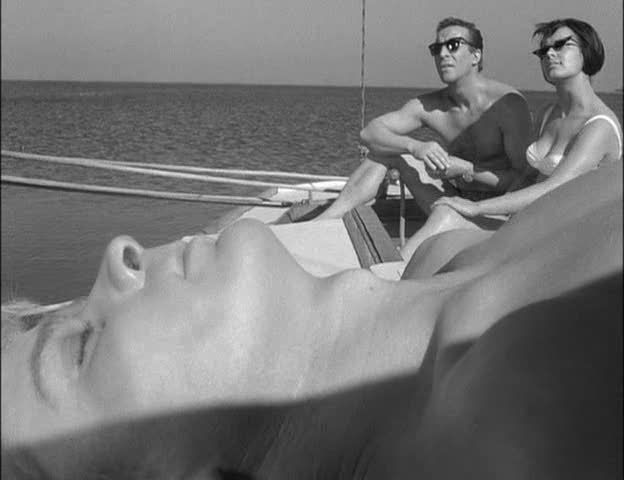
Starting this week at Filmhouse and the BFI Southbank is a retrospective of works by esteemed director, Roman Polanski, including some lesser-seen early gems. Knife in the Water (1962), his first feature film as director is a tense tale with a very simple plot – a couple go sailing and take a hitchhiker with them. What results is a struggle of power as Andrzej (Leon Niemczyk) essentially shows off in front of their student guest, testing the loyalty of his patient wife, Krystyna (Jolanta Umecka). The claustrophobia of the boat – staying onboard and being confined by the water surrounding them – is suggested perfectly in Polanski’s use of deep focus, never letting the immediate interactions lose association with the activities of the other character(s). tumblr_mc5z8twngl1qzbahzo1_1280
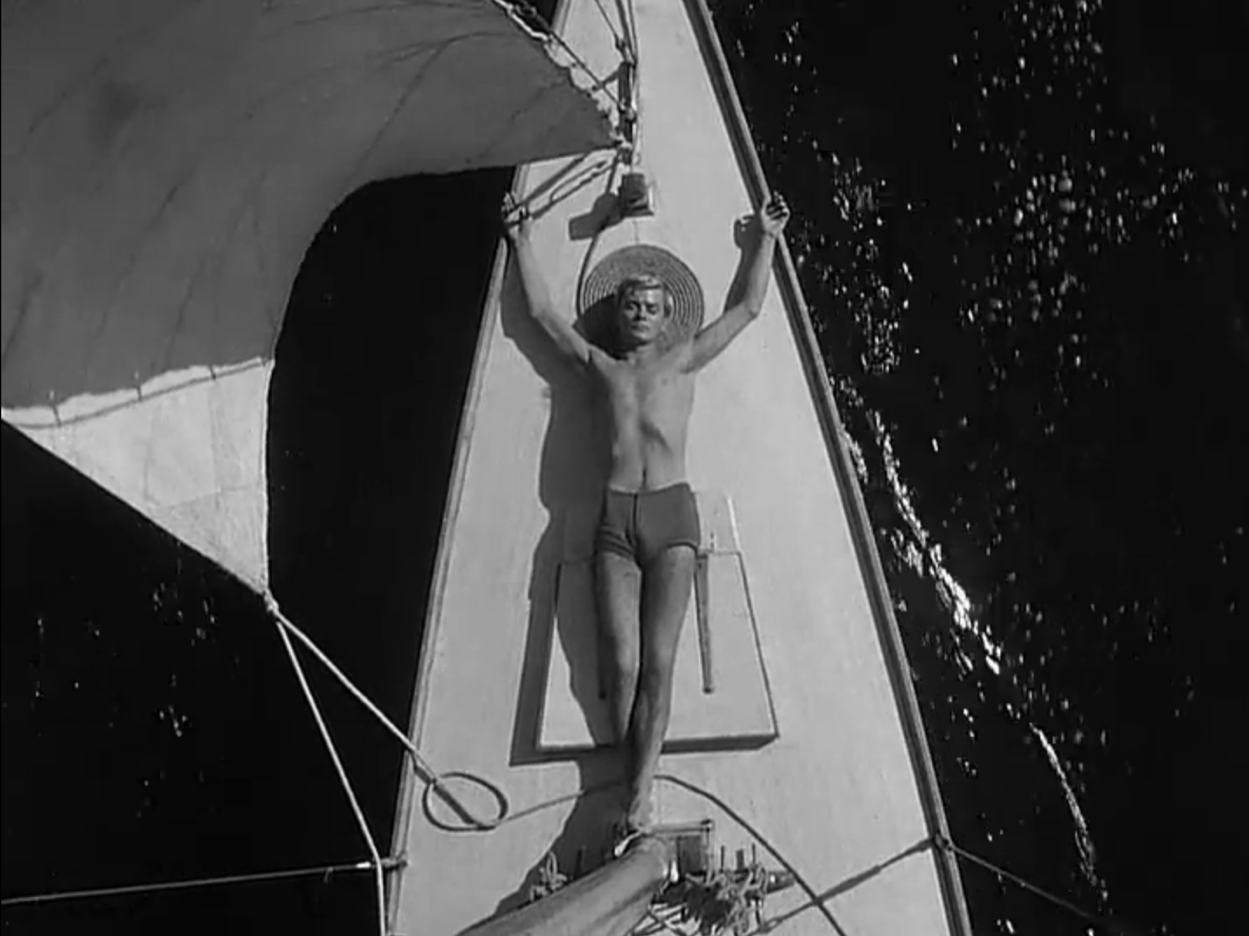
There’s also a wry sense of humour on display such as a visual gag that sees the unnamed ‘young man’ as Christ, implying the initial parent-child dynamic of this unlikely trio. At the screening I attended in Edinburgh the audience were also most amused by the jibes at Krystyna’s inflatable crocodile and her unexpected deception of her oblivious husband. With a screenplay by Jerzy Skolimowski, one couldn’t help noticing his influences elsewhere, such as Andrzej listening to a radio broadcast of a boxing match and the liberal use of frenetic Jazz on the soundtrack for moments of high tension. Skolimowski also co-wrote the screenplay for Wadja’s Innocent Sorcerers (1960) in which he appears as a boxer, (alongside Polanski as a musician) making Knife in the Water a clear product of the director’s then regular collaborators amongst the Polish Film School. trading-places-original
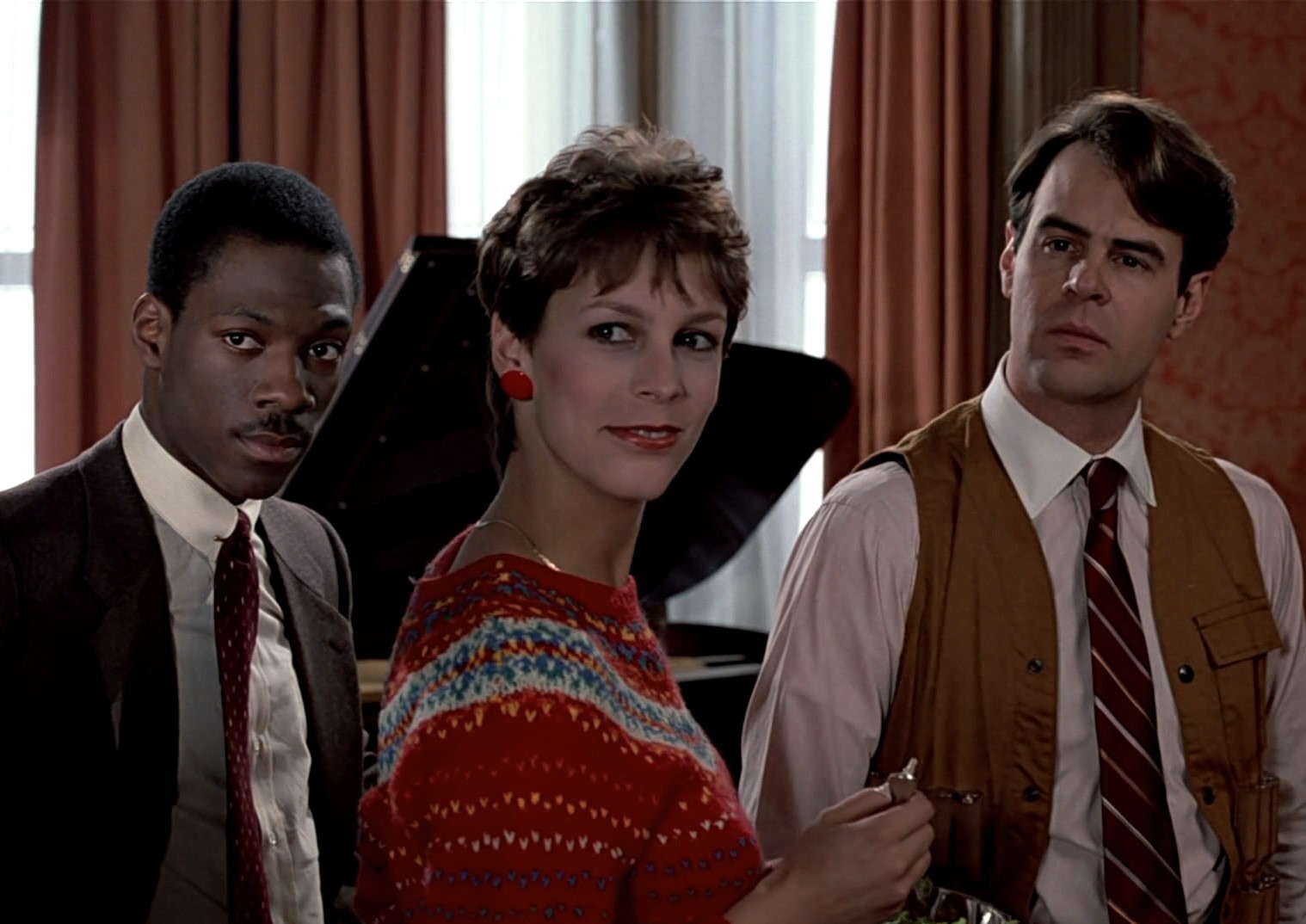
Also watched: John Landis’ comedic take on The Prince and the Pauper, Trading Places (1983) which brought to mind the legacy of slavery (now with added pop culture thanks to Django Unchained) in its depiction of men’s clubs staffed exclusively by African Americans.
DVD Review: The Confrontation by Miklós Jancsó


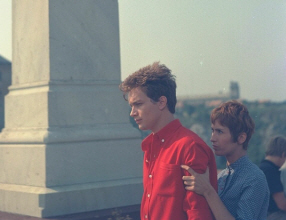
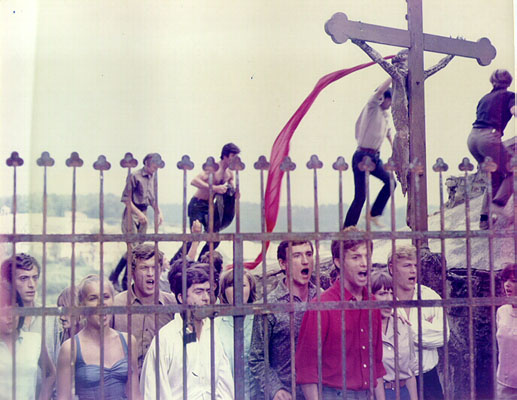
 Confrontation Watching Miklós Jancsó’s The Confrontation (Fényes szelek, 1968) one can’t help but think of famous US melodramas about troubled youth and the struggle against hypocrisy such as Rebel Without a Cause or West Side Story. In his first foray into colour film, Jancsó proves himself as much a master of a striking palette – costuming his actors in symbolic red, for example – as he had demonstrated himself capable of building tension through a careful choreography of individuals such as in The Round Up or The Red and the White. Rather than the personal traumas of such US classics, with their focus on racial, familial or romantic power struggles, The Confrontation uses music and dance to muse upon and dissect the political ideology of students, in the wake of newly founded Communist rule in 1947 Hungary. Clearly reflecting the events of the time – student riots in Paris – Jancsó’s vitality as a director is perfectly attuned to balancing weighty, philosophical dialogue and the inner squabbles of the student group, with striking visual flair.

At the start we see a group of students stop military cars on the road in a pacifist demonstration, blocking their way and lying on the ground when provoked to move on. Gradually some of the soldiers join them in dancing, but their actions are watched at all times by the police officer, Kozma (András Kozak, of The Red and the White) who’s offering of advice or criticism seems to provide the audience perspective as the actions of the group escalate. Entering a monastery in order to challenge the pupils there regarding their ideas of democracy, free education and the use of power; the leader, Laci (Lajos Balázsovics) becoThe-Confrontation-33820_5mes challenged himself when another of the group, Jutka (Andrea Drahota) deems his non-violent negotiation and debate-based tactics too weak to accomplish their goals of imposing Marxist teachings.

Using somewhat underhanded tactics to topple him from leadership – she claims a majority decision has been made but no evidence is shown to back up her pronouncement – Jutka then proposes more aggressive modes of persuasion. The notion of the group as terrorists hangs over the action of the film – and is demonstrable by their humiliation of non-conforming pupils via tactics that veer dangerously close to those of Nazi concentration camp officers. That hair-shaving doesn’t take place, but vandalism does; ultimately becomes controversial enough for Jutka’s power play to be disciplined thus proving that within political parties, the consensus regarding objectives – such as imposing Marxist ideology – is subject to the same internal (and essential) diversionary ethical debates regarding methodology.

Typical of Jancsó, the action is shot using long, fluid takes; camera movement following individual conversations, then slowly zooming out to focus on the group singing, then pausing on specific confrontations. It’s gorgeously rendered and choreographed, the brightly dressed students contrasted with those of the monastery in their grey uniforms enhancing the way the film uses musical genre conventions and their expectation of melodramatic subject matter to incongruous effect. Accompanying this fantastic restoration by Second Run DVD is a detailed and fascinating essay about Jancsó’s career by author Graham Petrie, which provides insight to the great director’s political and aesthetic filmmaking trajectory.

EIFF 2012 in Retrospect: Either Way

Either_Way_Still1

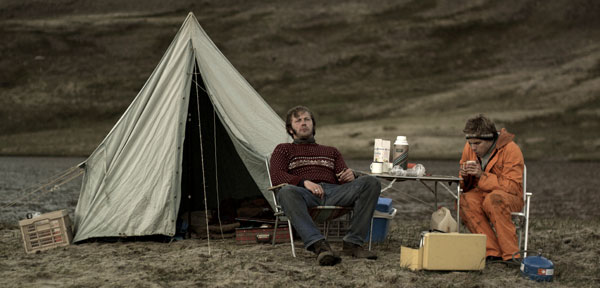
Finnbogi (Sveinn Ólafur Gunarsson) and Alfred (Hilmar Guojónsson) are tasked with painting the dividing lines on a deserted road in the majestic Icelandic landscape. Isolated from the city, with only each other for company week in, week out, the yellow lines on the road come to represent a point at which two mens’ opposing personalities cause a rift between them, both hilarious and tragic.

Aside from Finnbogi’s relationship with Alfred’s sister, the two men have almost nothing in common, Alfred preferring clubbing and the pursuit of women whereas Finnbogi likes fishing and reading. Minimalist in action and plot, much of the pleasure of Either Way comes from the inevitable humour arising from Finnbogi and Alfred’s very different values.

In one highly droll scene, Alfred gives a detailed chronological account of his two days back in the city spent attempting to party hard and find a woman to sleep with. Finnbogi listens attentively as he (and in turns the audience) live vicariously through Alfred. With so little action set amidst the glorious mountainous terrain, Alfred’s tale of his own ineptitude becomes fascinating, and absurdly funny. At several points in the film, Finnbogi and Alfred are visited by a truck driver who, oddly, plies them with alcohol in a rather insistent and random celebration of their hard work. Deciding they need to cut loose from their repetitive routine, the tow men indulge a little too heavily in their gifted drink, breaking the silence of the valley with their elated cheers and laughter.

Cinematographer Áarni Filippusson (who worked on the Sigur Rós documentary Heima) places the magnificence of the Icelandic country centre stage and the landscape in Either Way becomes the film’s third character. The cinematography, scenery and the brilliantly witty dialogue are just a few of the many pleasures of writer and director Hafsteinn Gunnar Sigurosson’s debut feature film.

This piece originally appeared in the EIFF Catalogue 2012. The film is available to watch on the Filmhouse Player