IFFR 2015: Interview with Gluckauf director Remy van Heugten

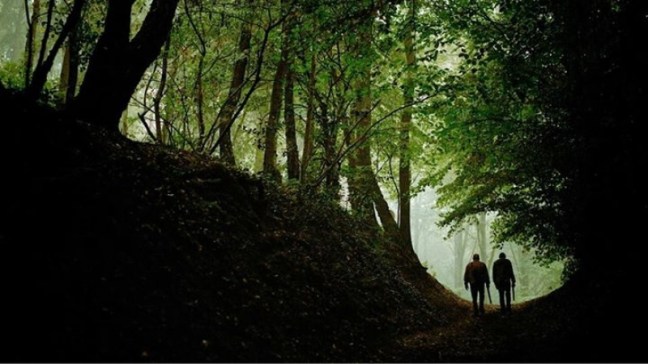
A film that is both about a very specific place, and a universally understood theme, Remy van Heugten’s Gluckauf is as precise about the Dutch province of South Limburg as it is broadly sympathetic regarding family ties. Focusing on Lei (Bart Slegers), father to grown son Jeffrey (Vincent van der Valk), van Heugten and co-writer Gustaaf Peek establish early on that their central pair have long been dependent on each other, and that the roles of parent and child have become interchangeable between father and son. Living in the shadow of his own father’s legacy and feeling the effects of a region abandoned by industry, Lei makes a living day to day, hunting and selling rabbits, whilst Jeffrey prefers to peddle narcotics. When Jeffrey discovers Lei’s debt to landowner Vester (Johan Leysen), he quickly becomes embroiled in darker and darker ways to pay back what is owed.

Screening in the Hivos Tiger Awards Competition at IFFR, Gluckauf showcases van Heugten’s assured and subtle direction, which has extracted a powerful, nuanced performance from Slegers, and a hugely effective sense of place. Having grown up in Limburg, Gluckauf is something of a personal film for the director, who desired to show the contradictions of the region – that despite the ‘’lovely image of Limburg’’ commonly known, the area has suffered greatly from the economic downturn caused by mine closures in the 1960’s, now consistently appearing second only to Amsterdam for high crime rates.

For van Heugten, Lei and Jeffrey are emblematic of a generational dynamic where unemployed men lacked the direction needed to push their own children to find careers. Developed from Peek and van Heugten’s observations and anecdotes about paternal relationships, the director describes Lei as the ‘’immoral father’’ who lacks social skills, whilst Jeffrey, having become a quasi-parent to his own father, has become amoral, such that ‘’he doesn’t know what’s right or wrong.’’ In a pivotal scene in the film, we see just how far Jeffrey has strayed from any sense of a moral code, valuing the acquisition of wealth above all else.

Finding the right actor to convey Lei’s depth of feeling was essential to the success of the film, and for this van Heugten consulted a casting agent with the intention to ‘’find somebody who feels deeply, emotionally invested in the story.’’ Eventually discovering Slegers, the director describes how the actor was intensely connected to the character and could relate Lei to his own life experiences. Slegers commitment to the role is apparent in his raw, natural performance as Lei, showing with skill the way a seemingly child-like father eventually realises the necessity of protecting his son.

With Gluckauf, van Heugten has successfully realised a vision of Limburg that is at once beautiful and barren, where Vester’s country estate – seen gloriously illuminated at sunset – is symbolic of a pastoral life that is now more hell than heaven and the burden of paternal expectation inescapable.

Originally published in the Daily Tiger, 22 January 2015. Re-published here courtesy of International Film Festival Rotterdam.

Returned from Rotterdam: IFFR 2015

The end of January saw this intrepid reporter attend International Film Festival Rotterdam (21 Jan – 1 Feb) for the first time, where I was selected to take part in their Trainee Programme for Young Film Critics, alongside Tina Poglajen, Rueben Demasure and Oris Aigbokhaevbolo. Whilst there, I contributed preview/interviews for the festival’s newspaper, The Daily Tiger, sat on the FIPRESCI jury (where me and my fellow trainees had one, collective vote) awarding the prize to the best film in the Bright Futures strand, and had the pleasure of ‘expert meetings’ with established critics and editors, Clarence Tsui (The Hollywood Reporter), Wendy Mitchell (Screen International) and Jay Weissberg (Variety).

I also managed to see thirty-one films in total, write three reviews for CineVue, and one focused report on the strand Signals: WTF?! for the forthcoming edition of Little White Lies. I got very little sleep, learned at lot and met some truly fantastic people.

Solos by Joanna Lombardi

Highlights from the programme were Ana Lungu’s Self Portrait of a Dutiful Daughter, a thoughtful, witty piece looking at the ‘late’ coming of age of a young woman inheriting her parents apartment, that exposes the learned behaviours that oppress her. Solos by Joanna Lombardi examined the financial and cultural restrictions on distributing exactly the kind of films that IFFR celebrates, following four friends as they attempt to attract audiences to independent film screenings in rural Peru. With improvised dialogue, the relationship between the friends emerges gradually, and their endeavour becomes ever more absurd, as audiences shift from one to zero. Lombardi’s steadfast refusal to abide by any cinematic rules is admirable, and though the audience for her films may be a small as her characters’, I hope to see more of her work in the future. Finally, Isabelle Tollenaere’s Battles, which was awarded with the FIPRESCI prize, was a carefully edited, episodic piece, exposing the military in Belgium, Albania and Russia, as more useful as a source of social propaganda than a means of defence. Three talented directors that are definitely worth looking out for.

I’ll be posting each of my Daily Tiger pieces here on the site, courtesy of IFFR’s DT editors, Nick Cunningham and Lot Piscaer.

My week in film: Cave of Forgotten Dreams

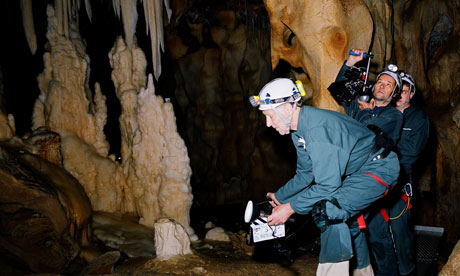
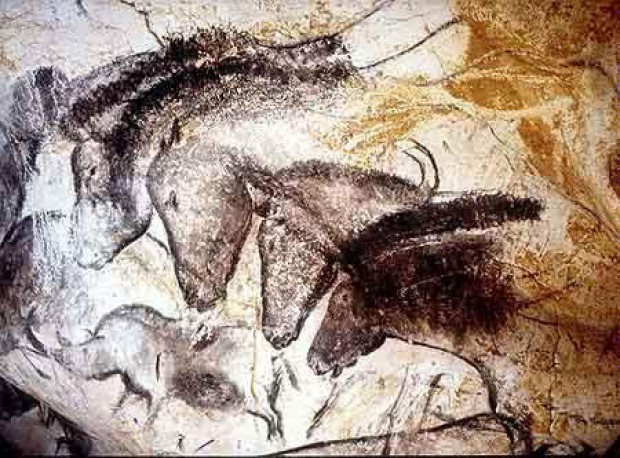
50afa903b0e0c.preview-620Now being fully embroiled in festival programming duties, the days of watching ten films as diverse as Innocent Sorcerers and Bachelorette every week are on temporary hiatus until the programme locks in April. For now, I’m trying to fit in at least one film every week that’s viewed just for myself and happily, thanks to the Filmhouse‘s The Third Dimension strand, Cave of Forgotten Dreams was it. A documentary that offers the only footage inside the Chauvet Caves in Southern France, where the earliest examples of drawing were discovered in 1994.

First of all, let me just give a small bit of praise for the projection team, who far surpassed what was offered when I first saw the film at Glasgow’s  Cineworld in 2011, in which the sound was deafening and the light dispersion from the silver screen rendering the image somewhat shallow. The film itself is a true cinematic pleasure as well; director Werner Herzog’s distinctive timbre providing a suitably reverent voice-over as the camera pans across the cave walls, revealing (as interpreted by Herzog), drawings akin to ‘proto cinema’. Accompanied by Ernst Reijseger’s celestial score, to say the effect of contemplating the beginning of art and representation is ‘moving’ would be an understatement. ??????????????????????????????????????????????????

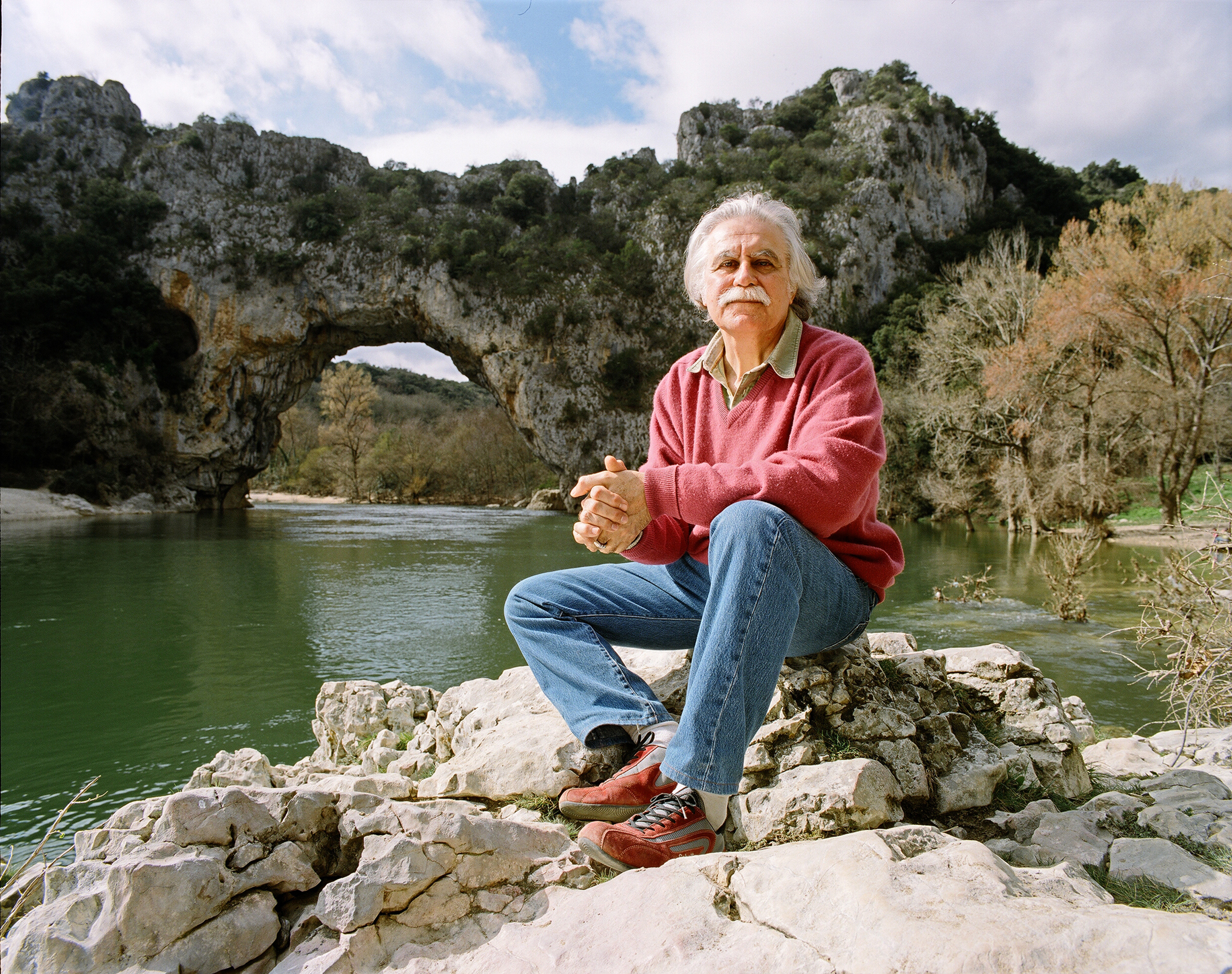
A key eccentricity in Herzog’s documentaries is the way he extracts tangential anecdotes from his subjects, one particularly delightful example here being the archeologist who’s prior career involved circus entertainment. Herzog’s inquiry into the past of his interviewee occurs naturally when said juggler turned archeologist describes what it is that fascinates the viewer of the Chauvet cave drawings; they are all that’s left of a people who lived thousands of years ago – we can only imagine the lives they lived and the thoughts they had. The way that our lives change – sometimes serendipitously in the twenty-first century – may be easier to document, but what makes us human is our expression of feeling, or thought, creatively represented through art, be it oral or visual. In an age of constant communication, Cave of Forgotten Dreams reminds us of the importance of private thought and considered creativity – revealing via a three-dimensional cinematic experience, what we can never see unmediated.