Extra Terrestrial

4–6 minutes

Hello! Hi! It’s been a while since I shared any writing here. About eight years I think. In that time I did more programming than criticism, became a parent just before the global pandemic and put my writing skills to good use at the arts charity I work for, writing funding applications, social media posts and really good emails.

Well, my daughter is six now and I find myself moved to write about film again. Different now though is the kind of writing I want to do. I’m much less interested in reviews and criticism and for practical reasons, I’m much less able to ravenously consume as many films as possible. What I’ve long cared about is how films and film-viewing shapes our identity. What films mean to us and how they affect us. That’s my new subject and you’ll find it explored here under the category of My Square Eyed Life. Yes I am a true millennial and that is a reference so My So Called Life. Without belaboring the introduction, here’s a little piece about a film that made me cry.


“She’s sensitive”

“She’s so sensitive”

Who are you saying that to, Mum? Not to me. Maybe to Dad? It’s such a vivid memory, being held and comforted as I wept. I couldn’t stop crying.

Why weren’t they crying like I was? Why is everyone looking at me like there’s something wrong with me? Don’t they feel it too?

“Stay.”

“I’ll be right here.”

And then the sweeping epic of John Williams’ score as the weight of that moment hits us. E.T. will always be a part of Elliott because they bonded in a way that made them one being.

I mean, devastating, right? They have to part, they can’t stay together, but Elliott will hold E.T. in his heart…! Family, surely you feel this like I do?!

No. They did not. Not my younger and older sisters, not like I did, in such a demonstrably vocal and uncontrolled way, as if I was Elliott and I was being left by my best friend.

I think I was about six or seven years old, I’m not sure. The film was released three years before I was born, so this was the nineties when I was watching it with my family, at home. Probably it was on the telly and probably my Dad recorded it onto VHS so we could watch it again sometime.

It had such an impact on me. I really, really felt it. I was so changed. I couldn’t believe films could make you feel that way and I found it so hard to come back to reality once it was over. When people say ‘it’s just a film’ what they mean is, it didn’t really happen. I understand why that makes sense to say. There is no alien visiting earth who’s gone back home, sure. Now the film is over we can go back to our lives and shake it off. But that’s not really how good art and storytelling works though, is it? If it comes together well – as Spielberg’s E.T. the Extra Terrestrial did in 1982 – then the impact of that story is deep and real.

E.T. is about family and loss, connection and grief. It’s told in a way that connects with children because it centres the wonder and magic of discovering something just for you, and trying to save someone because you can, and you must and it’s within your power to do so. So much in childhood is about what adults say is important, but from the child’s point of view, they know what matters, too.

I showed E.T. to my six-year-old daughter recently. It’s been an intention of mine for a long time, but we wanted to wait until she was the right age or gauge how she handles big drama and tension. She didn’t cry like me. In fact, she said “it’s not scary for me.” Another in a long line of amazing moments as a parent witnessing my child’s personality forming, her own individuality showing itself and we’re the lucky ones who get to see it.

She was invested, she cared what happened, she asked delightful questions about the Mum and the kids getting to go out by themselves on Halloween. She was particularly interested in Elliott kissing his classmate in school when he released the frogs. That was a fun moment, trying to explain E.T. being inebriated and being connected to Elliott.  “And why did he stand on that boy?… and why did he kiss her?”

I cried again. A lot. Of course. That moment, “I’ll be right here”, that’s what it feels like to lose someone and to grieve them. They’re gone, but the connection is held tight in your heart, it never goes away. Sometimes it orbits further away, sometimes it comes very close again, often unexpectedly, and always an acute feeling of love. 

What was named my sensitivity in my childhood I can now understand as my empathy, which must have been, as it is now, pretty major and surprising for the boomer adults around me. That I’m so affected by cinema is part of my personality. It’s maybe my favourite thing about cinema, beyond artistry and creativity and actors and sets and music – that cinema can move you, literally take you somewhere that seems like an elsewhere, a wondrous place, but is actually connected exactly to being human.
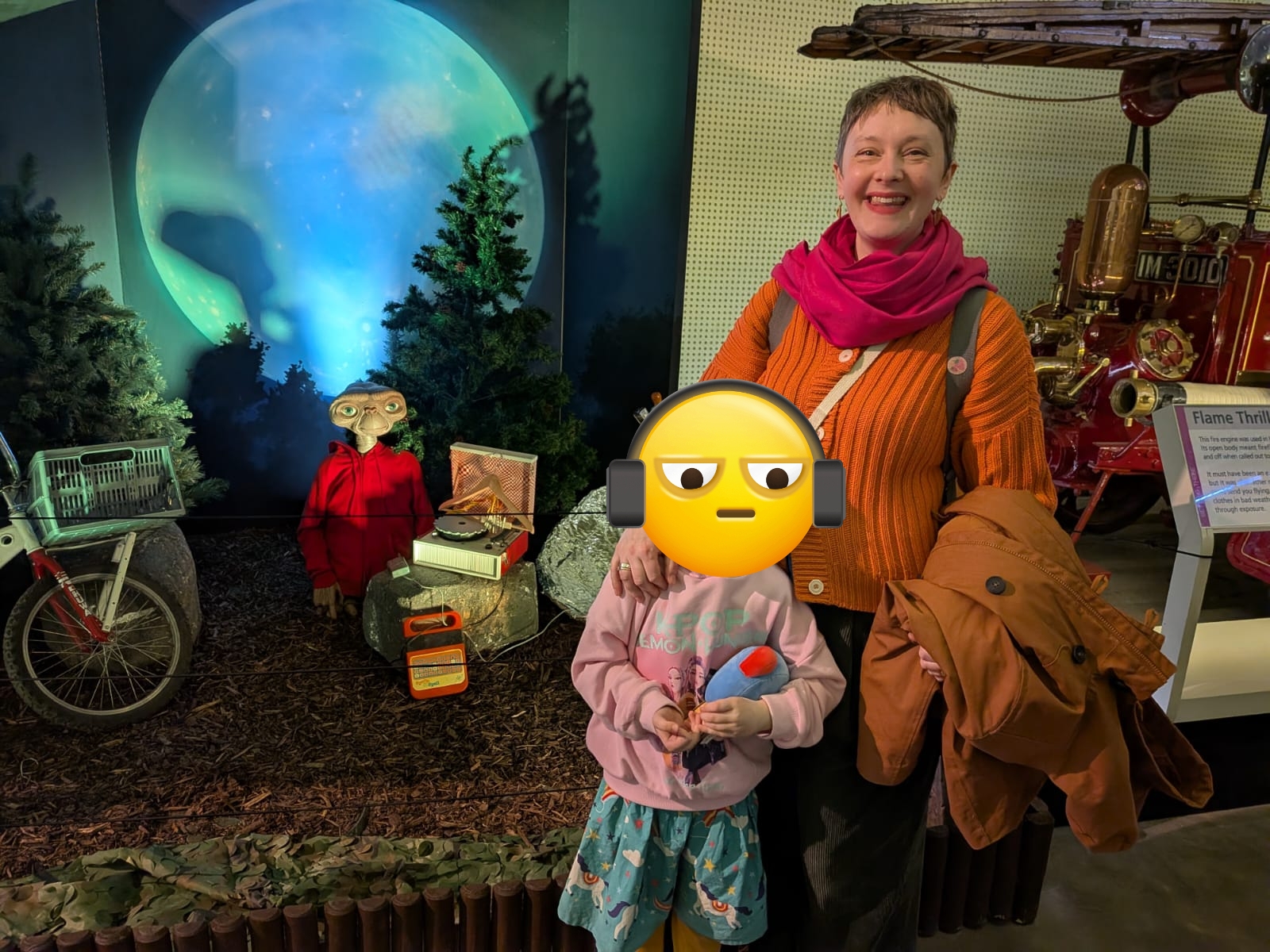
E.T. At the Riverside Museum, Glasgow

Aniston of the week: Life of Crime

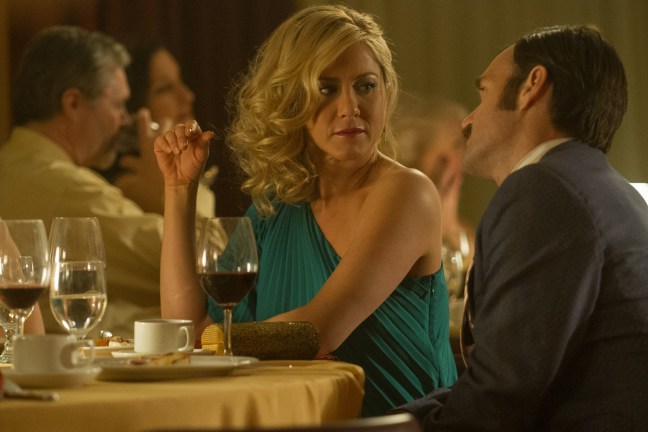
Jennifer Aniston – an actor seen frequently doing great work in poor films, sometimes excellent work in good films, and occasionally, amazing work in excellent films. How are we to know this prolific and skilled artist’s full range? We’ll just have to watch all of her films. Having been utterly depressed by the truly reprehensible Horrible Bosses 2 last week, we turn to a lighter and much easier watch in the form of Life of Crime.

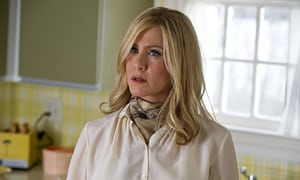
FILM: Life of Crime Jennifer-Aniston-in-Life--011
DIRECTOR: Daniel Schechter
YEAR: 2013
SCREENWRITERS: Daniel Schechter, Elmore Leonard
CHARACTER NAME AND PROFESSION: Mickey Dawson, full time Mum.
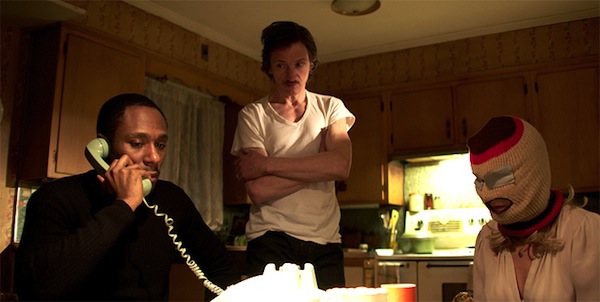
PLOT SUMMARY: In 1978, Mickey is the unhappy wife of corrupt real estate developer Frank Dawson (Tim Robbins) who has millions embezzled in shady deals. When Frank goes out of town for business, Mickey is kidnapped by Louis (John Hawkes) and Ordell (Yasiin Bey) who take her to the home of Richard, (Mark Boone Junior), who proudly displays his Nazi paraphernalia. Mickey can tell that Louis and Ordell don’t have much experience with their enterprise due to the haphazard way they try to protect their identities and their lack of detailed information about her husband. When they demand one million dollars for Mickey’s safe return, Frank – alongside his mistress Melanie (Isla Fisher) – prefers to call their bluff, as he was planning to divorce Mickey anyway. After their demand fails to provoke action in Frank, Ordell travels to where he an Melanie are staying in Florida, only to have Melanie switch allegiances when she sees a way to save herself and make money. Meanwhile, the plot to have Mickey killed goes awry, when Louis catches Richard trying to rape her – instead he saves Mickey and returns her home. The whole thing appears to go back to ‘normal’ when Frank returns from his trip. Mickey, furious that Frank bet her life to save a million, visits Louis where they plot with Ordell to kidnap Melanie.life-of-crime
CHARACTER TRAITS: Exasperated, sad, kind, intelligent, defiant.
NOTES ON PERFORMANCE: Aniston doesn’t really get to do much here other than play a straight victim role, plus her face is hidden under a balaclava for a large part of the film’s first half, so her impact on the film overall is limited. Aniston’s usual knowing looks and wit – her habit of being the most intelligent or sensible person in a film – are used here to good effect in that her kidnappers are demonstrably inept, but beyond that she’s not driving the plot here. Rather, she does convey a subtle sadness that Mickey has that’s not just due to the situation at hand, but a general melancholy with the status quo.
NOTES ON FILM: This is a film with only two female roles, which essentially depict a Madonna/whore binary, so it’s not particularly nuanced or conveying any depth or meaning. Having said that, it appears to doing something a little more thoughtful with its Elmore Leonard source novel than a simple crime gone-wrong plot, and the casting and pace certainly supports that, allowing as it does, moments for Yasiin Bey and John Hawkes to emote impulsive and sensitive aspects of their characters respectively. Early in the film, Aniston’s character is introduced as having an alternative romantic partner in the form of Will Forte’s Marshall, suggesting that she’ll be saved and re-coupled by the film’s end. That she ultimately rejects his ineffectual concern to stride towards an alternative new beginning is at least a happy end for Mickey.
CONCLUSION: A perfectly pleasant, if inconsequential Aniston outing.


BEHIND THE CURTAIN

Aside from the return of Aniston of the week, and September’s short essay on the wondrous experimental films of Dana Burman Duff, this site has been somewhat neglected of late. Programming, rather than writing has been my main occupation. Behind the Curtain is a project that was in the concept stage for a long time. The initial idea was to find a way to share with audiences, films which represent the eclecticism of my taste in cinema, so there’d be documentaries, and comedies and experimental works and more.

What came to fruition is a project that is quite close to that ideal, but with the added theme of a feminist film club. As I developed the idea, what became important was to show a cinema that is representative of all the different perspectives and creative practices of a variety of filmmakers. Behind the Curtain exists to support women filmmakers, queer cinema, filmmakers of colour and d/Deaf and disabled filmmakers – it is therefore by this very nature a feminist project.

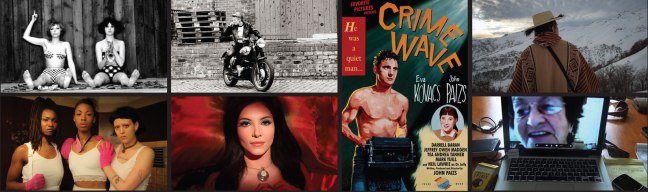
With funding from Film Hub Scotland and in partnership with Alchemy Film & Arts and Moving Image Makers Collective, I programmed and produced 7 screenings from September – December 2017 here in the Scottish Borders, where I’m based. The feminist film club theme ran most obviously through five of the screenings, with films touching upon subjects such as the construction of gender in relation to female reproduction (Maja Borg’s Man, Anna Linder’s Spermwhore), the intersection of race and gender (Cecile Emeke’s Strolling episodes 1 and 7), inequalities of gender in colonialism (Onyeka Igwe’s We Need New Names), female power, both physical and intellectual (Evi Tsiligaridou’s On Your Feet, Woman!, Vēra Chytilová’s Daisies), inherited oppression in mother-daughter relationships (Chantal Akerman’s No Home Movie), the problematics of radical feminism (Bruce LaBruce’s The Misandrists) and narcissistic feminism (Anna Biller’s The Love Witch).

Each of theses screenings inspired thoughtful conversations with the audience, especially the occasional opportunity to address a film’s relevance to feminism and the important intersections of other inequalities with that of gender.

Other film’s in the season were John Paizs’ Crime Wave, the cult, underappreciated Canadian comedy programmed by Glasgow’s Matchbox Cineclub, which depicts with a somewhat tender absurdity, the tribulations of the writing process. I also screened Further Beyond, the first feature documentary by Christine Molloy and Joe Lawlor, aka Desperate Optimists, which uses essayistic approaches, reflexive use of voice over and reconstruction to tell the story of Ambrose O’Higgins.

The intention is for Behind the Curtain to continue in some form, though I’m flexible as to what form it might take. Rather than have a fixed idea of programmes and projects I’d rather respond to the specific context here in the Borders, taking screenings to locations where there’s a shared interest in all the possibilities of an eclectic, feminist cinema.