DVD Review: Sofia’s Last Ambulance

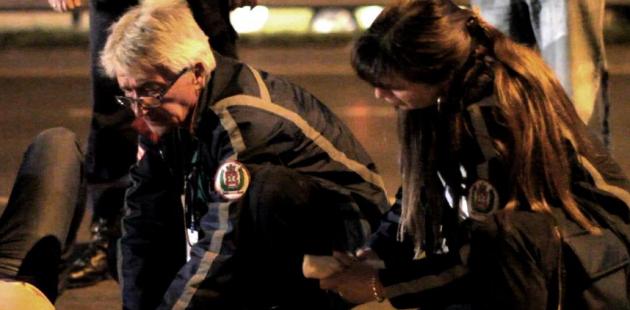
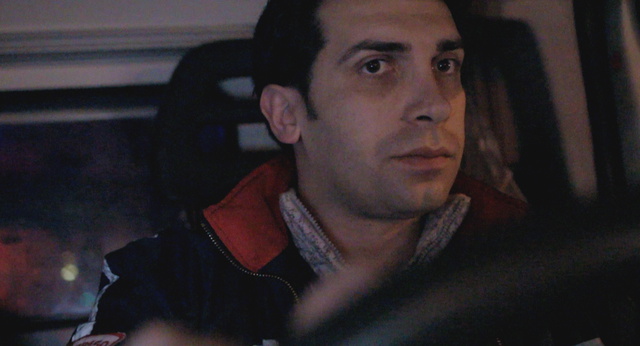
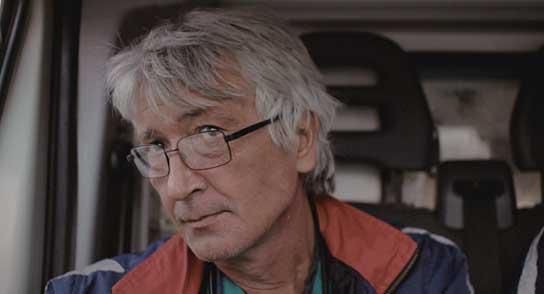
Shot primarily using three dashboard mounted cameras, Ilian Metev’s award winning documentary Sofia’s Last Ambulance captures the unaffected focus and inherent compassion of two medics and their driver, as they navigate gruelling shifts providing service to a turbulent society. Bulgaria’s capital city, Sofia is the setting for this beguiling film where a population of over one million is served by only thirteen ambulances. Dr Krassi Yordanov, Nurse Mila Mikhailova and driver Plamen Slavkov are each framed head on, creating a portrait of their gaze through the ambulance windshield, where Metev’s camera captures the anxiety and determination of the team in attempting to maintain communication with the base, and patience in traversing the pot-hole riddled roads on the way to their next emergency. Between patients, shots are held long enough to capture moments of interior thought expressed aloud, such as Krassi’s absent-minded assertion of his preference for gardening during his day off. Such an approach gives primacy to the team’s humanity, providing an insight into how Krassi, Mila and Plamen see the world and going some way to explain how they manage to operate under such difficult circumstances.
b640x600

Sofia’s Last Ambulance was filmed over three years, which allowed Metev and the small crew a large catalogue of footage from which to edit. It’s testament to the fluidity and coherence of the editing by Metev and Betina Ip that they managed to wrangle hundreds of hours down to a trim 77 minutes.  It’s also apparent in imagining what footage wasn’t used, how in tune with his protagonists Metev is – their frustration at the failing support infrastructure, which appears to leave them adrift from reasonable communication for long periods of time, their anger at the inconsideration of other drivers on the road, and their calm handling of patients that are understandably apprehensive of the broken health care system. Out of a moral instinct to protect the anonymity of the patients the team attend to, Metev keeps them out of frame, focusing instead solely on Plamen, Krassi and Mila, which allows an engagement with their perspective and their reactions, perhaps much deeper than if the patient’s presence was more heavily featured. Which is not to say the patients are absent, rather they are simply heard but not seen, Tom Kirk’s sound work picking up the essential heightened emotions and nuances of muted verbal exchanges to create a highly effective aural atmosphere.

Mila

Metev also forgoes direct interviews with the team, instead allowing their feelings and opinions about their work to be revealed in their actions. Krassi doesn’t hold back his frustration when remonstrating his colleagues at the switchboard for keeping them in the dark for thirty minutes with no information, and in a quieter moment, we learn something of the way Mila perceives herself and others as she is seen watching a woman in the street, imagining another life – a life perhaps very different to her own. This way of observing is strikingly effective, as despite the mounted cameras being presumably hard to miss, the team appear unaware of being filmed – something that Metev has attributed in interview to their work simply demanding all their attention. Amongst scenes of Mila attempting to calm wounded patients in the back of the ambulance, as it drills along pot-holed roads, humour emerges as the common factor both in the way we observe Krassi, Mila and Plamen relate to each other, and eventually in the warmth of feeling Metev creates around them, through the repetition of certain behavioural traits. Almost constant chatter about the next cup of coffee, and the incongruity of seeing three health care professionals chain smoking between calls, presents a vision of three friends supporting each other, bringing a humility to their extraordinary working conditions that is overwhelmingly poignant.fn078389_pic_02
Also included in Second Run DVD’s release of Sofia’s Last Ambulance, is Metev’s 2008 short film, Goleshovo, an incredible portrait of the titular Bulgarian town, whose elderly population totals less than sixty, and each of the inhabitants face a daily struggle for survival. Again, by unobtrusively observing the town’s people, Metev demonstrates an acute sensitivity towards their subtlety of expression, slowly developing a bond with his protagonists that is eventually deeply moving.
My week in film: The Impossible, Anna Karenina, Wild Combination and a little Cronenberg

The soundtrack to Keep the Lights On included many beautiful tracks by Arthur Russell, a musician whom I had previously no knowledge of. Wild Combination: A Portrait of Arthur Russell directed by Matt Wolf went some way to rectify this, it being a thoughtful documentary portrait that gives plenty of weight to what kind of person Arthur Russell was, as well as the particularity of his ‘genius’.

russell2Interviews with Russell’s parents, colleagues, friends – such as Allen Ginsberg – form a diversity of opinion on the late composer and musician but boyfriend Tom emerges as his tireless promoter, without whom Russell’s catalogue of recordings might never have been heard. The drawback to the far-reaching character analysis provided via contributions from friends and collaborators is that Russell’s music ends up being the one thing that doesn’t get enough attention. Performances are cut short and recordings given in snippets, so that the editing style is as frenetic and distracted as Russell’s demonstrable working method appears to be. It’s a shame really, as further insight from professional musicians and critics might have revealed more about the film’s subject than the testimonies of his contemporaries. TheImpossible_620_120312


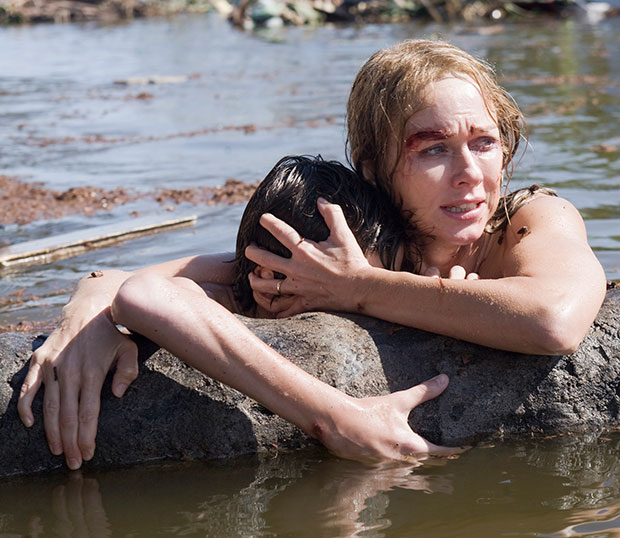
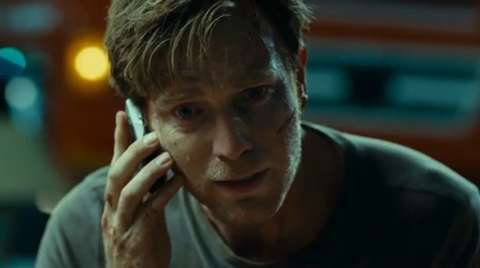
The Impossible could aptly be described as a horror film, following director Juan Antonio Bayona’s The Orphanage – it’s a visceral depiction of a tsunami and its impact on the fragile human body. Watching it I realised I had never actually thought about the sheer force of water, and after I couldn’t help but recall such shallow, romantic depictions of glorious death by tsunami such as Tea Leoni and Maximilian Schell standing on the beach in Deep Impact (1998). The family at the heart of the film are perfunctorily bland – if a little idealised as headed by Ewan McGregor and Naomi Watts – but its clear from the screen time given to the physical ordeals of each member that how the experience affects them, rather than who they were before that’s what really matters. ewan-the-impossibleThe performances are remarkable throughout; particularly that of Watts and Tom Holland – who plays eldest son Lucas – in the early scenes as they fight to survive whilst being carried at great speed by the giant wave. Bayona used a combination of CGI and actual scale models and tanks with gallons of water to create the wave, out of a desire for authenticity. With this in mind, the physical endurance of the actors seems all the more impressive and the result is immersive – a truly cinematic rendering of pure destruction, and one that is often hard to watch. McGregor also impresses as determined father, Henry, providing one of the most heartbreaking phone call scenes I’ve ever seen, beautifully simple in its delivery of a desperate message. Though The Impossible isn’t a film one would rush to see again, the horror is suitably rewarded through the melodrama of the family’s reunion and the chill of what their lives will become as a result of surviving. eastern-promises

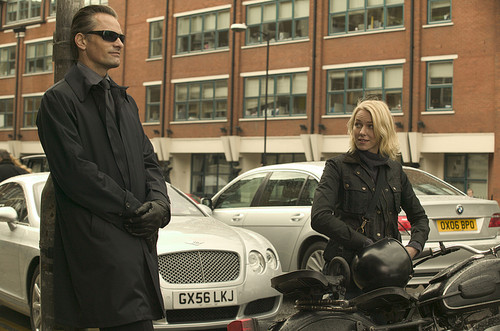
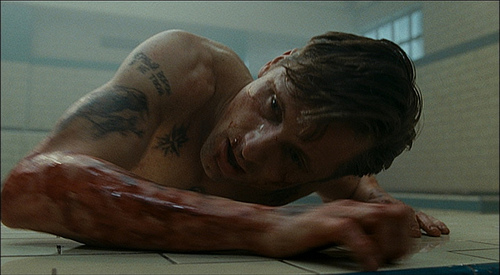
Impressed as I was by Naomi Watts I decided that seeing another of her performances would also provide an excuse (as if I needed it) to finally kick-start catching up with Cronenberg – a director who’s films I haven’t seen enough of. Eastern Promises (2007) is a London set tale of a Russian mob family who unexpectedly pique the interest of nurse, Anna (Watts) when she finds a diary belonging to a teenage Russian girl who dies on her ward during childbirth. Investigating the origins of the girl and a potential family for the baby leads down a dark path towards terribly violent, fiercely loyal and protective criminals. Anna’s interest in the welfare of the child is explained by a hinted at back-story involving a miscarried child, but once established, the complexities of her motivations are underplayed to make room for the more showy role – that of Viggo Mortensen as ‘driver’ Nikolai. Cronenberg’s oft-discussed fascination with the invasion of the body through violent acts is given a memorable treatment in a standout scene involving a naked Mortensen and some standard thugs. Mortensen’s body – his skin decorated with symbolic tattoos; is exposed and vulnerable as he gains more bloody markings fighting for his life. Having only previously seen The Fly, eXitenZ and parts of Rabid, Eastern Promises seemed less hysterical, but no less unnerving and has certainly inspired me to continue with my catch up. Keira-Knightley-Anna-Karenina

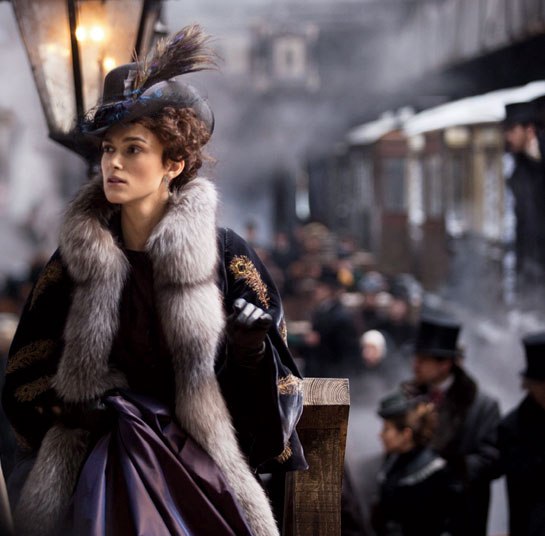
Its awards season, so aside from The Impossible, I was interested to seek out other nominated/winning films and not wanting to fight the crowds for Les Misérables this weekend I opted for Joe Wright’s BAFTA nominated Anna Karenina, in the running for the Outstanding British Film award alongside Skyfall, the aforementioned musical adaptation, Best Exotic Marigold Hotel and Seven Psychopaths. Wright’s adaptation of the classic Tolstoy novel imagines Russian society and its self scrutiny as grand theatre in which the staging moves around the actors, rhythmically creating an atmosphere of high drama played out for its own (and the audiences) entertainment. Once this device is established however, it soon becomes tiresome, not to mention dizzying as the attempt is made to find inventive ways to maintain the aesthetic. Keira Knightly, as Anna is excellent however, demonstrating graceful and engaging emotion that lifts the film out of its theatrical confines. Domhall Gleeson as Levin is also hugely sympathetic – his subplot regarding the guilt of privilege and the anxiety of resolving one’s political and romantic ideologies is perhaps the best thing in the film.

Also watched:

Death Proof, Quentin Tarantino

His Girl Friday, Howard Hawks.

Coming up, Les Misérables, Django Unchained and a continuing catch up with Cronenberg – now won’t that be exciting?!