IFFR 2015: Director Nicolas Steiner’s Above and Below

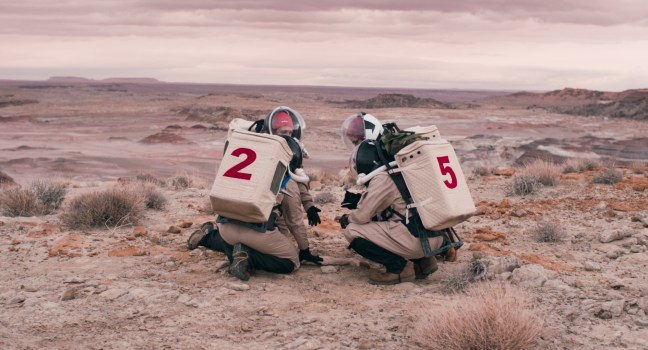
For his second feature film, director Nicolas Steiner set out to discover people hidden from the world. Those who have chosen a life away from the cities and communities – and the luxuries therein – that most ordinary folk take for granted. Above and Below documents the lives of Cindy, Rick, and Lalo who live in the flood tunnels below Las Vegas, David, who lives in a reclaimed military bunker in the Californian desert, and April, a geologist living out a red planet expedition simulation for the Mars-Society. Though each protagonist seems to be wilfully rejecting a normal life, for Steiner, they represent the will to survive that is natural to all of us, and created their own kind of ‘normal’ by which to do this; ‘’It’s amazing how fast a human being attaches to its surroundings and what the formula of three walls and a ceiling can be.’’

What’s striking about Above and Below is how successfully it makes seemingly ignored lives cinematically epic, whilst retaining an intimacy with the protagonists. Shooting wide and employing strategic use of a crane, Steiner and DoP Markus Nestroy convey the scale of the desert, the Mars-like terrain and the Las Vegas skyline, in such a way that the individuals who inhabit these mostly forgotten lands, appear heroic in their choice to live apart from the mainstream. For Steiner, this wide scope was essential to the concept of Above and Below, allowing him to visualise the connections between his star-gazing and tunnel dwelling protagonists. For the most part however, a looser, more spontaneous approach was needed, in order to remain discrete; ‘’we didn’t want to attract too much attention from the “outside” world, because especially in the underground of Las Vegas we were shooting illegally. We were constantly trespassing.’’

Building an intimacy with his subjects was also vital to achieving Steiner’s vision for the film. Before shooting he spent months with each protagonist without the film’s crew, which allowed the director to gain their trust, and whilst filming, this effort to respect their lives remained important; ‘’[During the] shooting period (which was over 2.5 months), we didn’t shoot that much daily, instead we spent a lot of time with them as well. Often times we went down into the tunnels for example, without any equipment. It was more “to hang out” and helping them: driving around, organizing stuff, collecting bottles, trying to help fix Dave’s RV etc. We did what we could to be part of the whole life system within.’’

Such respect and empathy for the subject is what makes Above and Below so effective, allowing for moments in which the protagonists reveal the difficulties that have come from their life choices. For Steiner, this closeness dismantled what he had imagined such hidden lives to involve; ‘’the true story is sometimes so much harder than anything that you could possibly even think of.’’

Originally published in the Daily Tiger, 26 January 2015. Republished with permission from International Film Festival Rotterdam.
IFFR 2015: Interview with Norfolk director, Martin Radich

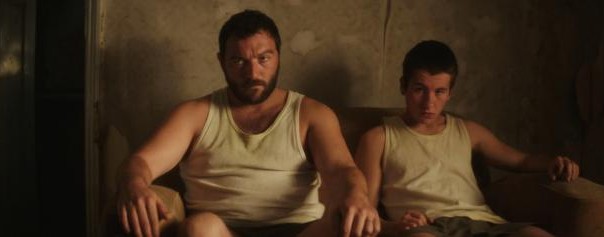
In writer/director Martin Radich’s Norfolk, screening in the Hivos Tiger Awards Competition, a nameless man (Denis Menochet) – a mercenary – lives an almost solitary life in a run-down farm house in the titular region. Aside from his son (played by Barry Keoghan), the only contact he welcomes from the world beyond is through six televisions, arranged on chairs, transmitting the news and entertainment of the day. An apparently self-imposed isolation is explained by way of a dream he describes to his son, the meaning of which seems to be: if we try to help each other, we will hate each other in the end.

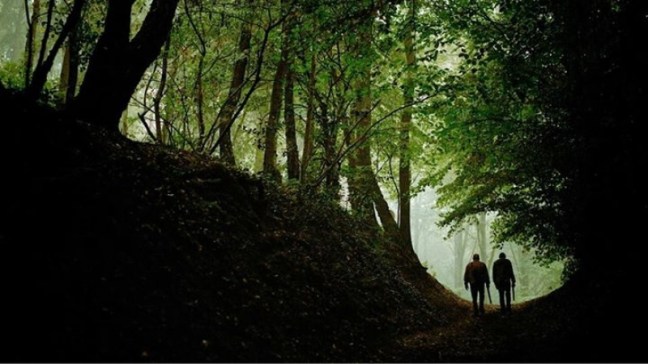
Norfolk’s pessimistic outlook is emphasised by an aesthetic that imbues the English countryside with dread. Using a palette of colours all on the spectrum of gloom and dirt – ochre, brown, impenetrably dark blue – Radich and cinematographer Tim Siddel, present us with a locale that’s neither wholly past nor present. This is a place where loss hangs in the air, the characters seeming to carry their ghosts with them as though hope is a luxury they can’t afford. Having worked extensively as a cinematographer, Radich admits he was perhaps unusually particular about finding the right person to achieve his vision of a timeless Norfolk; ‘’I wanted to find someone who wasn’t part of that London advertising aesthetic… someone who had the same philosophical outlook as me.’’ On working with Siddel, Radich describes it as ‘’a joy’’, the pair utilising in-camera techniques for ethereal soft focus, and a ‘’children’s camera’’ to allow for spontaneity on set. Melding different shooting formats was important in achieving the right texture for the film, says Radich; ‘’If you’re going to be committed to an idea, just commit.’’

At the centre of Norfolk is Menochet’s striking performance as the mercenary tasked with one more kill that will threaten his son’s future happiness. Whilst writing the screenplay, Radich imagined a ritual enacted by the character before he commences his deadly missions. Whilst shooting, the director allowed Menochet to interpret these sequences in whatever way he felt; ‘’we did no rehearsals at all, he just did what he did and it was very, very powerful.’’ Without discussing with Radich the connection he would draw upon for the performance, Menochet’s gesture’s in the resulting scenes evoke a deep, deep rage that the director feels are; ‘’an indication of how dedicated he was to the character.’’

In Norfolk the deadly serious tone is broken by moments of odd humour in the performances that play with the timelessness of the piece as a whole. Despite the mercenary’s economical attitude to communication, punctuated by allegorical lessons and statements about moral relativity, his gravitas is countered by a logical self-awareness on the part of his son, and Keoghan delivers his lines with a straightforward approach that re-situates the action in the present. Radich says this incongruity was essential for the film; ‘’the intention was always to have a bit of humour in this dark place.’’

Originally published in the Daily Tiger, 24 January 2015. Republished with permission from International Film Festival Rotterdam.

IFFR 2015: Interview with Gluckauf director Remy van Heugten

A film that is both about a very specific place, and a universally understood theme, Remy van Heugten’s Gluckauf is as precise about the Dutch province of South Limburg as it is broadly sympathetic regarding family ties. Focusing on Lei (Bart Slegers), father to grown son Jeffrey (Vincent van der Valk), van Heugten and co-writer Gustaaf Peek establish early on that their central pair have long been dependent on each other, and that the roles of parent and child have become interchangeable between father and son. Living in the shadow of his own father’s legacy and feeling the effects of a region abandoned by industry, Lei makes a living day to day, hunting and selling rabbits, whilst Jeffrey prefers to peddle narcotics. When Jeffrey discovers Lei’s debt to landowner Vester (Johan Leysen), he quickly becomes embroiled in darker and darker ways to pay back what is owed.

Screening in the Hivos Tiger Awards Competition at IFFR, Gluckauf showcases van Heugten’s assured and subtle direction, which has extracted a powerful, nuanced performance from Slegers, and a hugely effective sense of place. Having grown up in Limburg, Gluckauf is something of a personal film for the director, who desired to show the contradictions of the region – that despite the ‘’lovely image of Limburg’’ commonly known, the area has suffered greatly from the economic downturn caused by mine closures in the 1960’s, now consistently appearing second only to Amsterdam for high crime rates.

For van Heugten, Lei and Jeffrey are emblematic of a generational dynamic where unemployed men lacked the direction needed to push their own children to find careers. Developed from Peek and van Heugten’s observations and anecdotes about paternal relationships, the director describes Lei as the ‘’immoral father’’ who lacks social skills, whilst Jeffrey, having become a quasi-parent to his own father, has become amoral, such that ‘’he doesn’t know what’s right or wrong.’’ In a pivotal scene in the film, we see just how far Jeffrey has strayed from any sense of a moral code, valuing the acquisition of wealth above all else.

Finding the right actor to convey Lei’s depth of feeling was essential to the success of the film, and for this van Heugten consulted a casting agent with the intention to ‘’find somebody who feels deeply, emotionally invested in the story.’’ Eventually discovering Slegers, the director describes how the actor was intensely connected to the character and could relate Lei to his own life experiences. Slegers commitment to the role is apparent in his raw, natural performance as Lei, showing with skill the way a seemingly child-like father eventually realises the necessity of protecting his son.

With Gluckauf, van Heugten has successfully realised a vision of Limburg that is at once beautiful and barren, where Vester’s country estate – seen gloriously illuminated at sunset – is symbolic of a pastoral life that is now more hell than heaven and the burden of paternal expectation inescapable.

Originally published in the Daily Tiger, 22 January 2015. Re-published here courtesy of International Film Festival Rotterdam.