LOCAL/LOCALE season at EFG: Alluvion and Evergreen

Following last week’s White Coal directed by Georg Tiller, the LOCAL/LOCALE season continues on Sunday 22 November at 7pm with two films by Russian born, London based artist Sasha Litvintseva, Alluvion (2013) and Evergreen (2014). Litvintseva’s films explore the industry, tourism and history of specific places, commenting on the way culture, leisure and work are documented and valued.
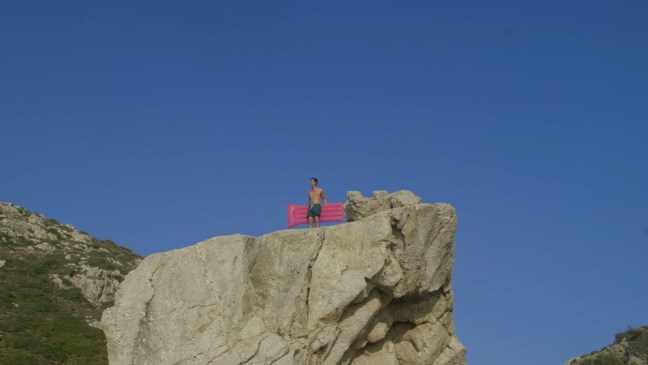
HW favourite_Alluvion Still 3 300
Alluvion

In Alluvion a family holiday at a Turkish coastal resort, taking in skating and gliding activities in between predominantly passive leisure time. Around them the work of shipbuilding and night time entertainment represent a contrast of labour, but it’s their essentialness to Turkey’s culture and economy that Alluvion appears to question.

evergreen still2
Evergreen

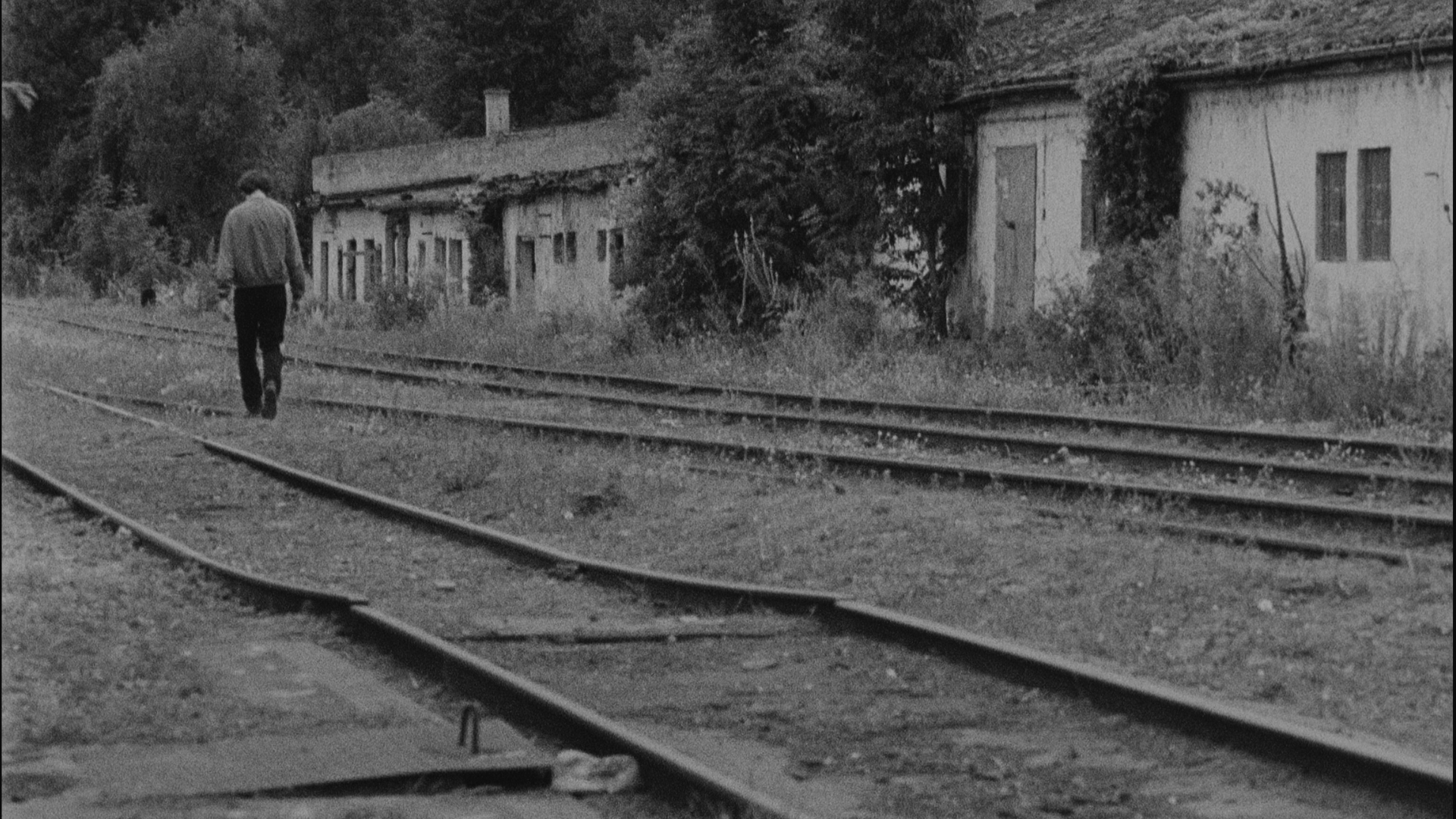
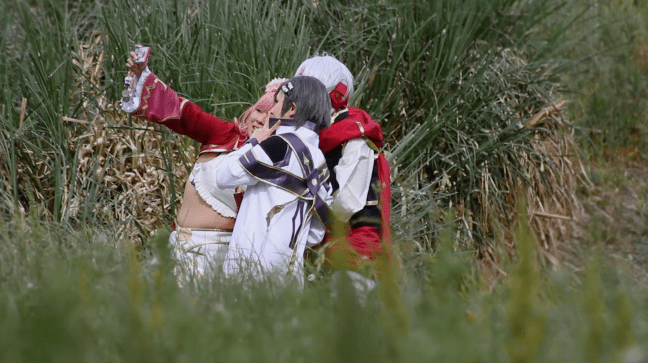
Evergreen meanwhile explores the constructed spaces, abandoned buildings and natural environments of Japan, where an immortal traveller attempts to understand each through their status as spectacle. We see tourists gather around a geiser, the endless unpacking of containers at a port and the image-making of costume players. All well documented by the ever present camera. Litvintseva asks what happens to a civilisation seeking perfection, when perfection means former utopias are replaced; ‘people were unwilling to abandon what they’d committed years of drudgery to acquire.’ Using still shots and soundtracks leaning towards the atmospheric ambient, both Alluvion and Evergreen have a languid pace that underlines the pleasure of looking that their subject references.

Litvintseva’s films have screened at the AC Institute in New York, Wroclaw Biennale and Alchemy Film & Moving Image Festival (among others) and her short film immortality, home and elsewhere (2015) screened as part of the programme Shorts: Secret Corners at the 69th Edinburgh International Film Festival.
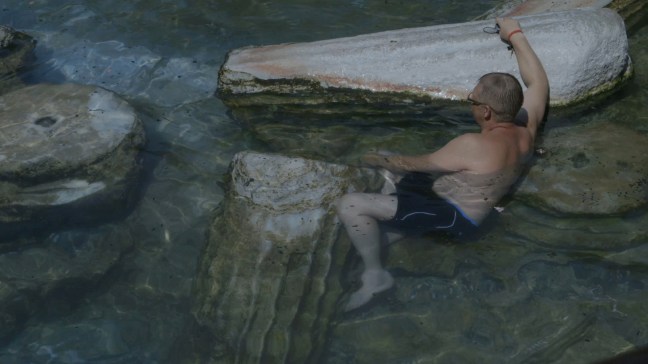
Alluvion still 300
Alluvion

Alluvion and Evergreen continue White Coal’s themes of travel, the unreliability of the image and the documentation of industry, and point towards the following week’s Our Beloved Month of August, a film by Tabu director Miguel Gomes that usurps its own assumptions about documentary.

With three screenings (and four films) left in the season, if you haven’t been able to attend yet, there’s still time to take advantage of the £20 season ticket price. Below is the full run down of the season and you can find more information on the Facebook page here and EFG page here.

Sunday 8 November: MAN OF THE STORY (KATHAPURUSHAN). Adoor Gopalakrishnan/India, Japan/1995/102/Malayalam with English subtitles.

Sunday 15 November: WHITE COAL. Georg Tiller/Austria, Poland, Taiwan/2015/70 min/English and Chinese with English subtitles.

Sunday 22 November: ALLUVION/EVERGREEN. Alluvion/Sasha Litvintseva/UK/2013/31min. Evergreen/Sasha Litvintseva/UK/2014/50 min.

Sunday 29 November: OUR BELOVED MONTH OF AUGUST (AQUELE QUERIDO MES DE AGOSTO) Miguel Gomes/Portugal, France/2008/147 min/Portuguese with English subtitles.

Sunday 6 December: TIRED MOONLIGHT. Britni West/USA/2015/76 min.

Aniston of the week: The Object of My Affection

In week three of Aniston of the Week, we look at another Friends era film. In 2000, the Madonna vehicle, The Next Best Thing (John Slesinger) would present the straight woman and gay man raising a chid scenario, with mainly terrible results, but two years prior, Jennifer Aniston starred alongside Paul Rudd in a superior film on the same subject, directed by The Lady in the Van’s Nicholas Hytner.

Aniston as Nina
Aniston as Nina

FILM: The Object of My Affection
DIRECTOR:
Nicholas Hytner                        
YEAR:
1998
CHARACTER NAME AND PROFESSION:
Nina Borowski, Social Worker
PLOT SUMMARY:
Nina (Aniston), a Brooklyn based Social Worker and George (Rudd) a private school primary teacher meet at the former’s step sister Contance’s (Allison Janney) house after the latter’s success directing the school play. The two become friends and move in together when George’s boyfriend breaks up with him unexpectedly. When Nina falls pregnant by her outspoken boyfriend Vince (John Pankow), she decides she would rather raise the child with George, which causes tension between them, not least of all because her feelings for George are not purely platonic.
CHARACTER TRAITS:
Super, super kind, thoughtful, nurturing, intelligent, optimistic but with low self-esteem.
The-Object-of-My-Affection-jennifer-aniston-665561_500_282NOTES ON PERFORMANCE:
This was perhaps the first film role in which Aniston could be seen in unglamorous mode, as Nina is a low-paid, socially conscious, ‘average’ person. As a result, Aniston is fairly subdued, convincing as someone who would spend their time with Vince, rather than find someone less egregious. She’s restrained and deeply sympathetic during scenes when she bares her heart to George, ultimately giving a very strong, relatable performance.

7142_16_8_1600x900_0NOTES ON FILM: The Object of My Affection, despite the convincing leads, seems to exist in a pretty idealised world. Nina’s community centre is portrayed as the kind of place where sexual health advice given to insecure teens is all that’s required, and the stereotype of the overweight outspoken downstairs neighbour in George and Nina’s building is enough to convince us that they live somewhere ‘real’. A certain awareness of this unreality is indicated by the references to Hollywood musicals, as George and Nina are compared to Gene Kelly and Debbie Reynolds in Singin’ in the Rain in a scene at their lovely community dance class. Everyone in the film seems to believe in the film and gives spirited performances, especially Rudd, and Nigel Hawthorne as the elder professor also experiencing unrequited love. All this contrives to elicit warm fuzzy feelings about the cast and overlook the super sappy happy ending, in which an interracial couple, a gay man, his boyfriend and the biological father all form the core of one sweet little girl called Molly’s family. Hooray!

CONCLUSION: Aniston is adorable.

LOCAL/LOCALE season at EFG: White Coal

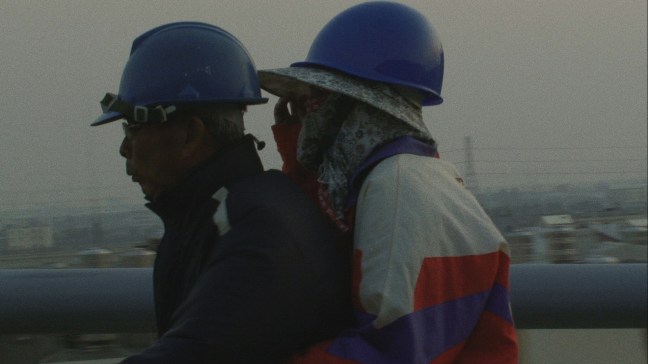
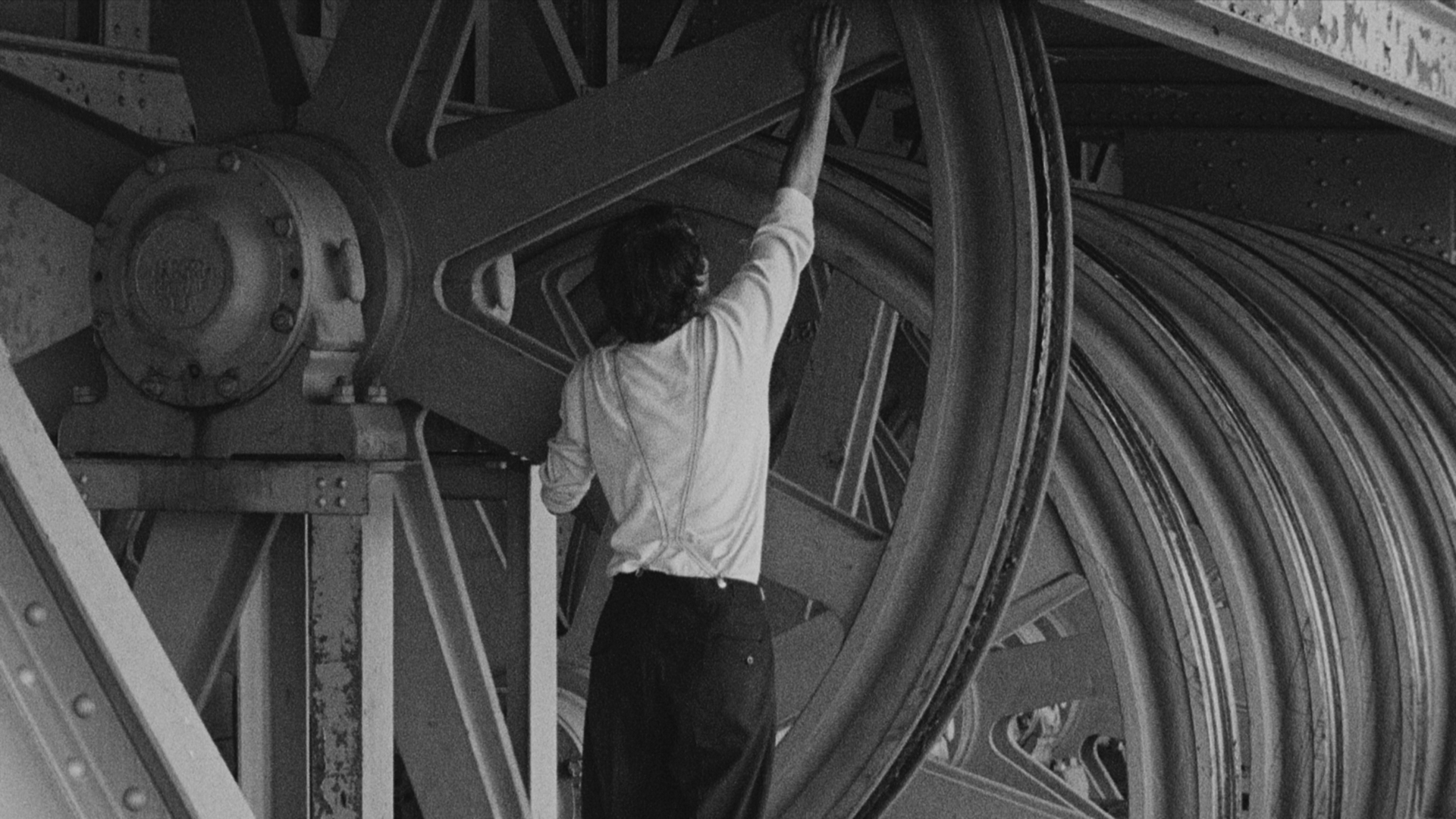
Following season opener, Man of the Story, LOCAL/LOCALE at the Edinburgh Film Guild continues on Sunday 15 November with the UK premiere of Georg Tiller’s White Coal (2015), a semi-fictional ‘document’ of the world’s largest coal-burning power plant in Taichung, Taiwan. Tiller based part of the structure of White Coal on Herman Melville’s novel The Confidence Man, and the film includes scenes, shot in black and white, that follow a figure aboard a Polish transport ship, much like the blind traveller of Melville’s tale. By contrast, the highly meditative scenes of the power plant were shot in colour, and it’s this contrast that is central to Tiller’s theme of factual distortion via image making. FranzwalkingBetterQTiller investigates the common imagery of the worker and industrial work place – huge chimneys, imposing buildings, hard hats, control rooms – and how these tells us something and nothing about the place in which they’re located. Tiller’s intention was for White Coal to have a certain timelessness and refer directly to cinema, as he described in an interview with Olaf Möller; ‘in the Polish part, I wanted to create something like a certain historicity – so playing with images from the history of cinema. Some shots could just as easily have been taken from a 1920s silent film, or from Soviet industrial films. (My Russian editor said the images reminded him of the Georgian cinema of his youth.) Anyway, the point is to historicize everything throughout the entire film, you don‘t know in what era the film takes place, a patina of transience is stuck to everything.’* FranzWhellBetterQThe coal industry may be slowing down in Europe, but elsewhere it’s booming, and White Coal sits well alongside other recent works that have referred to extraction industries, such as Jia Zhangke’s Mountains May Depart (2015), JP Sniadecki’s Yumen (2013) and Wang Bing’s Crude Oil (2008), Coal Money (2009), West of the Tracks (2002) etc. The screening of White Coal also points toward week three of LOCAL/LOCALE and the work of Sasha Litvintseva, who also explores the imagery of industry.

Thinking about the use of colour and black and white, the appearance of the workers, the common motifs and the PR messages heard (which may or may not come from truths), provide a useful way to experience White Coal. It’s a very different film to Man of the Story but has in common with it a use of narrative (albeit much looser) to connect the social and the political.

Below is the full run down of the screenings in the LOCAL/LOCALE season and you can also join the facebook event here. EFG are offering mini-season tickets for £20. More info here.

Sunday 8 November: MAN OF THE STORY (KATHAPURUSHAN). Adoor Gopalakrishnan/India, Japan/1995/102/Malayalam with English subtitles.

Sunday 15 November: WHITE COAL. Georg Tiller/Austria, Poland, Taiwan/2015/70 min/English and Chinese with English subtitles.

Sunday 22 November: ALLUVION/EVERGREEN. Alluvion/Sasha Litvintseva/UK/2013/31min. Evergreen/Sasha Litvintseva/UK/2014/50 min.

Sunday 29 November: OUR BELOVED MONTH OF AUGUST (AQUELE QUERIDO MES DE AGOSTO) Miguel Gomes/Portugal, France/2008/147 min/Portuguese with English subtitles.

Sunday 6 December: TIRED MOONLIGHT. Britni West/USA/2015/76 min.

*Olaf Möller in Conversation with Georg Tiller, Subobscura Films.