Introducing: Aniston of the Week

I like Jennifer Aniston. A lot of people do, and some people are indifferent, I’m sure. Some who know me, may be aware that I’ve been planning to write about Ms Aniston for years now, due to my conviction that she’s one of Hollywood’s most talented actors, yet consistently underrated. Jennifer Aniston has been in some really bad films, and A LOT of useless romantic comedies, and every few years she acts in a ‘serious’ film, and audiences and critics alike rush to praise her performance as if she’s never really performed before. That’s my perception of Jennifer anyway. Apparently, she’s also appeared as the cover star of magazines more than any other actor. People say she has a ‘girl next door’ quality that is key to her appeal. I’m not sure if that’s true, I just think she’s brilliant to watch.

In order to really put this long-held conviction to the test, this week I’m introducing a new column: Aniston of the Week. Every week I’ll report on a different Aniston performance, which will mean viewing some films I’ve seen many times before, some I’m looking forward to and some I have until now avoided (perhaps because they also star Adam Sandler). This viewing will be in no particular order but will commit fully to my Aniston attraction. This week, the mainly lamented and long gestating 2015 Bogdanovich comedy.

FILM: She’s Funny That Way  1384870-thumb-300xauto-1200514
DIRECTOR: Peter Bogdanovich
YEAR: 2015
CHARACTER NAME & PROFESSION: Dr Jane, Therapist
PLOT SUMMARY: Screwball comedy about a call girl named Izzy (Imogen Poots) playing a call girl in a play directed by one of her client’s (Owen Wilson) and written by her therapist’s (Aniston) boyfriend (Will Forte), who’s father (George Morfogen) is a private investigator following Izzy for another of her clients, the obsessed Judge Pendergast (Austin Pendleton). It’s basically a lot of backstage shenanigans.
CHARACTER TRAITS: Dr Jane is confident, assertive, judgemental of her clients and constantly breaking patient-doctor confidentiality.

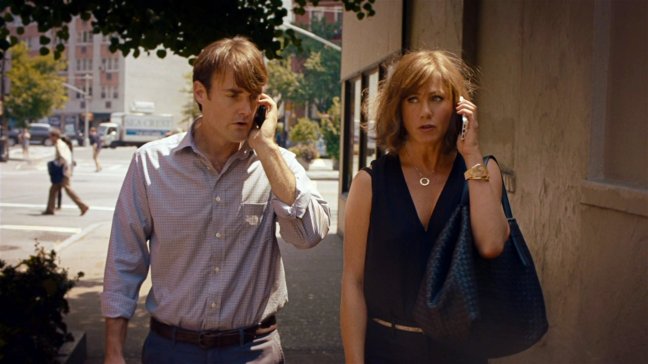
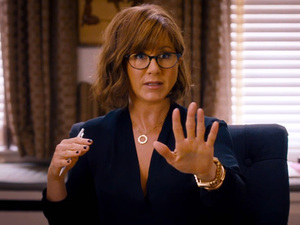
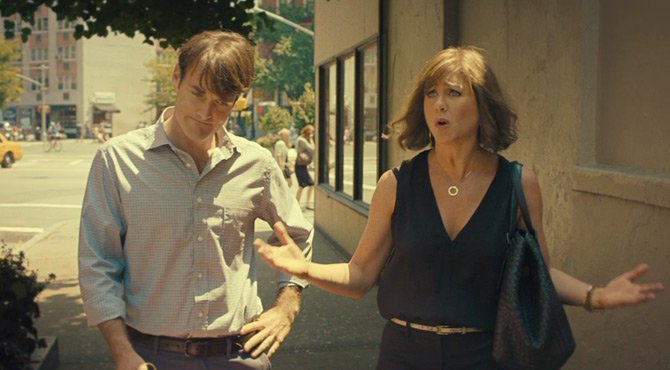
NOTES ON PERFORMANCE: Dr Jane’s character is key to the plot of She’s Funny That Way due to her habit of revealingshes-funny-that-way-dog-walk-clip-m4v-670 one patients problems to another, and Aniston seems to relish her tendency for rawness. She’s introduced having a fight with Forte’s Joshua Fleet on the street, pausing to shout at the annoying potential patient calling her mobile phone out of office hours (that pesky Judge). I particularly liked the line,  “Alright, I’m gonna change my tampon’’, which she says to the old judge while he’s in session with her. It’s a bit clunky – who says that?! But it demonstrates the character’s obliviousness and her self-confidence. Dr Jane doesn’t care what other people think of her, but she does judge them, and this contradiction is what makes her relatable and entertaining. Aniston is assured and controlled, making an (at first) very unlikeable character into the most interesting aspect of the film. While all the other characters slump into exactly the place you expect them to, Dr Jane remains the unpredictable element, seeming to have the most fun.
NOTES ON FILM: From a screenplay Bogdanovich wrote long ago with Louise Stratten, a long time in development and finally supported by Wes Anderson and Noah Baumbach, whose own work demonstrates the influence of Bogdanovich’s earlier output. As a consequence the film has an unconsciously retro feel, and relies on some pretty fantastical plot points. If you love Bogdanovich (Noises Off, What’s Up Doc? The Last Picture Show), you’ll nevertheless appreciate it.

CONCLUSION: Aniston saves the day!
Halloween special part 2: Fear Itself

‘Maybe when we indulge the things that scare us, we stop being victims of fear and become co-conspirators.’

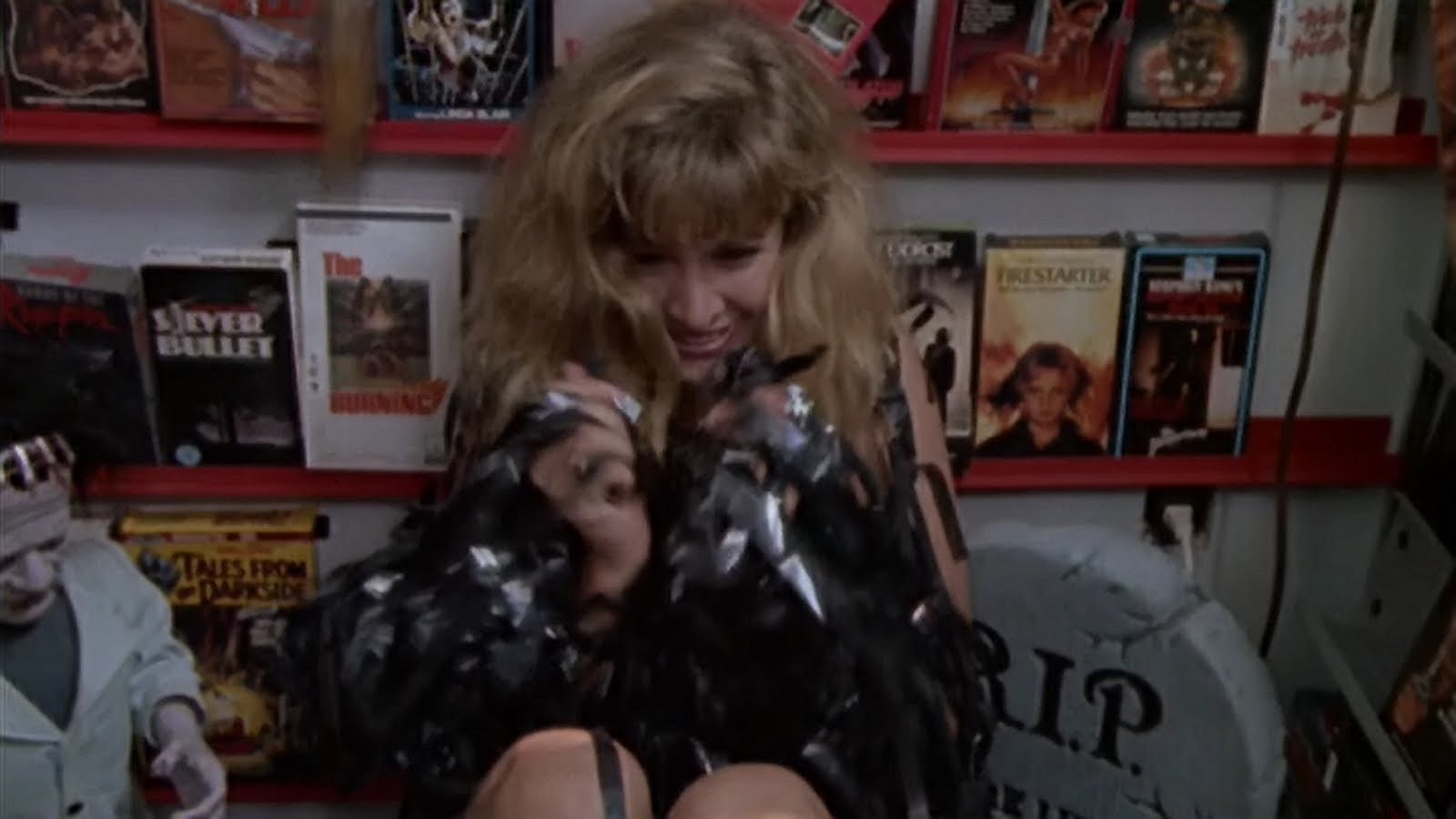
Do we get that control back, when we watch scary films? Is our fear manageable when we’ve volunteered to feel it? Director/writer/editor Charlie Lyne’s latest film, Fear Itself, like Beyond Clueless (2014) before it, takes a film genre – this time the horror film – and examines what draws audiences towards that which scares them. Using dozens of examples, classic (Night of the Hunter) and cult (Tetsuo: The Iron Man) alike to build a picture of the familiar themes and imagery that horror films seem to use endlessly to draw us in.

Lyne’s narrator is a woman grieving and traumatised, suffering nightmares but unable to keep from watching the scary films that then feed back into her subconscious. This narrator introduces the key questions at the core of our relationship with the horror genre, opening with the problem of predictability. Most of the time, we know exactly what is going to happen in a horror film, because we’ve seen the same thing in other horror films countless times before, and yet we allow ourselves to be manipulated.

There's Nothing Out There
There’s Nothing Out There

Lyne looked at this very problem in his previous short film, Copycat, which took the form of an edited conversation between Lyne and filmmaker Rolf Kanefsky, who’s 1991 film There’s Nothing Out There included a character savvy to the tropes of the horror film, who helps his friends to survive an alien attack. Kanefsky’s attempts to get the film wider recognition put him in contact with one Jonathan Craven, leading to his speculation that Scream (1996) and specifically the character Randy Meeks (Jamie Kennedy) might have a little too many similarities to There’s Nothing Out There, to be a coincidence.

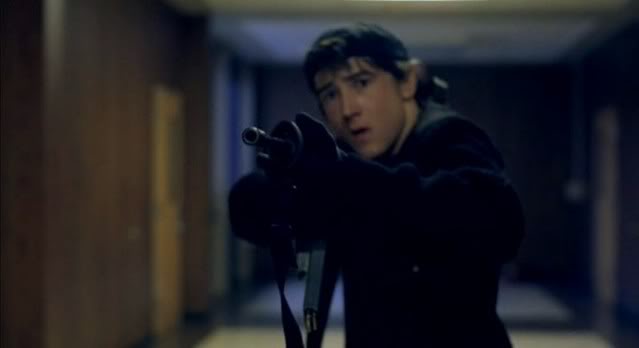
Scream is not one of the films referred to in Fear Itself, but the subject of horror movie clichés and our willingness to be scared is present in the film, though explored in more depth. One concern examined is how horror films relate to real life murder cases, which then become the source for film adaptations. Taking Gus Van Sant’s Elephant as one example, the narrator ponders the much reported on influence that violent films supposedly had on the perpetrators of the Columbine killings, and in turn, the way Van Sant’s film apparently influenced a separate murder by teens in the US. Fear Itself asks us, to what extent do we allow ourselves to be influenced by that which scares us? Was evil present in the soul of the killer before they allowed the imagery of horror films to influence them? Alex_in_ElephantLyne’s film poses questions with a fluidity of thought that appears effortless, moving from Hideo Nakata’s Ringu and our fascination with the unseen, to Elephant through to the frustration of viewing characters in danger, as in Bryan Bertino’s The Strangers and David Robert Mitchell’s It Follows. The result feels like a comprehensive meditation on the attraction of horror films, communicated via Amy E. Watson’s sensitive voice over, as a personal quest for relief from the torment of a death fixation. Lyne makes this investigation into fear and the movies something like a secret we’re being let in on, allowing an indulgence in questions we have no doubt asked ourselves. The catharsis we get from horror films is perhaps wrought from having a figure to project our worst fears onto, as Fear Itself’s narrator suggests; ‘we can’t bear the thought of what humanity might be capable of, so we put it down to evil instead.’

Fear Itself is available to view on BBCiplayer.

Halloween special part one: time to Shine

I used to like asking fellow critics and programmers which famous or ‘important’ films they would admit to having not seen. It was a good game to find out two useful things, 1. If everyone’s view of canonical films is the same and 2. Whether the person I had asked was secure enough in themselves to reveal a gap in their film viewing. One of the last times I asked this question was at a festival, and the group I asked were all men, mainly over the age of forty. Two of them answered happily (Rashomon and The Life and Death of Colonel Blimp were their answers) of the other two, one, after great hesitation chose (to my mind) a lesser known Howard Hawks film, Sergeant York and the other side-stepped the question.

Now, I’ll say happily that I wasn’t aware that Sergeant York was selected for preservation in the United States National Film Registry by the Library of Congress, as a film of significance. I love His Girl Friday, The Big Sleep and Monkey Business, but Sergeant York wasn’t on my radar yet. Clearly it’s not for me to say how essential a film it is compared to Hawks’ other work.

Nevertheless, I had no hesitation to agree that the other films revealed were important, based on my knowledge and experience. What I really learned in this instance was that if you ask film ‘experts’ what an important film is, you’ll get a film ‘expert’ answer. These days it’s easier than ever to see any film you can think of, whenever and wherever you want to, so there’s perhaps less of an excuse for having viewing ‘gaps.’ On the other hand, so many more films are released every week than in the past, and more films than ever are being re-discovered and hailed as greats – it’s impossible to keep up with what’s important now AND the increasing so-called ‘canon.’

Personally, I love that I haven’t seen certain cinematic greats. It means I have them to look forward to, how brilliant! Years ago I took a friend to see a re-release of Casablanca and she’d never seen it before. How jealous I was that her first experience of the film was a beautiful 35mm print at our local arts cinema. nicholson_shiningWould you agree that The Shining is an important film? My associations for it are all references elsewhere: Joey in Friends getting so scared he puts the book in the freezer, Tim and Daisy quoting Jack and Wendy when they view the flat in Spaced; ‘It’s really homey’ and finding identical twins in the closet; ‘it took forever. And ever. And ever.’ Now, in the spirit of watching things backwards, those references all make sense and sadly, I’ve got one more essential film behind me, having finally given in to my fears and watched it. I always thought of myself as someone who is afraid of scary films and have therefore avoided them (I still have Halloween to look forward to, for example). However, I love zombie films, werewolf films and generally any big creature feature, and this passion for monsters has made me reassess my fear threshold. I managed The Conjuring two years ago (albeit by burying myself in my friend’s shoulder), so in the spirit of 31 October, The Shining’s time had come.

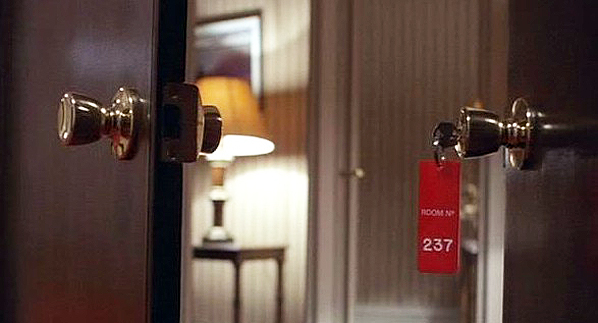
It might now be one of my new favourite films. Scale is one of the film’s great strengths. Kubrick’s rendering of the hotel’s massive interiors, the claustrophobia of the maze, the easy reveals afforded by Danny’s turns about the hotel corridors on his big wheel bike – it all makes so tangible the space the characters inhabit. The soundtrack too, by Wendy Carlos and Rachel Elkind, is just unrelenting in its stretching of tension to the limits. room_237I then watched director Rodney Ascher’s Room 237, a documentary about the myriad hidden meanings that The Shining enthusiasts have found within the film. Contributors include Juli Kearns, who has undertaken a complete shot by shot analysis of the film and created maps for all the interiors of the hotel. Kearns introduces some of the ‘problems’ of The Shining such as the impossible window in the interview scene, and the significance of a Matador poster. Other theories from interviewees include one that posits Kubrick as the director of the ‘faked’ moon landing footage, who used The Shining as a way to subliminally inform his audience of his complicity in its creation and cover up. Ascher uses nifty animated graphics within scene analysis to guide the viewer through each theory of the film, pointing out background details and frame compositions.

Some theories are more persuasive than others, such as the reading of the film as a critique of violence against Native Americans, but in each instance, the enthusiasm of each contributor is infectious. What could be more involving than being let in on secrets about a film and a filmmaker so famously complex? Room 237 is essential viewing for anyone who’s already seen The Shining and now having seen it, I intend to watch Kubrick’s classic again.