Ikarie XB 1: DVD Review

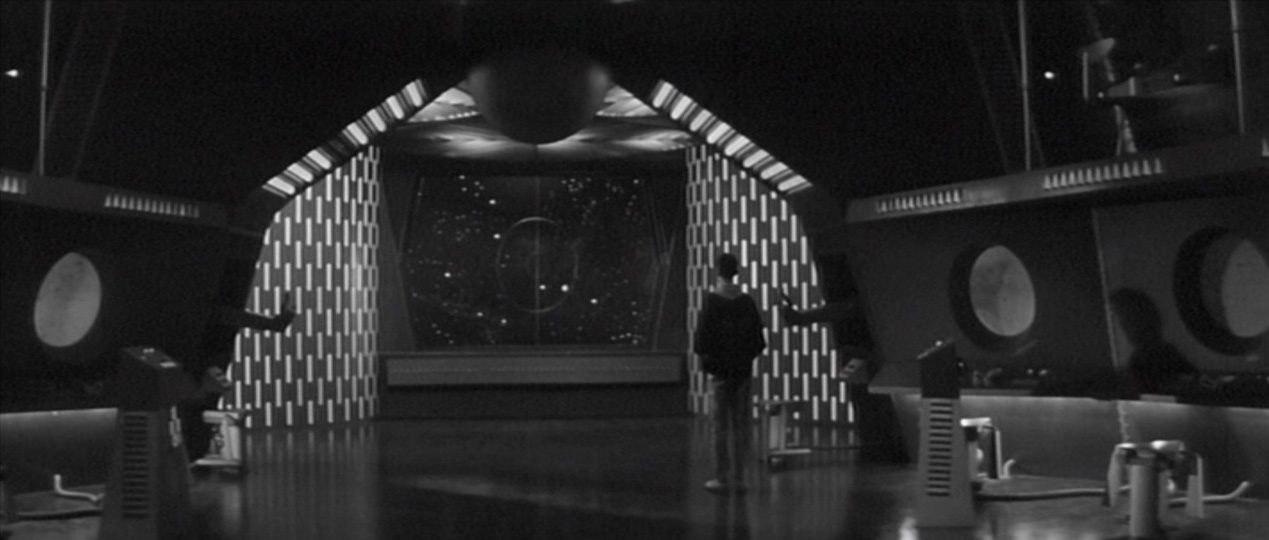
IKARIE_XB1-01In 2163 a crew of intrepid explorers are traveling through space in search of an Earth-like planet. Upon their shoulders rests the hope of the world, a world that will be fifteen years older and wiser by the time they return from deep space. The journey is long, fatigue sets in, but that’s not the only trouble awaiting our heroes in the depths of our solar system.

If the description above sounds familiar, it’s a mark of just how influential director Jindřic Polák’s Ikarie XB 1 (1963) has been, with elements of Star Trek, Star Wars, 2001: A Space Odyssey, and Alien to name just a few iconic films that might spring to mind on first viewing. In fact, the film represents a proliferation of Sci-fi films produced in the late 1950s/early 1960s after the launch of Sputnik by Soviet, East German, Polish and Czech filmmakers, who were unsurprisingly enthusiastic about the genre and its ability to present an optimistic future.
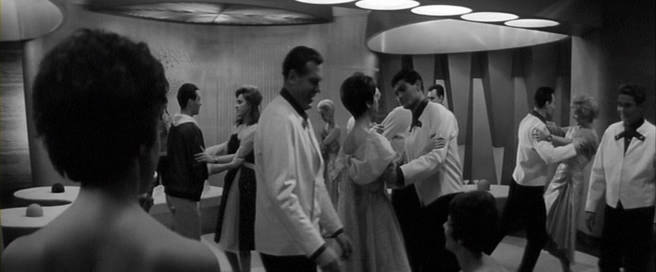
Ikarie-XB1-34519_5Witness the crew emerging from stasis as in Alien, a multicultural, cross generation team as in Star Trek, a ‘friendly’ robot called Patrick much like Forbidden Planet’s Robby (the latter an instance of Ikarie XB 1’s own influences) – but checking off iconic set-pieces and plot points isn’t the only pleasure afforded by this stunning release of a film previously known to western audiences as the overly edited, Voyage to the End of the Universe. There’s much to be enjoyed in the way Polák gives prominence to the quirks of an interstellar lifestyle over the ostensible exploration adventure plot. One scene sees the middle-aged male crew members spy on their younger colleague as he attempts to woo his female counterpart with an artificially grown sunflower, whilst another gives the viewer a rather quaint electro-jazz scored insight to the future of the discotheque, complete with jaunty dance moves.f0094235_4b4c6cf453d00
Shifting to a more contemplative tone when the crew investigate the wreck of another human-inhabited ship, Ikarie XB 1 makes more overt its judgement of 20th century’ explorers (signaled as Western by the presence of English signs and labels on board the damaged ship) and their ultimately destructive investment in nuclear weapons. This sombre discovery prompts discussion of the benefits and drawbacks of their human, and therefore vulnerable crew – better able to navigate the idiosyncrasies of space travel than their robot alternates but exposed to biological dangers.

As usual Second Run have provided some unique features to accompany the DVD; Michael Brooke’s essay details the historical and cultural context surrounding the film’s theatrical release and subsequent censorship by its US distributor, whilst Kim Newman’s video appreciation takes further delight in the aesthetic preoccupations of Czech cinema and Sci-fi of the time.

View and re-view: some thoughts on The Sun in a Net

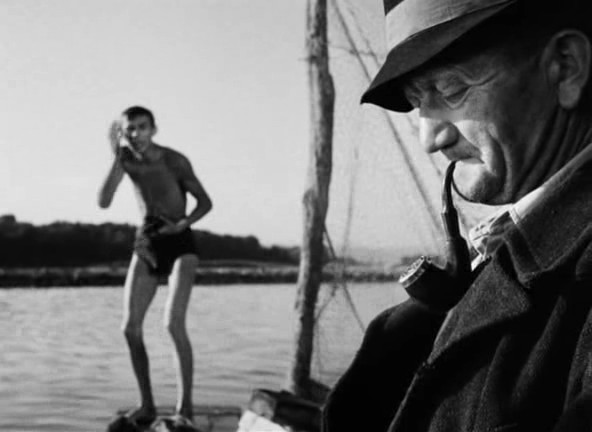
Fayolo (Marián Bielik) is, much like other examples of the cinematic photographer (Blow Up’s David Hemmings springs to mind) introduced as being somewhat distanced from the world around him. Seen in the company of the beautiful Bela (Jana Beláková) he admonishes her, as though her expression of personality runs contrary to the image of her he has created. Like all sensible fifteen year olds who have bigger problems than self-absorbed boys, Bela quickly splits from Fayolo, leaving him to dabble in both physical labour and the arms of the welcoming Jana (Ol’ga Ŝalagová). bscap0025je5Thus is a simple, teen-movie interpretation of The Sun in a Net’s (1962) plot – one omitting to mention the naturalistic portrayal of rural and urban life, family melodrama and expressionistic use of sound and music. Director Štefan Uher was a graduate of the Prague Film School (FAMU) in the mid 1950’s, and his subsequent work is considered key within the Czechoslovak New Wave, primarily The Sun in a Net – his second feature. Here Uher combines a formal vigour and innovative use of sound that is truly remarkable, with the question of what is seen and unseen of vital importance. Not only does the film present a central character who mediates the world through the lens of a camera, but the opening scenes use the drama of an eclipse to frame the initial characterisation – with characters seen using blacked-out glass through which to view the event – whilst Bela’s mother (Stana) – played with sensitivity by Eliška Nosálová – is also blind, relying on a descriptive interpretation of her surroundings, provided by her son and daughter. As the film makes clear, Bela’s mother is rendered doubly blind – both due to her impaired vision, and the modified versions of her environment that her children provide. Mirrors are also key, with both Stana and Bela framed within their reflections, suggesting the distorted image to be more primary than their actual selves.  Alongside this, the rhythmic, almost a-tonal music by Ilja Zeljenka punctuates Uher’s compositions, and a rock and pop soundtrack has a presence in scenes largely via radio transmissions, yet another instance of the medium being just as – (if not more) powerful as that which is heard. bscap0031ei4This focus on what are essentially forms of communication, gives depth and poignancy to a simple tale of teen passions, a tragic marriage and the concerns of the social and working lives of the Slovak people. By giving such prominence to media – the television aerials, the radio, even (to an extent) the narrative of working life Fayolo provides in written form to Bela – Uher presents a distinctly post-modern vision of Slovak life, and one which was clearly too provocative for the authorities at the time, who judged it unsuitable.

Once again Second Run DVD have brought another previously unreleased, yet vital cinematic work to our attention – and might I suggest that it be viewed as a double bill with Andrzej Wajda’s Innocent Sorcerers, made two years earlier in Poland, with no less an infectious and charismatic portrayal of youth, jazz and sex.

Review: Mania Akbari’s One. Two. One

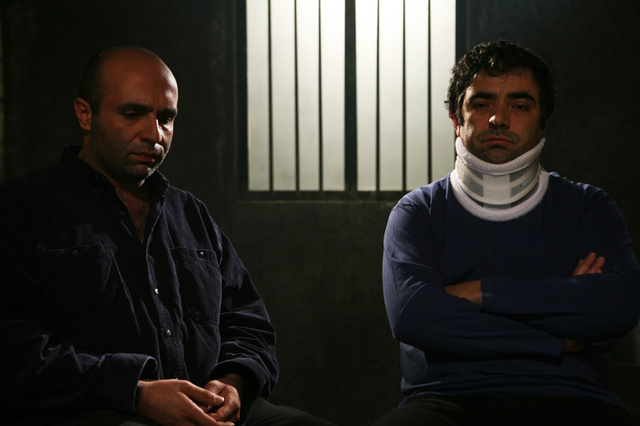
phpThumb_generated_thumbnailjpgAt Edinburgh Film Festival in 2012 I had the pleasure of meeting director Mania Akbari ahead of the European premiere of her film, One. Two. One (Yek. Do. Yek). Mania was polite, charming and possessed of a fiercely intelligent wit – as her beautifully accomplished films demonstrate. During her introduction to One. Two. One, Mania described her fascination with micro expressions – that the smallest facial movement or hair falling across the face could reveal so much about the inner feeling of the character. That One. Two. One is composed of mainly close-ups and two shots attests to this fascination, showing the full extent of each impressive performance, most notably Neda Amiri as central character, Ava. 121sos-300x167
Beginning in a skin therapy clinic where Ava is being treated for facial scars inflicted as the result of an acid attack, the film then consists of a series of conversations between people connected with her and the incident, including her friends, family, lovers, and the man responsible for the attack. Shots are still, with camera movement limited to panning back and forth between characters, oscillating between two points of view that gives gesture central prominence. Ava’s physical disfigurement is not the only damage that has been inflicted on her, as she feels deeply the pressure to hide her imperfection from a society that places a high value on a woman’s beauty. In the clinic her treatment is accompanied by advice and comments from friends, whilst visits to the Psychiatrist and fortune-teller focus on the anxiety of Ava’s dreams. ONE-TWO-ONE_3

In Akbari’s From Tehran to London, another character (also called Ava and played by Neda Amiri) is seen with her husband getting ready in the bathroom, the repetitive gestures of grooming emphasised using close-up in the mirrors’ reflection. Both Ava and her husband, in this scene, tease and taunt each other in a playful prelude to the dramatic fall-out that awaits them. Here, Akbari focuses on female beauty in a film that uses the construct of marriage to examine gender inequalities in Iran. With One. Two. One gender is again explored, but the tone – established by the tightly composed framing and still shots – is more sombre, exploring deeply the psychological implication of attempting to conform to acceptable standards of beauty whilst hiding half of one’s face.

Now exiled from Iran following the making of From Tehran to London (the director fled in fear when members of her crew were arrested), Mania Akbari is the subject of a BFI retrospective that seeks to celebrate the outstanding accomplishments of this most courageous filmmaker. One. Two. One is unexpected pleasure, a moving, considered and important work, that benefits from repeat viewings.