Cinematic delights: My year in film 2012

I prefer not to order films according to a prescribed ‘best’ list and find that, looking back at the year’s viewing – it’s the most memorable that are important. I couldn’t imagine putting them in order as they’ve all drifted in and out of my mind at one time or another, and have equally filled my thoughts with arresting images and sounds. To that end, here are some films that have affected me and I hope they did you, too. film2.widea
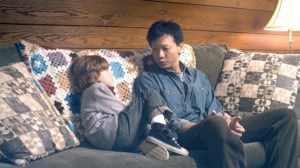
At Glasgow Film Festival in February I had the pleasure of seeing Patrick Wang’s In the Family, an epic melodrama about a one half of a couple, Joey (Wang) struggling to affirm his place in stepson, Chip’s life when his biological father suddenly dies. Wang’s languid pace and attention to detail gradually allows an intimacy with the characters, supported by wonderfully natural performances and dialogue. It all adds up to an un-showy, Capra-esq last act that rewards the viewer tenfold. twoyearsatsea

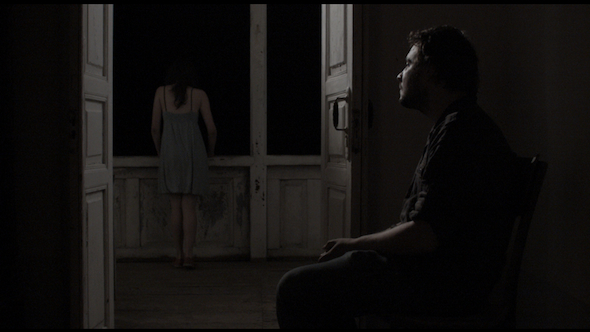
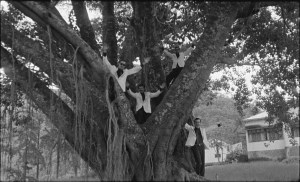
Two Years at Sea was a gorgeous, skillful portrait of Jake, the Aberdeenshire hermit that managed to play with the expectations one might have of a solitary soul. Ben Rivers black and white film spends plenty of time on Jake’s daily routine, but his camera’s presence is the clue to just how ‘real’ or ‘true’ this depiction is, and even manages a tree-house related magic trick too. That this 16mm delight was developed in a sink only adds to it charm. 6a00d8341c630a53ef0154363a61ea970c-600wi
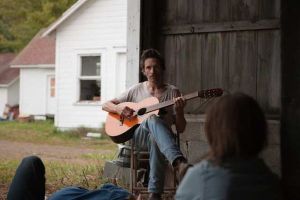
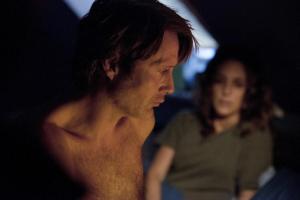
Martha Marcy May Marlene directed by Sean Durkin is responsible for some of the most arresting images to permeate my thoughts – not least of all the excellent John Hawkes singing sweetly, enchanting his young followers.

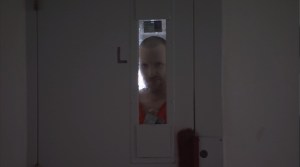
This, and Amy Seimetz’ Sun Don’t Shine – a couple-on the run thriller that used harsh daylight to evoke claustrophobia akin to a daylight noir – were perhaps the US independent films that impressed most (and that’s in the sun dont shineyear that brought us Beasts of the Southern Wild – supposedly the saviour of the American indie).

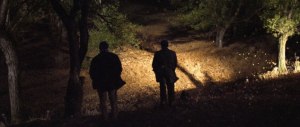
Barbara was simply an excellent narrative film, a hugely rewarding drama that managed to surprise and beguile me. It almost goes without saying that Amour and The Master were stand-out auteur works so I won’t say anymore, other than if you’re put off by their heaps of praise, don’t be. For me, the big, epic of the year was Once Upon a Time in Anatolia from Climates director Nuri Bilge Ceylaonce-upon-a-stilln. Ostensibly a police procedural – the search for a body in a landscape only penetrated by car headlights – this was morality and myth on screen that I frequently misremember as a 1940’s Renoir ballad of humanity. I sincerely hope it gets more outings on the big screen. Kosmos by Reha Erdem also deserves a mention for being another example of fine Turkish cinema. Here_Then1-533x300
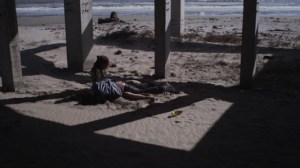
I was delighted to be able to see Maria Saakyan’s new film, I’m Going to Change My Name at London Film Festival. As a follow up to her feature debut, The Lighthouse (2006), this tale of a young girl’s identity crisis represented online space more fluently and sensitively than the crass Catfish and suggested that if Saakyan continues to develop with such originality, we are in for some very exciting films indeed. Another excellent depiction of youth and longing was Mao Mao’s Here, Then which screened at Edinburgh International Film Festival and won the Award for Best International Feature Film. Using long takes and crisp cinematography, masterfully handled by DoP Liu Ai Guo, Mao Mao’s film manages to weave connections between his seemingly unrelated protagonists and create a ponderous space in which to consider their action/inaction. *** Local Caption *** Museum Hours, , Jem Cohen, A/USA, 2012, V'12, Spielfilme
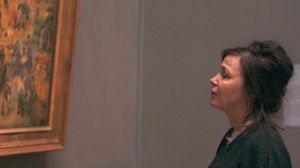
A beautiful, very special film for me this year was Jem Cohen’s Museum Hours starring the enigmatic Mary Margaret O’Hara as a visitor in Vienna who befriends a guard at the Kunsthistorisches Art Museum. Cohen’s sensitivity towards his characters and obvious ease with which his actors perform makes for a naturalistic musing on friendship, art and communication. A more ‘Hollywood’ take on the subject might see this unlikely pair romantically involved but Cohen prioritises the subtleties and awkwardness of newfound connection – much like the detail in Breugels paintings, so delicately discussed in the film. The result is a highly engaging, honest and relatable depiction of contemporary relationships. Tabu
2012 will always be the year I discovered Miguel Gomes and I couldn’t possible write of the most memorable without mention of his masterpiece, Tabu. I don’t think I can remember a recent film that has brought me so much joy to watch, or to think about afterward. To have made such a funny, heartbreaking and fiercely intelligent film means that I will never be shy of heaping praise on Mr Gomes, and eagerly anticipating what he will do next.

Honourable mentions must go to the following, which were just as thoughtful, funny, enjoyable or intelligent as those mentioned above, but who’s drawn out appraisal I will save you from here.

Shame. Steve McQueen.

Mitsuko Delivers, Yûya Ishii.

The Muppets, James Bobin.

Avengers Assemble, Joss Whedon.

Marina Abramovic: The Artist Is Present, Matthew Akers, Jeff Dupre.

The Myth of the American Sleepover, David Robert Mitchell.

Berberian Sound Studio, Peter Strickland.

Since publication Sun Don’t Shine has been picked up for distribution by Factory 25 – not sure if it’ll come to the UK but look out for it, whether its in cinemas, DVD or online – its worth it!
My week in film: Keep the Lights On, The Girl, Jennifer’s Body and an assortment of fairytales.

The festive week’s film viewing, rather than including the usual Christmas fare (I didn’t even manage to watch A Muppet Christmas Carol!) for the most part; either reinforced exactly the same ‘magical’ feeling that Christmas is supposed to be about – only in fairytale form or; centred around issues of female identity and gender stereotyping – depending on which way you look at it.  JENNIFERS-BODY-photos-lesbi

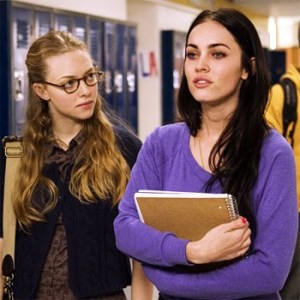
On Christmas eve whilst many round the country were at midnight mass, I was thoroughly enjoying Jennifer’s Body (2009), the Megan Fox starring high-school horror/comedy in which Mean Girls’ Amanda Seyfried dons spectacles to play the titular cheerleaders’ BFF. Diablo Cody’s witty screenplay and Karyn Kusama’s thoughtful direction combine to produce a hugely enjoyable critique of the female teen experience. Not to mention a nice satire of the ubiquity of US indie rock bands. A comment about the myth of PMS comes to take on new meaning when Jennifer (Fox) is possessed by a blood-hungry devil, who – when not satisfied – reduces her appearance to dank hair and pallid skin; or does this ‘beauty’ simply look like every other teenage girl at their ‘time of the month’. Needy (Seyfried) must then find a way to stop Jennifer’s murderous rampage, whilst keeping the friendship intact (or not). Rather than a will-they won’t-they love story, Jennifer’s Body puts female friendship at stake and refreshingly examines loyalty across presumed social barriers. It’s also very funny indeed. Giselle-enchanted-1992210-1024-768

Next up – fairytales and parody in Tangled (2010), Enchanted (2007) and Sleepless in Seattle (1993) – the latter being a film I’ve seen more times than I care to mention. Tangled on release followed The Princess and the Frog (2009) in being a fairytale princess tale harking back to the times of Snow White and Cinderella, but with the twist that their heroines are more autonomous and quit-witted than previous incarnations of the Disney female. Tangled’s Rapunzel may be surrounded by fairytale archetypes such as the mean witch/mother who won’t let her out of her tower but she determinedly breaks out of her comfort zone to pursue her own goal.

sleepless-in-seattle-meg-ryan

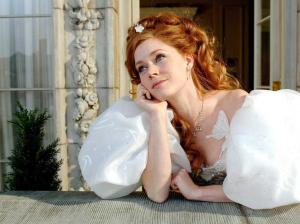
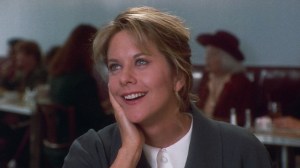
Likewise, in Enchanted, Giselle – having been pushed out of fairytale land Andalasia and into Manhattan – ends up fighting the evil queen to save the man she loves, rather than marry the traditional prince with whom she is supposed to share true loves’ kiss. In Sleepless in Seattle, Meg Ryan’s Annie fantasises that a man she has never met could be ‘the man of her dreams’ and we, the audience are complicit in the fantasy as Nora Ephron’s sweet and clever film persuades us of the couple’s compatibility with a huge bucket of charm. Believing in a fairytale, whether you’re aware of it or not is a simple part of life, apparently. In my festive line up of fantasy females though, I think Jennifer and Needy win.

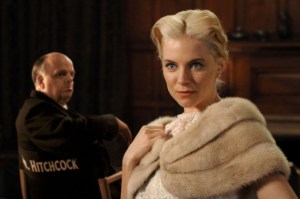
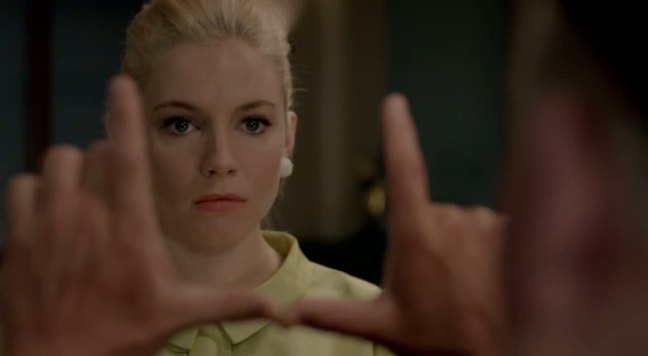
the-girl-ay_99779624HBO/BBC’s The Girl also dealt with female autonomy and male sexual fantasy whereby the fairytale of Hollywood stardom comes with a heavy price.  Sienna Miller and Toby Jones portrayed Tippi Hedren and Alfred Hitchcock during the making of the legendary directors iconic films, The Birds (1963) and Marnie (1964) and Hitch is shown to have manipulated his star, sexually harassed her and put her under physical and emotional distress. Based on interviews with Hedren and members of Hitchcock’s crew, Gwyneth Hughes and Donald Spoto’s screenplay nevertheless makes it hard not to question the veracity of the events portrayed, as Hitch comes off as a sleazy, impotent creep, an image contrary to the loveable, black-humoured national treasure he is considered by many to be. Indeed it has been reported that Hitchcock’s former crew have spoken out about his portrayal in The Girl claiming that he has been misrepresented. Truth or fiction aside, the level of period detail and recreation of film sets and locations is a singular achievement and Miller and Jones both perform with conviction and authentic emotion.

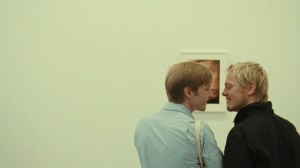
2_e_Ira-Sachs-_Keep-the-Lights-OnGetting back to the cinema I was thrilled to see Keep the Lights On by Ira Sachs. Unfortunately I hadn’t managed to avoid the praise for this film (I like to keep an open mind) but nevertheless it proved to be an intelligent and mature approach to a contemporary romance about a couple, one half of which is struggling with drug addiction. Thure Lindhardt as Erik was a luminous, enchanting presence on screen and well matched by Zachary Booth as his troubled boyfriend, Paul. That it was shot on super 16 film not only renders the whole film completely gorgeous but lends the aesthetic a romantic feel and grounds the form in line with its protagonists profession as a filmmaker – cinematographic warmth translates to deep affection for the characters, indicating a very personal story. The use of Arthur Russell on the soundtrack is also an excellent element that coheres with the emotion of the screenplay demonstrating a freshness that saves it from sentimentality.

Coming soon, my most memorable – rather than best of – 2012 and a list of those I’d rather forget.


My (two) weeks in film: The Hunt, Alps, The House I Live In and some festive fare

Pre-Christmas deadlines have kept me from my regular writing routine so this week’s reviews are somewhat abridged. The Hunt - main imageThomas Vinterberg’s The Hunt (2012)was tense, invigorating filmmaking that employed a rewarding, and steady pace and showcased a sympathetic, subtle performance by Mads Mikkelsen. Less about fighting a false accusation, than recovering from it, The Hunt tackled issues of child abuse and close-knit communities with humour and a lack of sensationalism that proved engaging viewing.

Alps (2012)by Dogtooth director Giorgos Lanthimos proves that it is possible to make a film more opaque than the latter – and happily demands an involved, inquisitive audience. 13ALPS_SPAN-articleLargeClearly accomplished filmmaking and an important political and social critique of contemporary Greece, nonetheless it would be a stretch to suggest that Lanthimos’ film is enjoyable per se, rather that its playful way with language and blurring of fiction/reality represents an intelligent and vigorous talent.

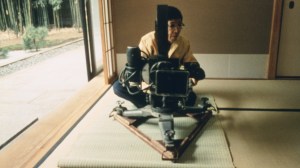
tokyo-gaorigTokyo-Ga (1985)was a suitable film to watch in the week that saw the anniversary of the birth of legendary director Yasujirô Ozu. Wim Wenders’ ode to the director of over fifty features including much loved Tokyo Story attempts to discover if anything recognisable from the humanity of Ozu’s oeuvre is present in modern Tokyo. Training his camera on fascinating practices such as the creation of wax replicas of restaurant menu options or Americana loving teens, Wenders also tenderly interviews Ozu’s leading man; Chishû Ryû and cinematographer; Yûharu Atsuta – who dedicated his whole career to assisting the great director, and since his death in 1963 laments being unable to find work as satisfying as that with his former colleague.

TheHouseILiveInDocumentary The House I Live In by director Eugene Jarecki combines personal experience with testimonies from professionals related to illegal drugs and their effects; including those from policing, law, imprisonment, psychology, history, media and politics – all of whom tend to support the argument that the War on Drugs has been a failure. Jarecki’s thoughtful voiceover connects persuasively the accounts of said contributors with the first-hand experiences of convicted men and women – predominantly African American – most of whom have been subjected to harsh minimum sentence rulings. This is a first class combination of investigative fervour and thorough, sensitive filmmaking.

The-Return-of-the-King-Sam-saves-dayPrior to seeing The Hobbit – which I’m sure I’ll get round to at some point – I decided to re-watch the Lord of the Rings trilogy and was delighted to find that the films are just as enjoyable ten years later. Fellowship grips on to you gloriously and demands you hold on through each passionately detailed set piece that follows in the two subsequent epics.


Other viewing took on a festive theme (of sorts): if it wasn’t Christmas itself, the presence of snow was enough to satisfy.

The Chronicles of Narnia: The Lion, the Witch and the Wardrobe, Andrew Adamson (2005).

Harry Potter and the Half-Blood Prince, David Yates(2009)

Miracle on 34th Street, Les Mayfield (1994)

Wonder Boys, Curtis Hanson (2000)

Coming up – my best (and worst) lists for 2012 with the promise not to repeat the dozens already widely celebrated and berated.