My week in film: Carol, Sunset Song and more…

As the red curtains are soon to close on 2015, the impetus to catch up on films I’ve missed has set in. It’s also the time for ‘Best of’ lists and for my part I’ve already contributed to one – in early November I was asked to select my ‘preferred five films’ of 2015 for Sight & Sound magazine’s annual poll. Since then I’ve seen more that I would have included, but luckily the CineVue top ten will be revealed later this month, so those missed in S&S will get their chance. Of those in Sight & Sound’s top ten, I’ve seen eight (though only if you count joint eleventh position) but not their number one film, Hou Hsiao-Hsien’s The Assassin and only one is in my top five, David Robert Mitchell’s It Follows. You can read my full list and rationale behind my selection here.

carol-cannes-film-festival-3
Rooney Mara as Therese and Cate Blanchett as Carol

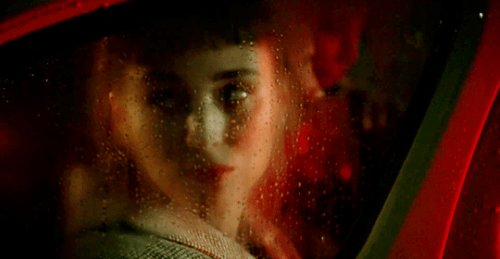
At the cinema meanwhile, there’s also been plenty to see. Todd Hayne’s Carol, starring Cate Blanchett in the eponymous role and Rooney Mara as shop clerk Therese, who fall in love in 1950’s New York, is perhaps one of the most accomplished and affecting works of cinema I’ve ever seen. Adapted by Phyllis Nagy from the 1953 novel The Price of Salt by Patricia Highsmith and shot on Super 16mm, Haynes has created a film so utterly glorious it’s hard to know where to begin praising it. Instead I’ll attempt to recall those moments that moved me so acutely. Both performances by Mara and Blanchett are fantastic. Blanchett demonstrates that Carol is first of all a mother, dedicated to her daughter Rindy (Sadie and Kk Heim) and possessed of a will strong enough to know that abandoning her identity would be more damaging than partial custody of Rindy. At the same time, her chemistry with Mara is palpable, showing their instant attraction and developing tenderness for one another.
tumblr_nt8yfqiI4w1u81qoro3_r1_500
Rooney Mara

Mara as Therese reveals the agony – frequently internalised – of having no name for what she’s feeling, but becoming aware that her lack of investment in her heteronormative life might have an explanation that she can share with someone else. Carol shifts its narrative focus between Therese and Carol, demonstrating how they both experience a questioning of their identity, struggling with, by turns, the reconciliation of being a mother, but not a wife, or where one’s allies and friends might really lie. As with Far From Heaven (2002) Haynes recreates the 1950s’ period with a cinematic nostalgia that nods to the work of Douglas Sirk and the paintings of Edward Hopper and has even been open about stealing the opening scene’s set up from David Lean’s Brief Encounter (1945), where a hand on a shoulder is the only expression of affection permissible in public. The film’s identity theme is also expressed in the use of reflections, as the characters gaze into mirrors, or are seen through rain-soaked glass, or a camera’s lens. Here, love is about how one identifies not only with one’s lover, but with the image of oneself.
sunsetsong4-xlarge
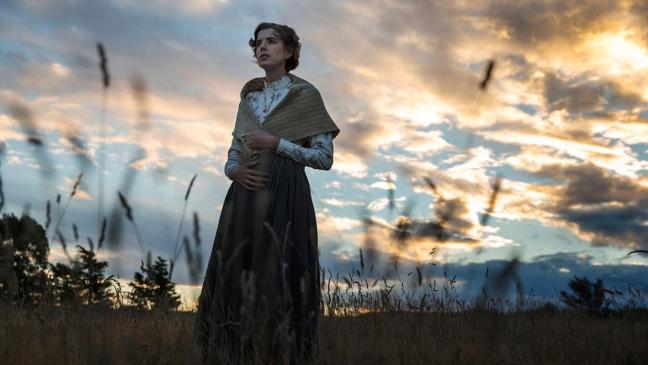
Agyness Deyn as Chris in Sunset Song

Also at the cinema, I rushed to see Terence Davies long-gestating adaptation of Lewis Grassic Gibbon’s 1932 novel, Sunset Song. Set in the years just before WWI, the film tells the story of Chris (Agyness Deyn), a young woman who lives with her family on their farm in rural Aberdeenshire. Throughout Sunset Song, Chris’s coming to terms with her own autonomy, her own desires and the responsibilities of motherhood allow Deyn the opportunity for a spirited and sensitive performance. Chris’s changes as a woman are compared to the mutability of the seasons, and cinematographer Michael McDonough’s choice of 65mm for the exterior scenes celebrate the drama and beauty of the landscape. Much like Davies’ Distant Voices, Still Lives (1988), an overbearing father is again a central element, yet the revelatory use of nature, opens up Sunset Song to a make it more than a set of explored themes for the director.

elisabeth-moss-listen-up-philip
Elizabeth Moss as Ashley in Listen Up Philip

Other films viewed in an effort to ‘catch up’ include Olivier Assayas’ Clouds of Sils Maria, in which a luminous Juliette Binoche plays an actor facing up to aging, role reversal and the ‘truths’ of performance alongside a fantastic Kristen Stewart. A Pigeon Sat on a Bench Reflecting on Existence was the latest from Roy Andersson this year, which again follows Songs From the Second Floor (2000) and You, the Living (2007), in depicting the inherent tragi-comedy of modern life. I also checked out Listen Up Philip by Alex Ross Perry, a comedy about a total bastard novelist ‘struggling’ with success. The film says very little of any originality about the torment of creativity, but it does take an interesting route by spending almost as much time with Philip’s (Jason Schwartzman) ex, Ashley (Elizabeth Moss), and her development into a single person again contains some very thoughtful moments, not to mention a stunning performance by Moss
Announcing a mini film season: LOCAL/LOCALE

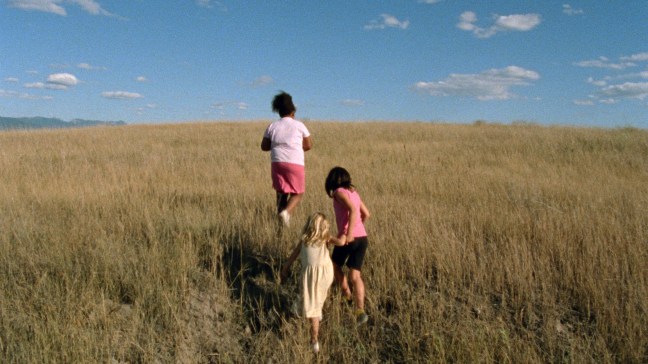
Starting next month on Sunday 8 November, the Edinburgh Film Guild will be host to a mini season of film’s I’ve programmed around themes of location, community and industry. The season will showcase examples of cinema that dissolves the divide between documentary and fiction and offer in turn, intelligent, beautiful and humorous comments on the human condition.

Each film is one that’s provoked thoughts in me about the diversity of human experiences that I might only ever encounter through cinema. In the ways that each film uses narrative and documentary to reveal their subjects, they allow us to question the authenticity of the experience that we’re witnessing. How much is ‘real’ and how much is an embellishment?

In the coming weeks I’ll post more details about the films in the programme, but this is just a small teaser of what’s to come. More info here at the Edinburgh Film Guild’s site.

Sunday 8 November: MAN OF THE STORY (KATHAPURUSHAN). Adoor Gopalakrishnan/India, Japan/1995/102/Malayalam with English subtitles.

Sunday 15 November: WHITE COAL. Georg Tiller/Austria, Poland, Taiwan/2015/70 min/English and Chinese with English subtitles.

Sunday 22 November: ALLUVION/EVERGREEN. Alluvion/Sasha Litvintseva/UK/2013/31min. Evergreen/Sasha Litvintseva/UK/2014/50 min.

Sunday 29 November: OUR BELOVED MONTH OF AUGUST (AQUELE QUERIDO MES DE AGOSTO) Miguel Gomes/Portugal, France/2008/147 min/Portuguese with English subtitles.

Sunday 6 December: TIRED MOONLIGHT. Britni West/USA/2015/76 min.

Also: Film journal update. Viewed two brilliant detective/serial killer films: David Fincher’s The Girl with the Dragon Tatoo and Michael Mann’s Manhunter

DVD Review: Independencia

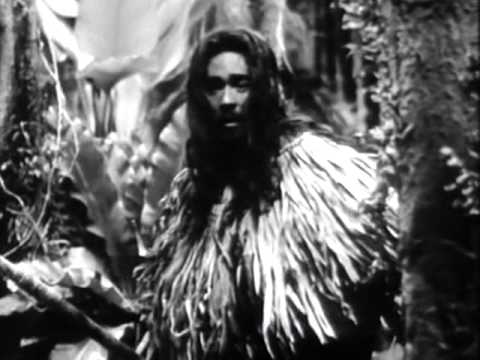
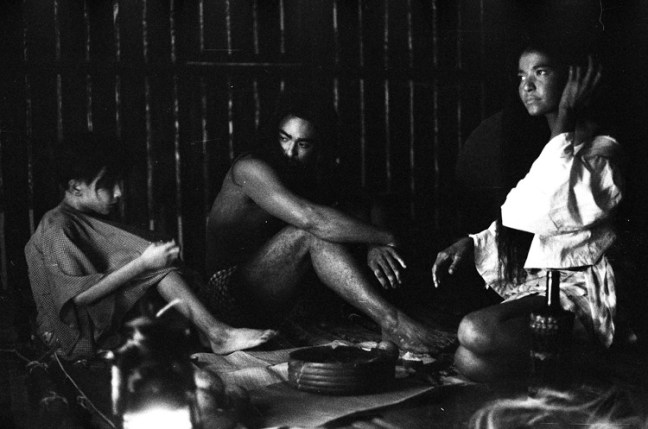
A film harking back to the days of early cinema. The black and white flicker of 35mm grain softening expertly lit scenes, in which actors perform in period costume on a sound stage. Independencia (2009) creates both an obvious artificiality, and an authentic nostalgia. Developed through the Résidence du Festival de Cannes in 2008 Raya Martin’s exquisite film positions a history of Philippine autonomy – or lack thereof – alongside a history of cinema, presenting a fable of familial survival as an image as questionable as that of propagandist ethnographic ‘news’.

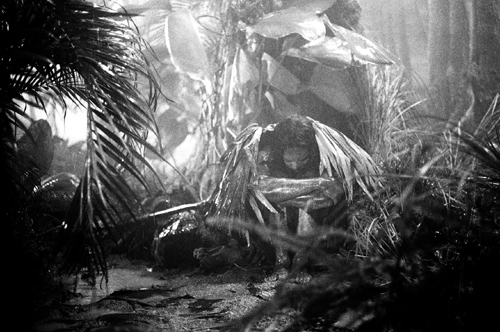
independencia-foto2-560x372Set at the outset of the invasion by US forces in the Philippines in the early 20th century, a mother (Tetchie Agbayani) and adult son (Sid Lucero) escape to the jungle to begin a new life. Eventually the son discovers a lone, pregnant woman in the jungle too (Alessandra de Rossi), and as time passes, the trio changes from a mother, son and ‘daughter’ of sorts, to a mother and father and young son. Learning to hunt for survival is the first struggle to overcome, and the son’s transformation from a naïve but enthusiastic adventurer to a skilled hunter and father is signalled both by Lucero’s performance, which gradually becomes more assured in his environment, and by a closer physical assimilation with the forest. indendencia_3

Martin’s overall aesthetic is one of a highly sensitive attention to detail, as, though it is obvious from the start that the environments are fabricated, the painted backdrops are but one element of the cinematic world Independencia consists of. Ronald de Asis’ and Arnel Labayo’s sound design evokes the claustrophobic heat of a dense, rural habitat, whilst Digo Ricio’s production brings the natural world to life through authentic sets that include the presence of birds and smaller animals. Lutgardo Labad’s pastoral score provides an underlying romantic melancholy, which, combined with Jeanne Lapoirie’s charcoal toned cinematography, results in a film that seems to encase its characters in the image that it presents; they move from one lush forest scene to another, as though within an unending, unambiguously cinematic loop. Though they have come to the jungle to for freedom, their boundaries are just as limited as those who remained in the town, and are defined by the film’s own construction. independencia_1

Martin therefore addresses an undoubtedly emotive imagining of history, entrenched with a pessimism represented by the futile ambition of his characters whose ostensible escape from white oppression is inevitably threatened. This is pre-colonialism presented from the perspective of the post-colonial individual, who, in his own words ‘portrays an alternative resistance of the times, one that moves away from a history of armed struggle and delves deeper into the opposition of forces, a survival of human existence and a liberation of the true Filipino identity.’

Alongside the new, beautiful digital transfer of the film that Second Run have released is a new short film, Track Projections by Raya Martin, which flips the image of a digitally shot, rolling landscape from a train window on its side, thereby making the image akin to the cinematic reel, abstracting the reflection in what might be considered a reference to Stan Brakhage, who the director has previously cited as an influence. This new short again demonstrates the director’s concern with the meaning of cinema – made most explicitly in his recent collaboration with Mark Peranson, La última pelicula (2013) – and the particularity of the filmic image in the digital age.