My week in film: Frank, The Passion of Joan of Arc, Scarface and more…

Frank-Sidebottom-film-still-770This week Frank by director Lenny Abrahamson surprised me in its sincere depiction of troubled band Soronprfbs and their enigmatic front man, played by Michael Fassbender. Co-written by Jon Ronson and adapted from his own book about his experiences as the keyboard player for Frank Sidebottom’s band in the 1980s, Frank sees Jon (Domhall Gleeson) spontaneously enlisted to join Soronprfbs, and live with them in Ireland for almost a year in the attempt to record a new album. Enamoured by Frank’s curiosity and seemingly limitless ability to find music in everyday objects and activities (not to mention the giant fake head he never takes off) but treated with suspicion by Theremin player Clara (Maggie Gyllenhaal), Jon begins documenting the creative process via social media, blogging, tweeting and sharing videos until viewers and followers exceed 20,000 and the band are offered a gig a SXSW.

The above is a fairly standard narrative for a film about a band – we see the band through the eyes of a new member, they rehearse and prepare for their first big gig. Except in the case of Frank, the real narrative is that of the an outsider – Jon – failing to perceive that not chasing fame is the default mode for a band who are outsiders themselves and care more about the mental wellbeing of their members than the glory of increased Twitter followers. So what starts as an inherently comedic approach to getting to know Frank and his idiosyncratic songs, becomes a very moving look at mental illness, as Jon realises he’s completely out of his depth once he alienates the rest of the band and effectively becomes Frank’s sole carer.

The transitions from comedy to tragedy are deftly handled by Abrahamson, who never allows Frank to be the subject of ridicule – rather its Jon who, by failing time and again to ‘get it’ – is the fool, deliriously, obliviously guiding Frank down the path to ultimate humiliation. Fassbender is typically excellent, conveying Frank’s seductive mystery from under his giant fake head, whilst Gyllenhaal, though given some of the best comic moments, is somewhat limited by her underwritten role.
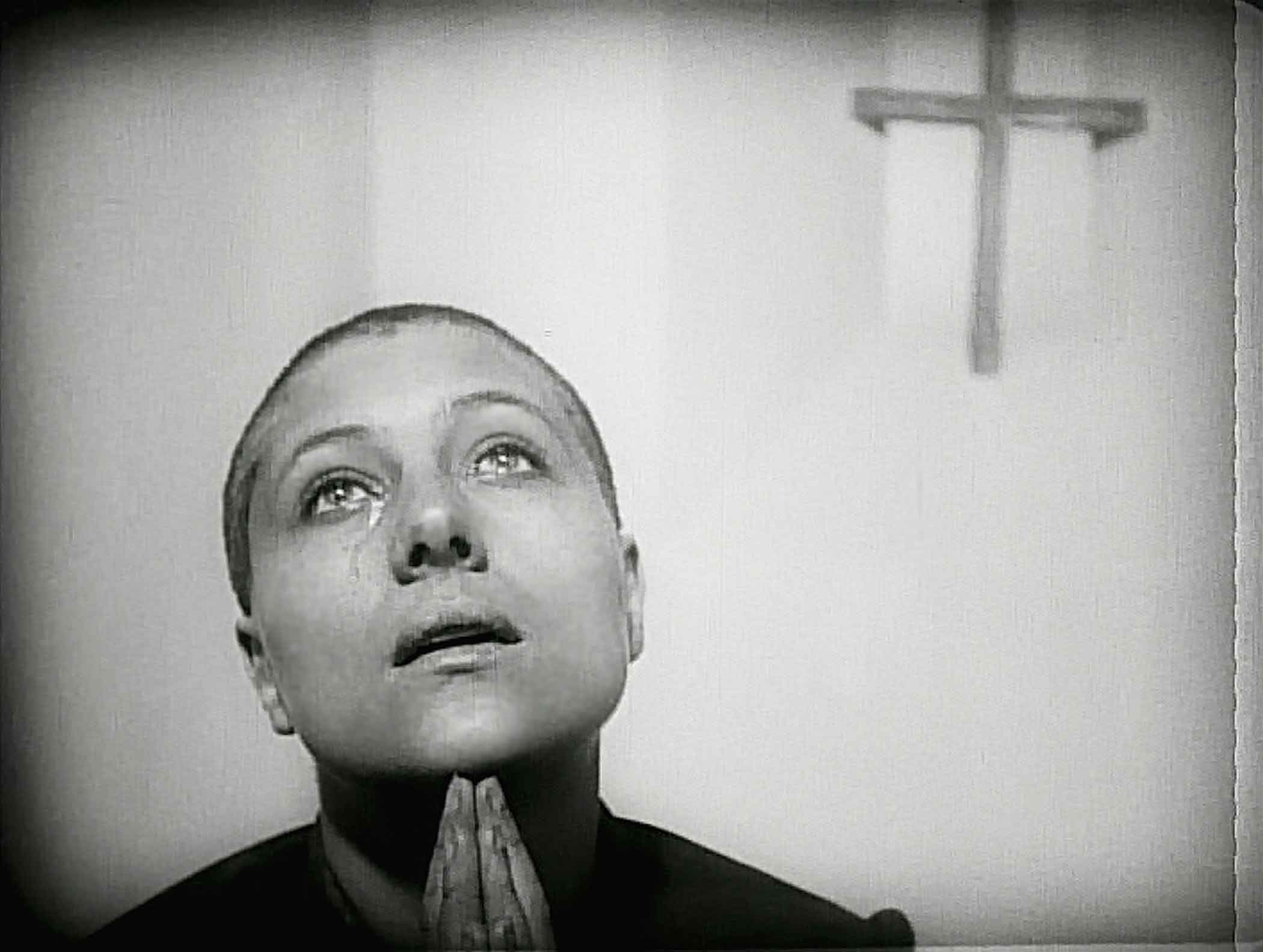
Joan-of-arc21Also this week I finally made the time to watch the ninth Greatest Film of All Time (according to Sight & Sound’s once a decade poll in 2012), Carl Theodor Dreyer’s 1928, The Passion of Joan of Arc. Consisting almost exclusively of close-up shots, Dreyer’s masterpiece is miraculously affecting, conveying Joan of Arc’s torment during her trial in the lead up to her execution. I viewed the film from Eureka’s Masters of Cinema release (2012) at 20fps, silent, as Dreyer reportedly preferred the film to be viewed. This DVD release also includes the film at 24fps and with two optional scores, as well as a 100 page book with writing on the film by the likes of André Bazin and Chris Marker. Watching the film without a score was an unusual experience, allowing me to imagine sounds; the murmur of Jeanne’s jury, the uproar of the crowd, Jeanne’s exhausted sighs. I’m certain it’s a film I’ll return to again and again.
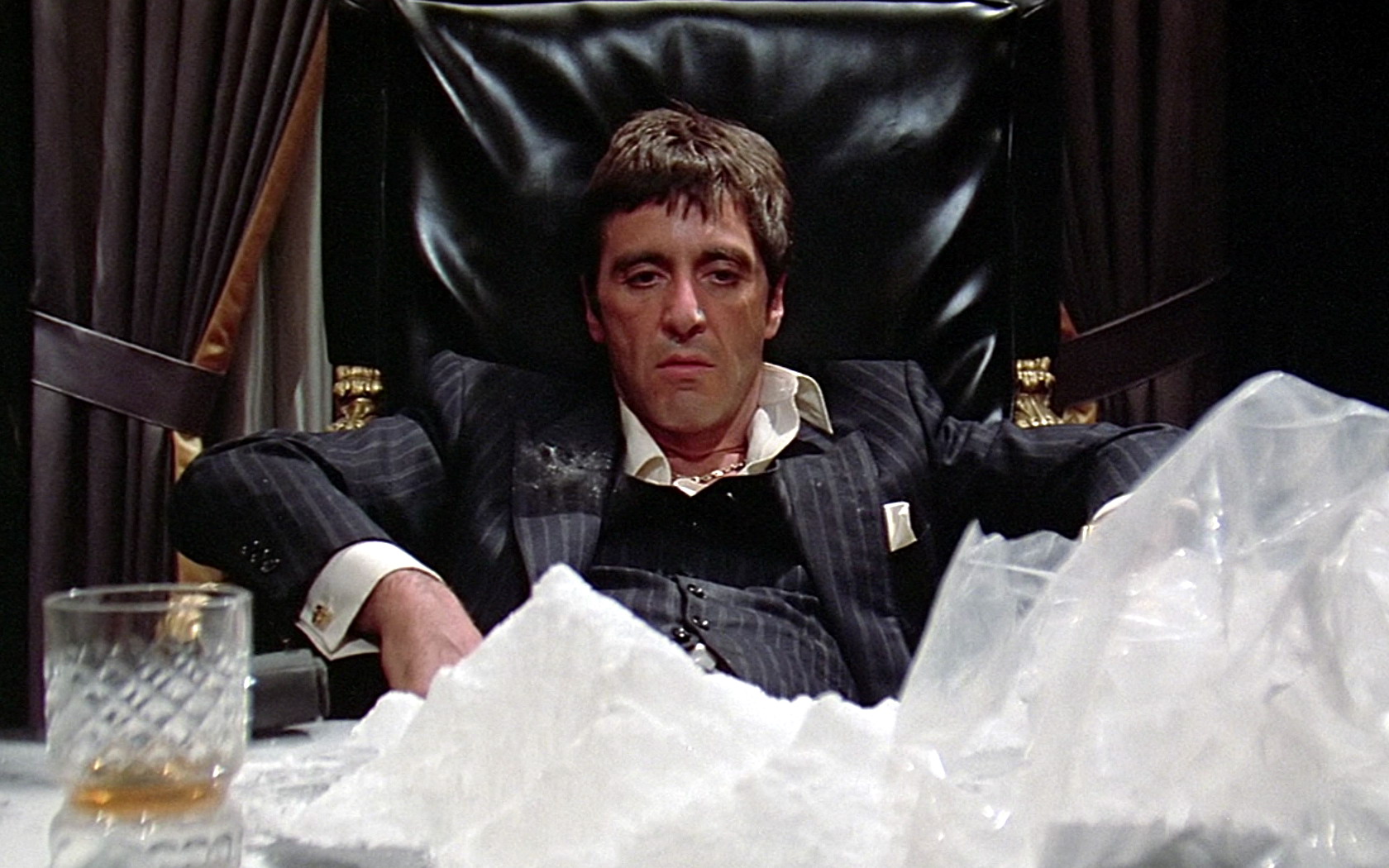
kinopoisk.ruAlso considered to be a ‘classic’ but of a very different kind and not one that made it to the Sight & Sound top ten, viewing Brian De Palma’s Scarface (1983) proved to be an exercise in list ticking, with seemingly no other discernable reason to view it appearing throughout the film’s runtime. Unlike Paul Muni in Hawks’ original 1932 Scarface, Pacino’s Tony Montana is utterly devoid of charm, which left me baffled as to how the character could have risen to status of cultural icon – I spent most of the film imagining I was watching James Franco’s brilliant gangsta parody in Spring Breakers (Harmony Korine, 2012) performing his inspired ‘look at all my shit’ scene, in which he boasts having Scarface on constant repeat whilst standing in front of a portrait of Tony Montana (see video)


Also viewed: Now You See Me (Louis Letterier, 2013) was entertaining to a point – that being the moment the filmmakers appeared to have no clue how to end the film.

My week in film: Blue Ruin, Captain America: The Winter Soldier, The Amazing Spiderman 2 and more…

THORInspired by the effervescent Avengers Assemble, I sought out Thor (2011) for another watch to compare the tone of Branagh’s earlier effort with Whedon’s spot-on get-the-gang-together adventure. As with Avenger’s Assemble, one of the main pleasures of Thor is Tom Hiddleston’s demi-God Loki, brother to our titular hero. Hiddleston is deft at combining the pathos of Loki’s identity crisis, with the camp of a truly despicable villain, and in Thor his origin story is well worth revisiting, even if the more spectacular action set pieces are confined to realms other than earth, leaving Thor and his comrades battle with Loki’s metal man henchman seem a little underwhelming.

David Cronenberg is a director I’ve shied away from mainly due to my irritation with eXistenZ (1999), which seemed to belabor its point somewhat, however having finally seen The Fly (1986) and caught up with come more recent work, A History of Violence (2005), and Eastern Promises (2007), my irritation has lifted and I’m certainly trying to see more. With that in mind I watched A Dangerous Method (2011), which looks at the relationship between Carl Jung (Michael Fassbender) and Sigmund Freud (Viggo Mortensen), aA-Dangerous-Method-9nd the battle for morality and ethics in the birth of psychoanalysis, as represented by Jung’s torment at this relationship with a patient, Sabina Spielrein (Keira Knightly).
The key Cronenberg concerns are all present – sex, the death drive, the mind/body divide, an emphasis on the corporeal – making this perhaps the perfect subject for the director, and none more perfectly expressed than in Knightley’s committed performance, her body contorting in a pure expression of mental anguish.blue ruin

In Blue Ruin, a man seeks vengeance for the murder of his parents on the day their killer is released from prison, leading to a bloody series of retaliations, a form of justice kept ‘in house’ and away from the police. The immediate aftermath of Dwight’s (Macon Blair) somewhat calamitous yet shocking first kill sees him come face to face with the innocent quotient of his enemy’s clan, in a moment of pathos-filled humour, in which Dwight is required to release a passenger from his unplanned escape vehicle, and is given the first hint that his side of this story is not the only great tragedy at stake. Director/writer/cinematographer Jeremy Saulnier establishes a suitably sticky atmosphere, as the heat of the Virginia forests seems to emanate from the image of each blood-soaked character. Blue Ruin won the FIPRESCI International Critics prize in Cannes 2013 and it’s easy to see why – Saulnier here achieves a pure clarity of character, plot and form that draws strength from being both terrifyingly simple and artfully realized.

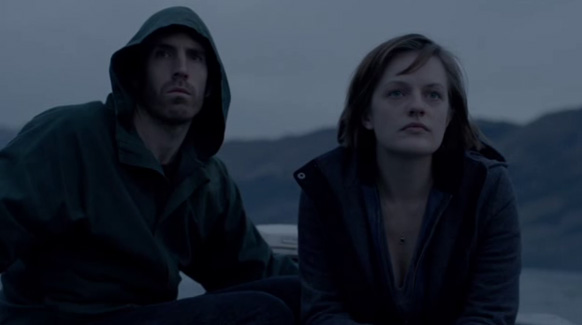
With Jane Campion’s Golden Globe winning Top of the Lake (2013), murder or the threat thereof is also the driving force of a plot that has Elizabeth Moss’s Detective Robin Griffin return to her home town, ostensibly to visit her dying mother, yet pulled into a rape investigation when a pregnant 12 year old attempts suicide in the titular Lake Top. Issues of gendered power plays are at the heart of this stellar mini series, as Robin’s status as a lone female sees her subject to forms of male protection both welcome and unwelcome, an inappropriate marriage proposal, threatening displays of violence, psychological manipulation and name calling, whilst other women seem to have varied experiences of the same enforced passivity at the hands of local land-owning alpha male, Matt (Peter Mullan).img_topofthelake1

Whilst Robin searches for Matt’s runaway daughter Tui (Jacqueline Joe), a camp sets up at Paradise, the lakeside land sold from under him by business partner Bob Platt, and a group of women move into storage containers, under the guidance of GJ (Holly Hunter). Although GJ professes not to teach or impart wisdom – only the ‘the body knows what to do’ all the characters of Top of the Lake are drawn to her at some point, whether seeking help, shelter or a chance to offload anger and fear – represented by one male onlooker that directly questions the specificity of her gender.

Showcasing the New Zealand landscape as a site of astonishing beauty and acute danger, Campion creates an atmosphere that never allows the viewer to assume the worst is over, as Robin’s investigation reveals inextricable links between her own past and present self.

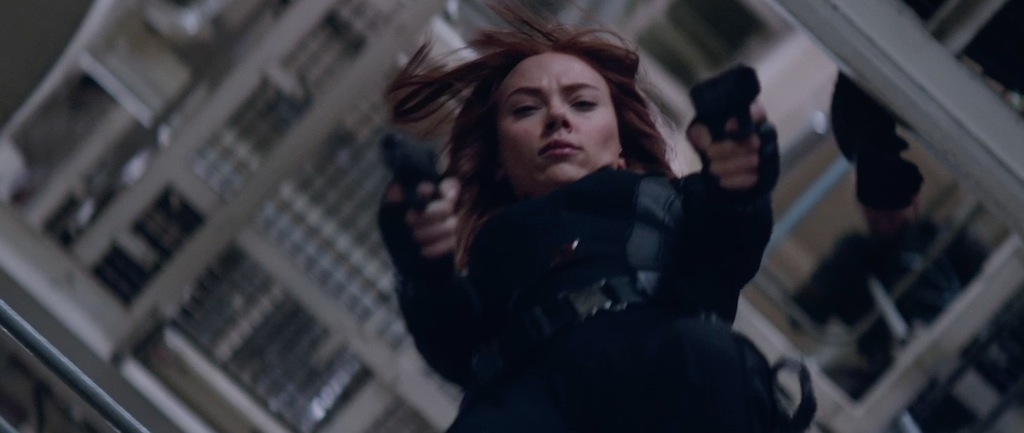
captain-america-the-winter-soldier-teaser-trailer-black-widow1Finally, my viewing this week ended on lighter notes, with a double bill of Captain America: The Winter Soldier (Anthony & Joe Russo, 2014) and The Amazing Spiderman 2 (Mark Webb, 2014). I thought Captain America: The First Avenger (Joe Johnston, 2011) a terrible bore of a film – due mainly to the unimaginative direction (but then what was I expecting from the director of Jurassic Park 3?) so helpfully my expectations were low, and this new, post Avengers, Phase 2‘ iteration of the Steve Rogers story proved engaging, delightfully silly and earnest only when it mattered most. Action scenes involving Scarlett Johansson’s Natasha Romanoff aka Black Widow maintained the excellent standard of choreography for this character that began with Iron Man 2 (John Favreau, 2010) with the kind of fighting style that believably demonstrates how a woman of Romanoff’s strength and size can immobilize swathes of henchmen.

amazoing spiderman 2Emma Stone was also given ample space to show strength and characteristic intelligence as Gwen Stacy – saving Spidey’s (and the rest of New York’s) life in The Amazing Spiderman 2, which puts the romance between Peter and Gwen at the centre of the film. Though Andrew Garfield as Peter was once again the perfect, sinewy, athletic Spidey, I was left with a sense that his world is less tangible than that of the Avenger’s and its respective solo ventures in the series – despite also being a Marvel title. Perhaps it’s due to every villain so far having originated in that comic book cliché of accidental merge with toxic animal/goo/experiment gone wrong in the Osborn lab, or maybe Amazing Spiderman 2 failed to exploit the potential of any one of its villains, instead settling for broadly painted caricatures doing little justice to the caliber of the actors playing them. Nevertheless, Stone and Garfield are a sheer joy to watch, being that rare example of sizzling on-screen chemistry.

Coming next on My week in film… In cinemas I’ll review Frank, and at home – an as yet unknown plethora of film from around the world.

Review: Andrzej Wajda’s Man of Marble

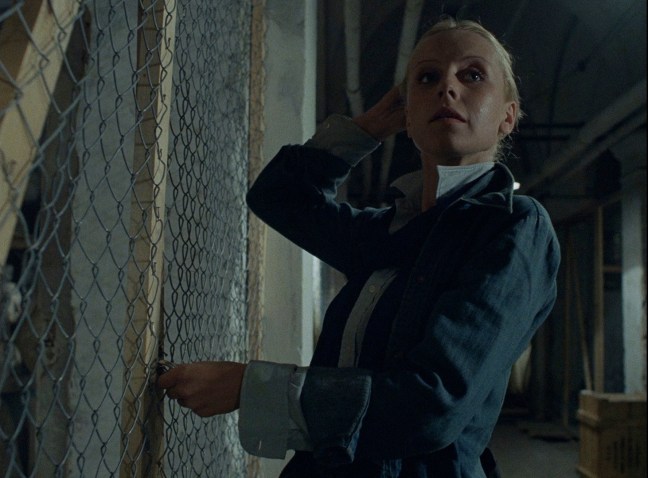
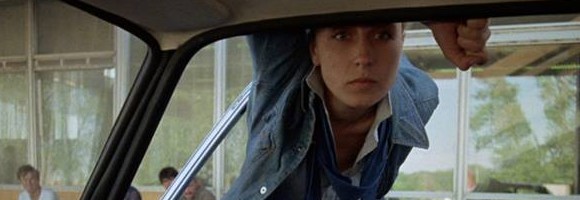
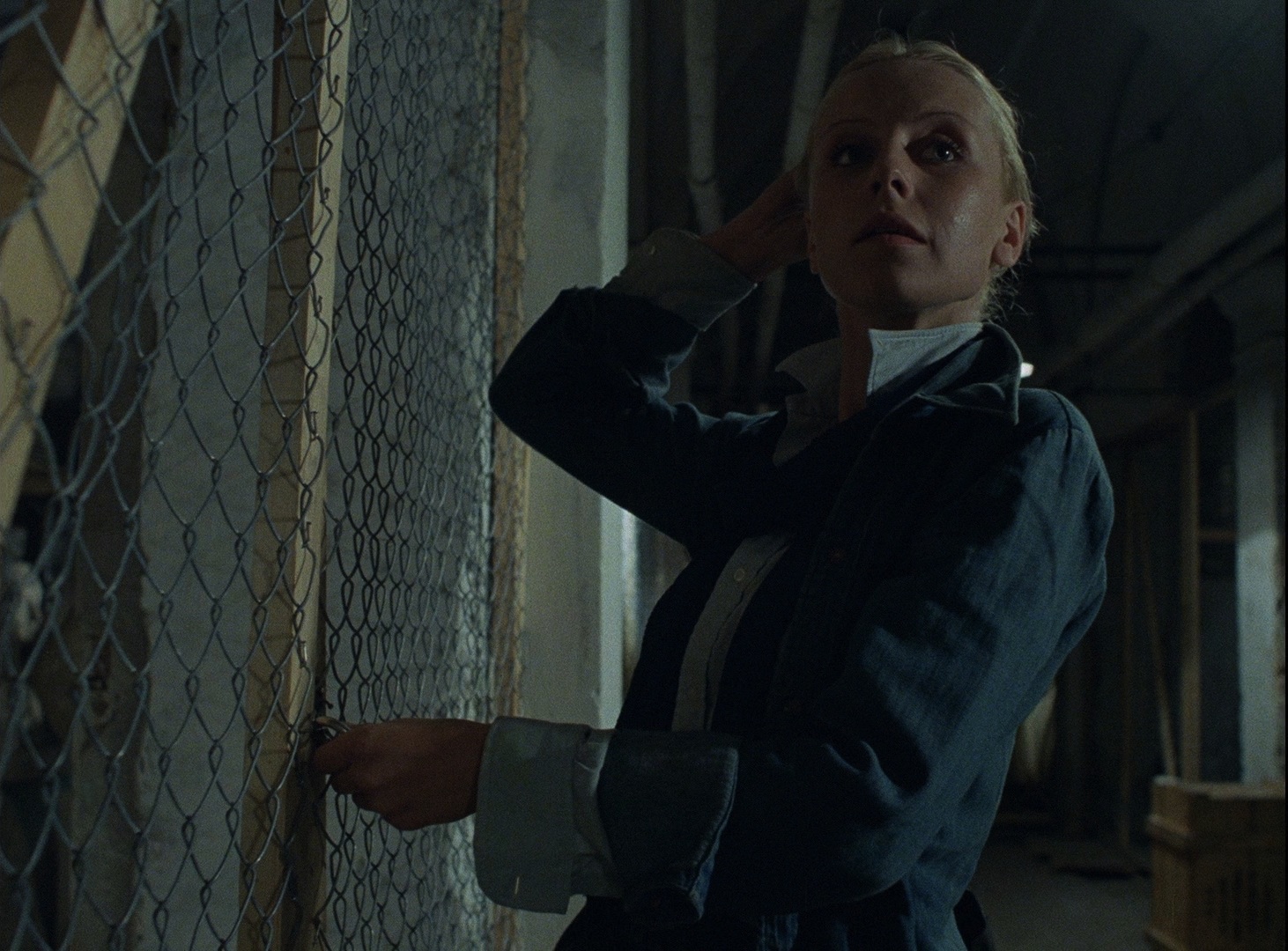
Andrzej Wajda’s Man of Marble (Człowek z marmuru, 1976) bursts with iconic images, costumes and gestures, from the poster-sized portrait of ‘worker’s hero’ Mateusz Birkut (Jerzy Radziwilowicz), to the blue denim worn by film student Agnieszka (Krystyna Janda), to the nervous, purposeful way she has of chain smoking cigarettes. That such images become so insistently memorable, is due partly to the way Wajda frames his characters and partly to the timeline of the film, in which Agnieszka – film crew in tow – charges around Poland in pursuit of the truth of the rise and fall of socialist hero Birkut, barely resting in the attempt to finish her diploma film despite the objections of her supervisor at the TV station. A filmmaker on a mission, Agnieszka is perpetually in blue, moving constantly forward, rarely seen without a cigarette throughout the film’s pacey runtime.manmarble2

The origin of the film was a newspaper article seen by Wajda in the 1960’s, which described the plight of a working man unable to find employment, despite his previous status as a symbol of socialist labour, elevated to a standard of heroism by the State. Wajda asked Aleksander Ścibor-Rylski to write a script based on the article, but in the 1960’s the socialist project was seen as too risky a subject to tackle by the authorities and so work on developing the film came to a halt. It wasn’t until 1976 that Wajda was able to restart the project, with revisions to the script and the character of film student Agnieszka driving the plot forward, framing the story of investigating Birkut just as Thompson (William Alland) searches for the truth about Rosebud in Citizen Kane (1941).large_man_of_marble_927_blu-ray_Just as Agnieszka tries to find the person behind the image of Birkut, Wajda frames his female lead as an image – frequently at low angles as if to show Agnieszka as a towering statue – a symbol of passionate creativity in her blue denim uniform. Andrzej Korzyński’s soundtrack also goes a long way to cement the image of cool strength that Agnieszka embodies, with groove-heavy synths used heftily at moments when the young filmmaker’s purpose appears most clear.

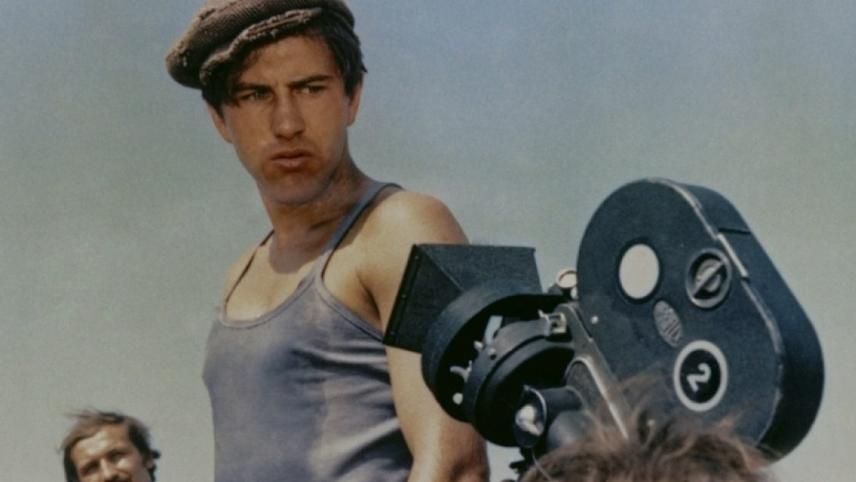
The contrast between Agnieszka’s self-assurance and Birkut’s unassuming nature is one of the key points of focus in the film. Early on, we see the intrepid reporter viewing unused footage of Birkut shot by star filmmaker Burski (Tadeusz Łomnicki, also seen in Wajda’s Innocent Sorcerers) in which his discomfort at being filmed and naïve manner is a source of fascination for Agnieszka – perhaps perceiving this to be the defining characteristic that allowed him to be manipulated into representing socialist ideology.man-of-marble_cameraCelebrated on its release in defiance of the censors that attempted to limit Man of Marble’s distribution, Wajda’s film appears today as a sharp critique of Stalin-era Poland, with a truly inspirational female lead, representing the filmmaking process as a fight for an autonomous voice in a male-dominated world, and the attempt to forge a formidable creative presence that might do justice to the idealism of her subject.

Beautifully restored for this release (restoration fans will note the image comparison feature on disk 2) by Second Run DVD, with fascinating interviews with the director, Krystyna Janda, and ‘unofficial’ assistant director, Agnieszka Holland. Fans of the damn catchy soundtrack might also note a new release on vinyl last month.