LOCAL/LOCALE season at EFG: Man of the Story

A few weeks ago I announced a mini film season at the Edinburgh Film Guild. Taking place on Sundays at 7pm from 8 November until 6 December, LOCAL/LOCALE presents films that each address a specific place or places, using techniques of documentary and fiction, essay and narrative, to undermine our assumptions about genre and offer in turn, intelligent, beautiful and humorous comments on the human condition.

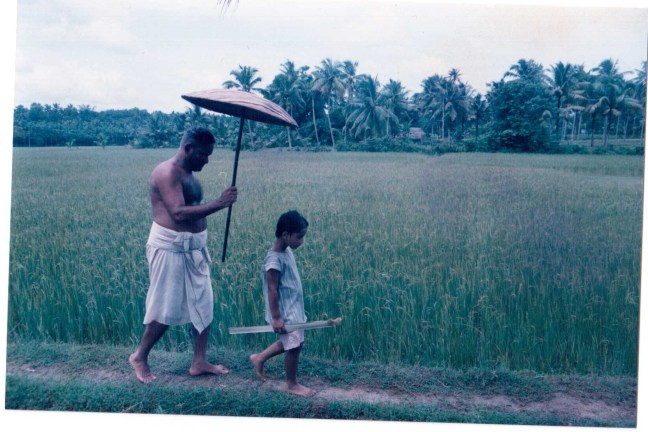
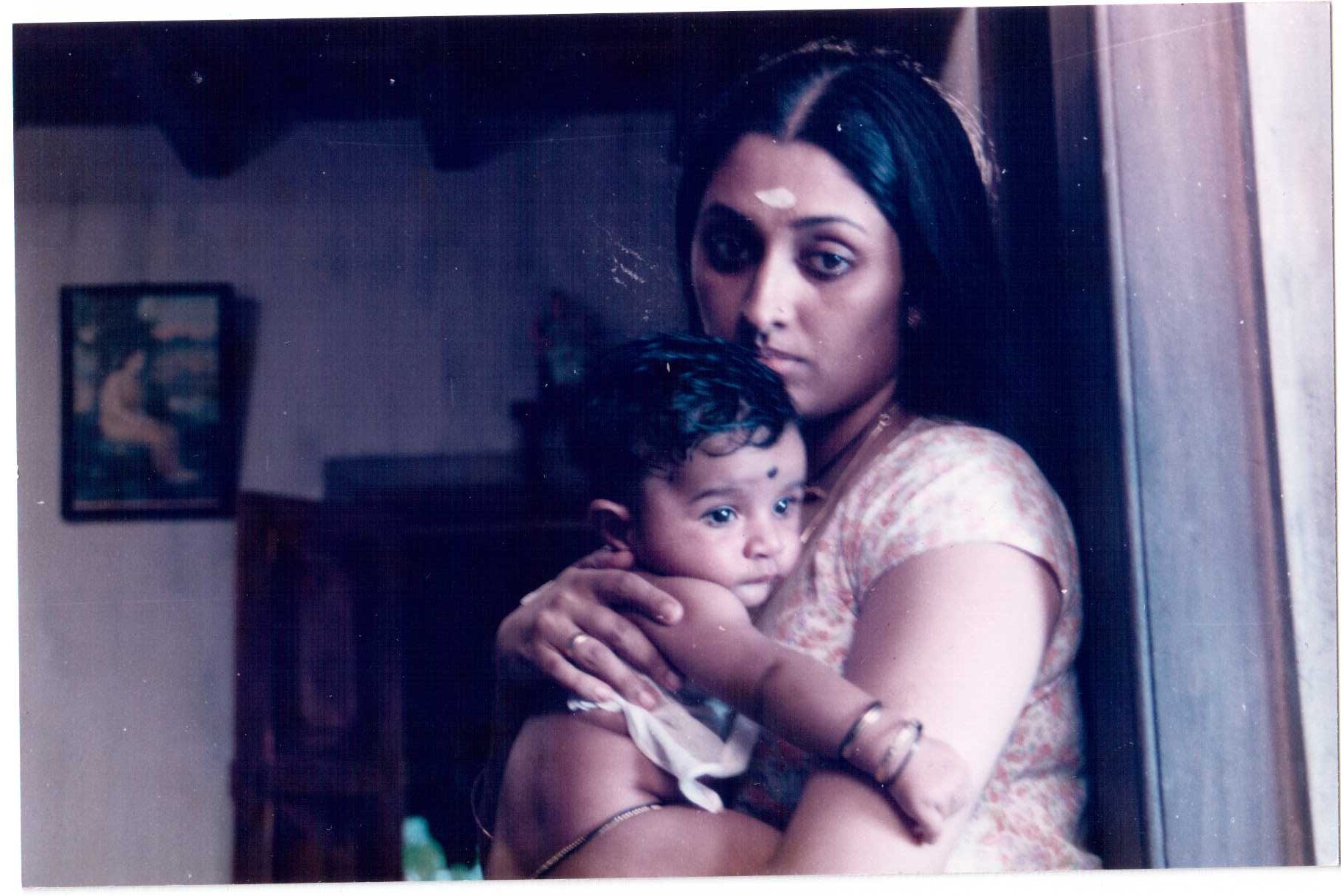
The season opens on Sunday 8 November with Adoor Gopalakrishnan’s 1995 film Man of the Story (Kathapurushan), which chronicles the life of Kunjunni (Viswanathan), born to a land-owning family but without any paternal influence, who must then reconcile his place within his family, social class, and political position. Gopalakrishnan frames the story of Kunjunni within a folk tale of a family who encounter a cannibalistic demon in the forest, where the father must decide if he would sacrifice those he loves in order to survive. It’s this melding of narrative layers and the use of personal and historical contexts that gives Man of the Story such depth, and makes it such a pleasure to watch. Kathapurushan - Infant Kunjunni +Motehr
Gopalakrishnan has used multiple narratives or films within films in some of his other work (such as Rat Trap, 1981 and A Climate for Crime/Oru Pennum Randaanum, 2008 ), which is also very socially conscious and often focuses on Kerala, in southern India where the director was born in 1941.

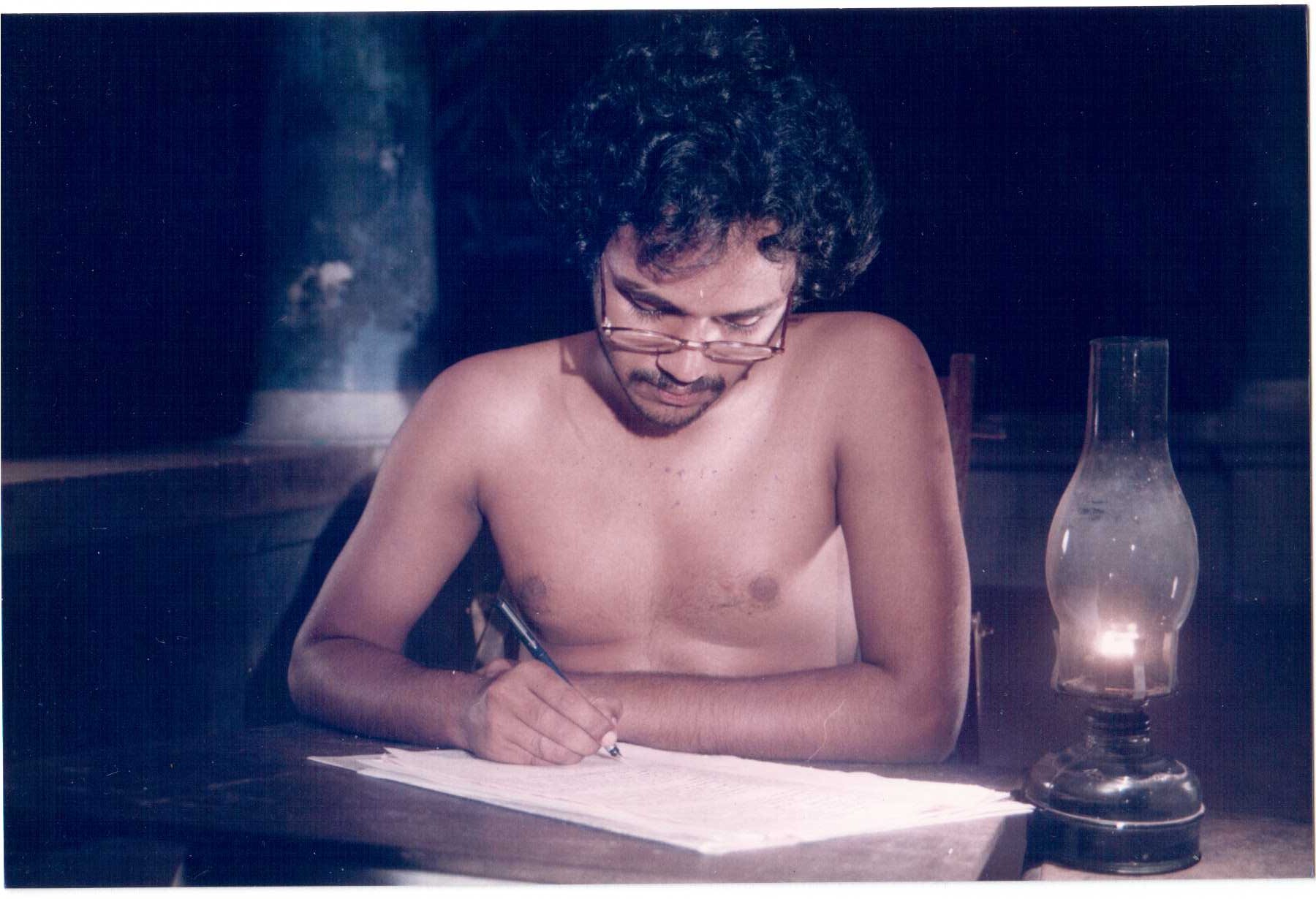
Writing for the Second Run DVD release of Rat Trap, Derek Malcolm said of Adoor Gopalakrishnan; ‘[his films] speak eloquently to other cultures as well. This is because they are not closed to outsiders, however subtle they are in examining Kerala’s social, political and cultural history. They invariably contain some of the eternal verities of our existence, and they do so with a humanity and skill that is not easily matched.’ Kathapurushan - Kunjunnii writing (lamp before) It’s this relevance to other cultures that makes Man of the Story a fitting opener to the LOCAL/LOCALE season. Gopalakrishnan’s film not only realises beautifully, a period of great change in Kerala, but will hopefully introduce some of the themes that will be seen throughout the film season.
Below is the full run down of the LOCAL/LOCALE season. The Edinburgh Film Guild are offering season tickets for £20 for five screenings, more information here. You can also join the Facebook event.

Sunday 8 November: MAN OF THE STORY (KATHAPURUSHAN). Adoor Gopalakrishnan/India, Japan/1995/102/Malayalam with English subtitles.

Sunday 15 November: WHITE COAL. Georg Tiller/Austria, Poland, Taiwan/2015/70 min/English and Chinese with English subtitles.

Sunday 22 November: ALLUVION/EVERGREEN. Alluvion/Sasha Litvintseva/UK/2013/31min. Evergreen/Sasha Litvintseva/UK/2014/50 min.

Sunday 29 November: OUR BELOVED MONTH OF AUGUST (AQUELE QUERIDO MES DE AGOSTO) Miguel Gomes/Portugal, France/2008/147 min/Portuguese with English subtitles.

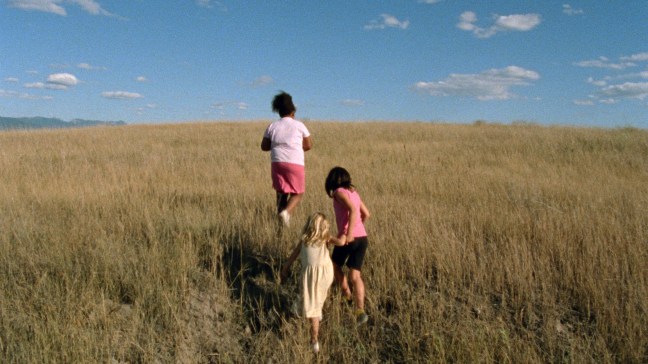
Sunday 6 December: TIRED MOONLIGHT. Britni West/USA/2015/76 min.
Announcing a mini film season: LOCAL/LOCALE

Starting next month on Sunday 8 November, the Edinburgh Film Guild will be host to a mini season of film’s I’ve programmed around themes of location, community and industry. The season will showcase examples of cinema that dissolves the divide between documentary and fiction and offer in turn, intelligent, beautiful and humorous comments on the human condition.

Each film is one that’s provoked thoughts in me about the diversity of human experiences that I might only ever encounter through cinema. In the ways that each film uses narrative and documentary to reveal their subjects, they allow us to question the authenticity of the experience that we’re witnessing. How much is ‘real’ and how much is an embellishment?

In the coming weeks I’ll post more details about the films in the programme, but this is just a small teaser of what’s to come. More info here at the Edinburgh Film Guild’s site.

Sunday 8 November: MAN OF THE STORY (KATHAPURUSHAN). Adoor Gopalakrishnan/India, Japan/1995/102/Malayalam with English subtitles.

Sunday 15 November: WHITE COAL. Georg Tiller/Austria, Poland, Taiwan/2015/70 min/English and Chinese with English subtitles.

Sunday 22 November: ALLUVION/EVERGREEN. Alluvion/Sasha Litvintseva/UK/2013/31min. Evergreen/Sasha Litvintseva/UK/2014/50 min.

Sunday 29 November: OUR BELOVED MONTH OF AUGUST (AQUELE QUERIDO MES DE AGOSTO) Miguel Gomes/Portugal, France/2008/147 min/Portuguese with English subtitles.

Sunday 6 December: TIRED MOONLIGHT. Britni West/USA/2015/76 min.
Also: Film journal update. Viewed two brilliant detective/serial killer films: David Fincher’s The Girl with the Dragon Tatoo and Michael Mann’s Manhunter

IFFR 2015: The Chambermaid Lynn, interview with director Ingo Haeb

Approaching his adaptation of Markus Orths’ novel, director Ingo Haeb knew that he couldn’t take the narrative of a cleaning-obsessed chambermaid only at face-value; ‘’it was clear that it was a modern, adult, fairy-tale’’ says Haeb. Whereas the novel presented the experience of Lynn plainly, without any doubt as to the actuality of her experiences, when envisioning the source as a more ambiguous, cinematic work, for Haeb; ‘’the distance between the audience and the character is gone, so I wanted to keep it open.’’

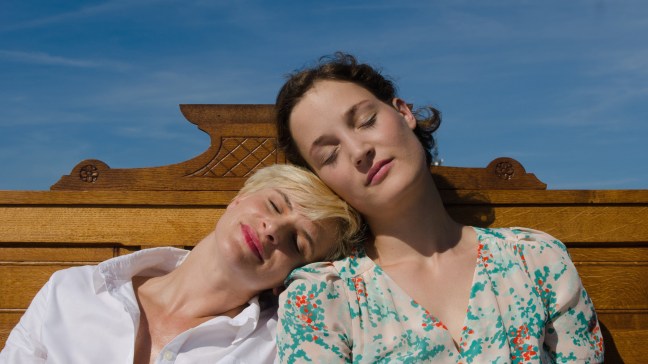
The Chambermaid Lynn follows its titular heroine as she goes about her weekly routine, working at the Eden Hotel cleaning the rooms with a fastidiousness that outstrips the efforts made by the other chambermaids. Lynn (Vicky Krieps) is fascinated by the lives of the hotel’s guests, and examines the remnants of their lives – clothes, books, etc. that they leave behind when they go out. One day hiding under the bed to avoid detection, Lynn is immediately hooked on another aspect of one guest’s life, when he hires dominatrix, Chiara (Lena Lauzemis). Having compartmentalised her sexual life, much like work, exercise and cleaning, Lynn is desperate to know what it would be like disrupt the order that she has created, and so makes a date with Chiara too.

Visualising Lynn’s world involved meticulous planning by Haeb, who focused on the smallest details, such as the colour of a telephone, or the way Lynn’s hair is parted, in order to convey the structures that the character has put in place in order to go unnoticed, which meant that for the production design; ‘’everything becomes important.’’ This careful approach also extended to making sure the audience could understand the origin of Lynn’s obsessiveness, through the relationship with her mother (Christine Schorn). To do so, Haeb consulted a psychologist/philosopher, who could advise what kind of maternal relationship would produce Lynn’s particular coping methods, and her attitude to sex – says Haeb; ‘’with this kind of mother, she [Lynn] would have the psyche that ‘I never had sex, but sex is done to me’.’’ Such an important relationship becomes key to understanding Lynn’s initial reticence when attempting a less passive approach to intimacy with Chiara.

Far from being the familiar story of a sexual awakening however, The Chambermaid Lynn is successful in showing the shifting power dynamic between Lynn and Chiara. For someone for whom sex is simply a perfunctory activity, it is feeling at all – rather than feeling for a woman – that is important. Says Haeb; ‘’this is not a coming out story’’ rather, Lena was cast as Chiara for her androgyny, having neither the particular energy of a man or a woman; ‘’she’s neutral [to Lynn].’’ While Lynn begins to gains confidence in the new feelings she’s experienced, for Chiara, her feelings – and Lynn’s – make her vulnerable. Plunging into something new is all part of human nature for the director however, and though we see Lynn grow and take risks in the film, for Haeb; ‘’getting what you want and going too far’’ is inevitable.

Originally published in the Daily Tiger, 28 January 2015. Republished with permission from International Film Festival Rotterdam.