
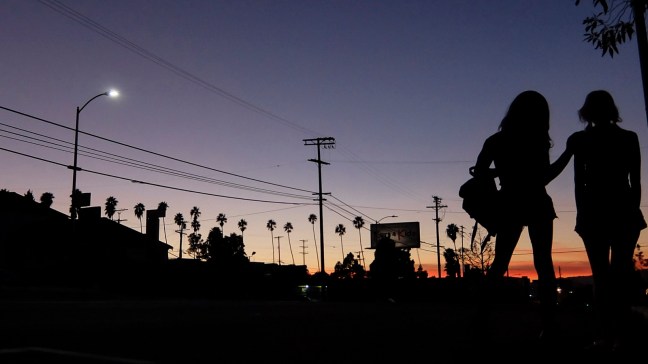
Pretty soon the viewing habits of this writer will all feature the sight of a Christmas tree, tinsel, presents and/or snow, but for the last week before the festive holidays commence proper, there’s been time to catch some of the year’s lauded comedies and acclaimed dramas. 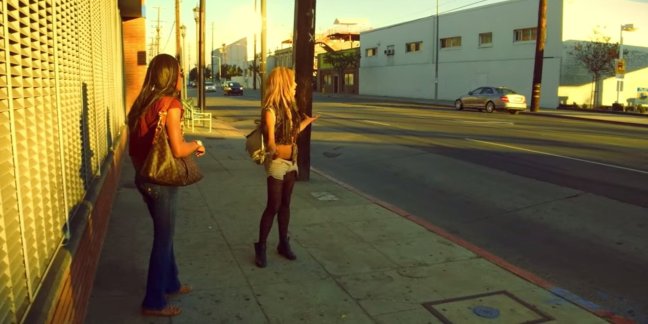 Sean Baker’s Tangerine has been widely praised and discussed since its world premiere at Sundance in January. Shot using an iPhone 5 in West Hollywood, the film follows trans sex workers Sin-Dee (Kitana Kiki Rodriguez) and Alexandra (Mya Taylor) around LA over the course of one day – Christmas Eve – while Sin-Dee attempts to confront her boyfriend Chester (James Ransone) for cheating on her with a cis-gendered woman. The film is remarkably cinematic, due to Baker and co-cinematographer Radium Cheung’s discovery of an anamorphic adapter for the iPhone that allowed them to shoot in scope. Assumptions about a film shot with a phone are quickly dispelled as wide roof-top shots and street scenes open up the film’s setting and capture the character’s sprawling environment.

Baker developed the story from his friendship with Mya, and there’s an authentic energy to the way Alexandra and Sin-Dee interact, the latter’s fast paced, lisp inflected dialogue conveying an impatience that contrasts with her cohort’s ‘no drama’ principles. Tangerine shows the toughness of its character’s lives, the dangers inherent in getting into a strangers car with no guarantee that they won’t turn violent. Alongside this vulnerability, Baker’s film demonstrates how his character’s care and look after each other, and relate through humour, the result is a film that’s as open to being serious as is to being silly and heartfelt. 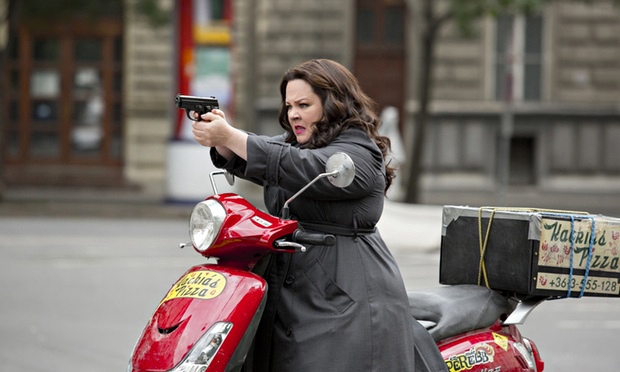 Other films viewed this week include two starring Melissa McCarthy, one a re-watch of Bridesmaids, and another Paul Feig helmed comedy, Spy, which also stars Miranda Hart and Jude Law. McCarthy plays Susan Cooper, a desk-based CIA agent usually guiding Law’s active spy Bradley Fine through his covert operations via an ear piece. When disaster strikes, Susan offers to go into the field herself, assuming her lack of experience will make her less of a target for the agencies enemies. McCarthy is reliably hilarious, and there’s some sharp observations of workplace sexism in the way her character is frequently assigned aliases that reinforce stereotypes about a person of Susan’s size, age and gender. Jason Statham, is given ample opportunity to ape his Transporter-like persona, throwing out boastful lines attesting to his strength and indestructability with an almost insatiable frequency. That McCarthy is very a dramatic, comedic and action star here is immensely enjoyable, even if spy spoofs bring with them their own clichés.
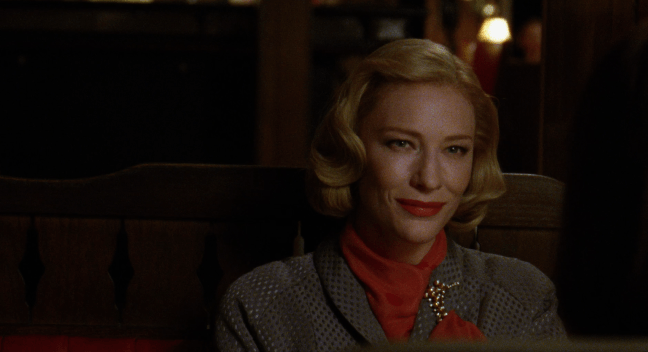
Coming soon (or maybe after a festive lull), Cinematic Investigations on Star Wars, Christmas movies and a full review of 2015 highlights. For those interested in my official top ten of 2015, check out words in praise of Carol – CineVue’s film of the year plus links at the bottom of the page to my LetterBoxd list.


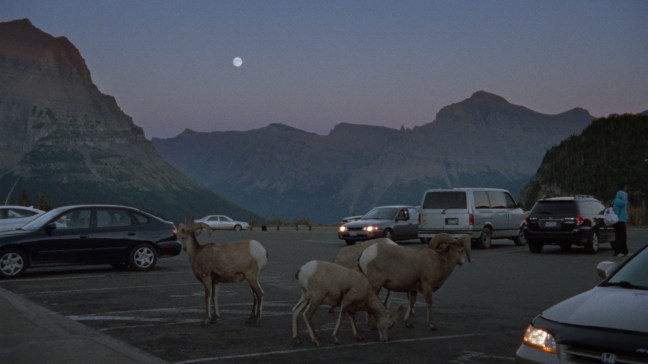
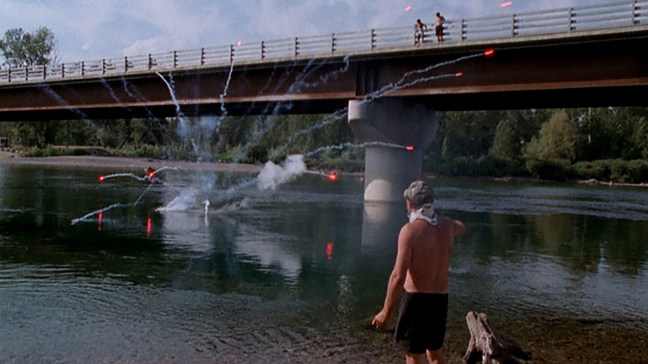 Beyond this central conceit, West’s method while shooting was to allow the town to guide her in terms of what was important to portray, just as can be seen in the work of Miguel Gomes, in last week’s EFG screening
  Shooting on Super 16mm, cinematographer Adam Ginsberg (Stinking Heaven, Nathan Silver, 2015) captures the beauty in the landscape and the small moments between people, making Tired Moonlight’s sense of place so evocative. The result of this looseness and beauty in shooting, the affection for the location, and a narrative lead by ‘real’ people is a film that succeeds so well in describing the experience of living in Montana, without treating those who do as curiosities.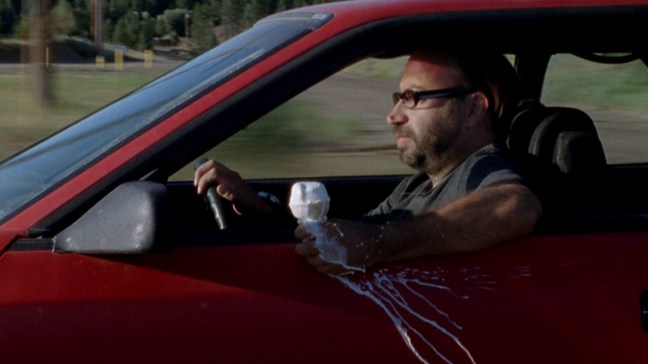
 cinematicinvestigations.com