
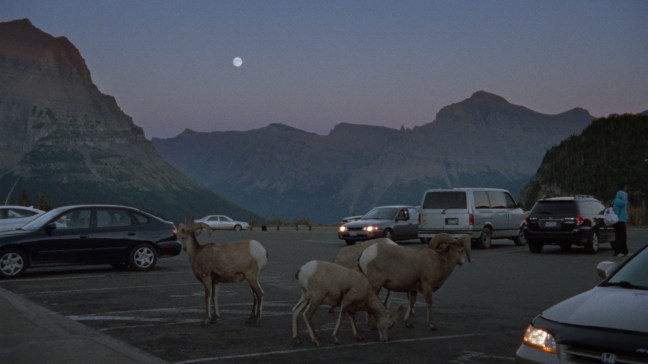
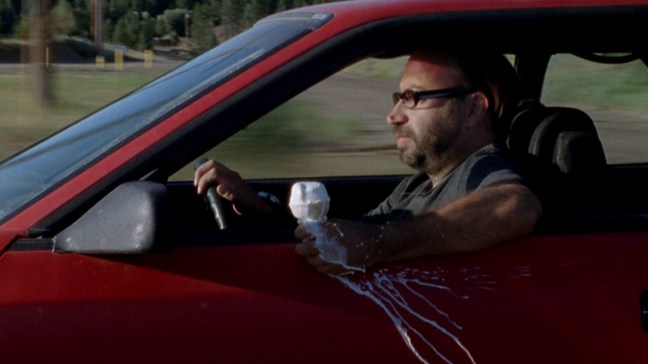
The final screening in the mini season LOCAL/LOCALE at Edinburgh Film Guild is the UK premiere of Britni West’s Slamdance award-winning Tired Moonlight. Set and shot in West’s hometown of Kalispell, Montana, Tired Moonlight uses mainly non-professional actors and a ‘documentary’ approach to capture the atmosphere of this simultaneously ordinary and special place. The director went back to Kalispell over the summers of 2012 and 2013, working from an 80 page script but with the flexibility to allow the performer’s own personalities and experiences to influence the film’s direction.
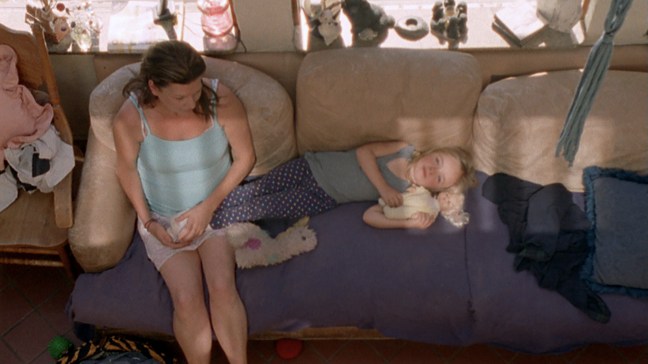
The film’s main characters are the poet Paul Dickinson, who plays himself and whose writing features in the film, and Dawn, played by Liz Randall, a woman who lives alone. Dawn’s ‘small’ story is essentially about the new connections she makes, first with a four year old girl and then with Paul, and Tired Moonlight relishes the awkwardness and vulnerability of opening up to others, within the a setting where it might be assumed that everyone knows each other. 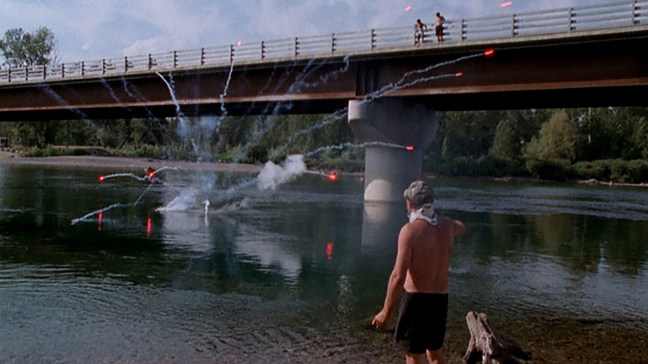 Beyond this central conceit, West’s method while shooting was to allow the town to guide her in terms of what was important to portray, just as can be seen in the work of Miguel Gomes, in last week’s EFG screening Our Beloved Month of August and Arabian Nights. Says West; ‘We would see what was happening, who was around, try and figure out if there was something more interesting that we should be focusing on. It was loose, but also held together by this thread of my experiences, care for the environment in which I grew up, and love of the people I was working with and meeting along the way.’*
 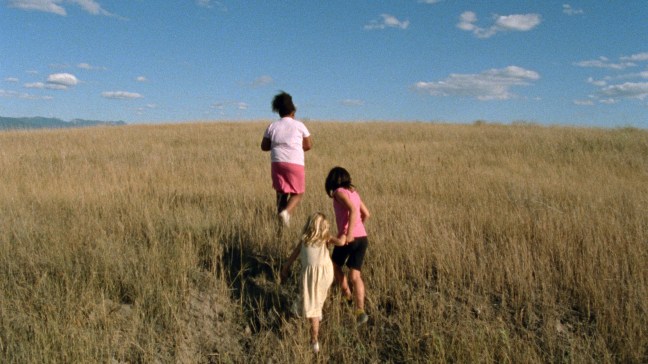 Shooting on Super 16mm, cinematographer Adam Ginsberg (Stinking Heaven, Nathan Silver, 2015) captures the beauty in the landscape and the small moments between people, making Tired Moonlight’s sense of place so evocative. The result of this looseness and beauty in shooting, the affection for the location, and a narrative lead by ‘real’ people is a film that succeeds so well in describing the experience of living in Montana, without treating those who do as curiosities.
Tired Moonlight screens at 7pm on Sunday 6 December. If you’d like more information about the whole mini season check out the EFG page here, or the other programme notes here on Cinematic Investigations, listed below.
Sunday 8 November: MAN OF THE STORY (KATHAPURUSHAN). Adoor Gopalakrishnan/India, Japan/1995/102/Malayalam with English subtitles.
Sunday 15 November: WHITE COAL. Georg Tiller/Austria, Poland, Taiwan/2015/70 min/English and Chinese with English subtitles.
Sunday 22 November: ALLUVION/EVERGREEN. Alluvion/Sasha Litvintseva/UK/2013/31min. Evergreen/Sasha Litvintseva/UK/2014/50 min.
Sunday 29 November: OUR BELOVED MONTH OF AUGUST (AQUELE QUERIDO MES DE AGOSTO) Miguel Gomes/Portugal, France/2008/147 min/Portuguese with English subtitles.
Sunday 6 December: TIRED MOONLIGHT. Britni West/USA/2015/76 min.
*Britni West, Press Notes for Tired Moonlight
 Of the films in consideration, we selected Drama directed by Guan Tian (pictured above) as the winner of the
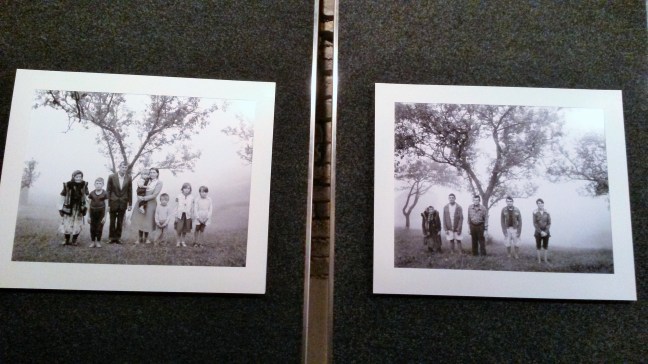
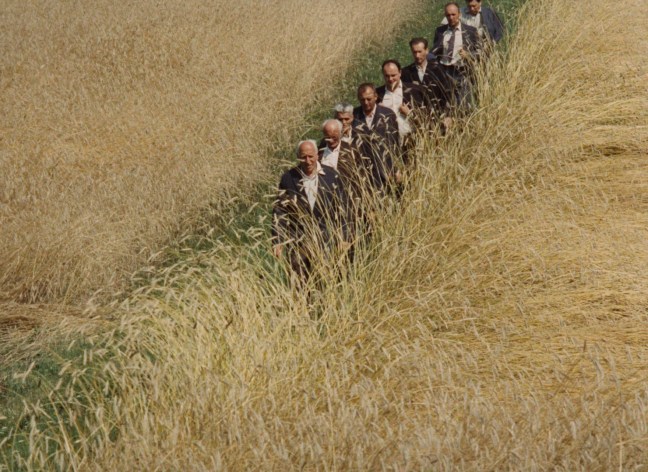
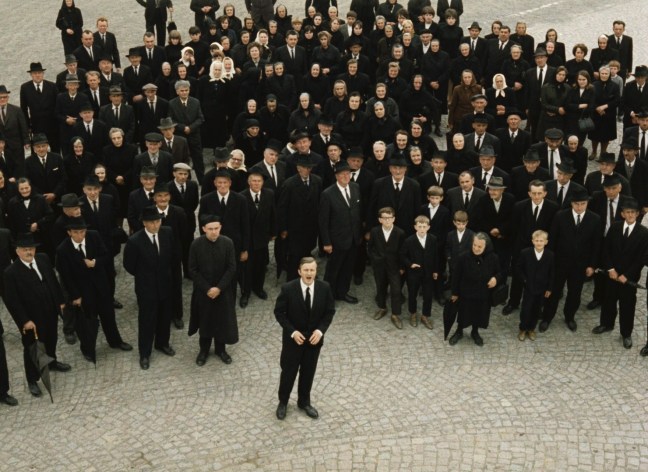
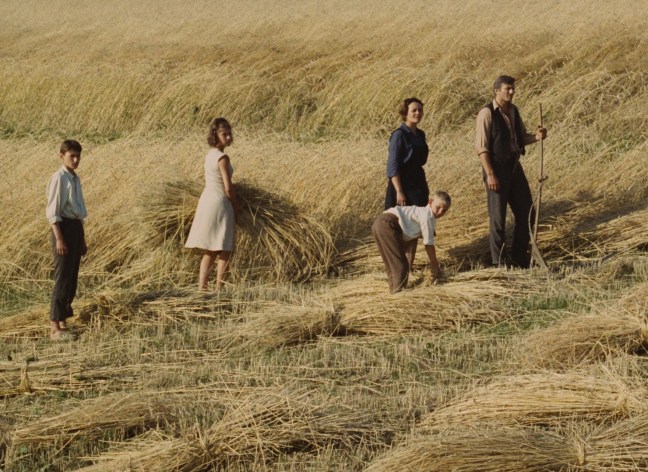 All My Good Countrymen was Jasný’s nineteenth film, and followed on the success of When the Cat Comes (1963) in continuing the director’s international acclaim. It was however later banned due to its portrayal of the Communist system and Jasný was for a period forced into exile. The film was a long-gestating and highly personal project based on memories the director’s mother shared about village life, and there’s an impressionist tendency to the way the people and landscape are shown, connecting characters and places but remaining ever so slightly removed from the subject. Jasný covers the period from 1945 to 1958 in chapters that follow the seasons, with an epilogue set in 1968 during the Prague Spring, and it’s the treatment of time that’s one of the film’s most beautiful elements.
 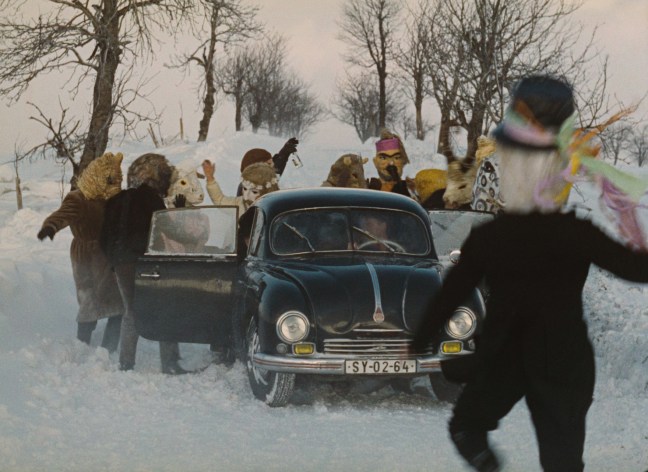 Characters come and go, the local council persists in attempting to recruit František to join ‘the Cooperative’ but the land still needs plowed and festive celebrations continue according to the season. The elderly of the village appear set apart from events, commenting upon their younger counterparts with the wisdom of experience.
  For someone unfamiliar with Jasný, but an appreciator of the Czech output of this period from directors such as
 cinematicinvestigations.com